Stop Leading from the Front, Start Orchestrating: The Guide to Amplified Impact.
Golden Hook & Introduction
SECTION
Nova: What if the very thing you're doing to be a "brilliant" leader is actually dimming the lights on your entire team?
Atlas: Whoa. That feels… counterintuitive. My best intentions, my drive to lead from the front, could actually be sabotaging our collective potential? That's quite a claim.
Nova: It is, Atlas. And it’s at the heart of a profound shift in leadership thinking. We often associate impact with individual brilliance, the singular visionary. But true, amplified impact isn't just about brilliance; it's about unlocking the brilliance in others, becoming less of a soloist and more of an orchestra conductor.
Atlas: Right, becoming the "smartest person for the room" instead of just the "smartest person in the room." So, what insights are we drawing from today to understand this pivotal shift?
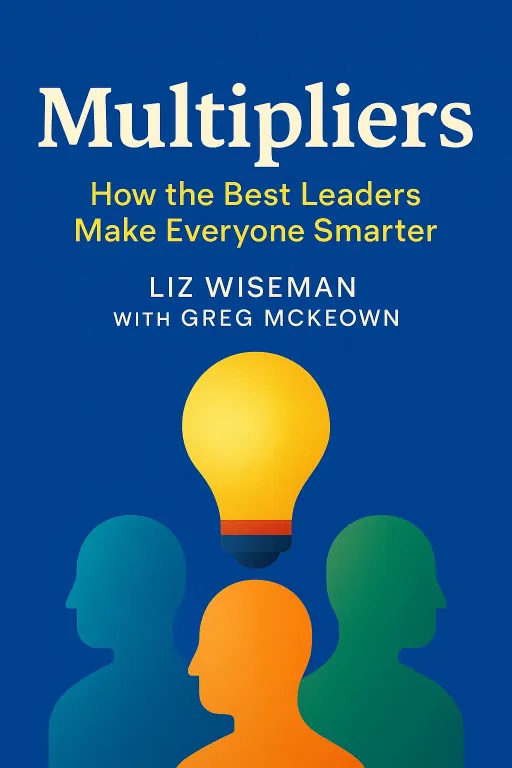
Nova: Today, we’re diving into the core ideas behind "Stop Leading from the Front, Start Orchestrating: The Guide to Amplified Impact." This guide draws heavily on the extensive research and practical experience of authors like Liz Wiseman, whose impactful work on 'Multipliers' emerged from studying over 150 executives, and Patrick Lencioni, a renowned organizational health consultant. Their insights provide the bedrock for this transformative approach.
Atlas: Ah, the architects of team brilliance! I’m ready. Where do we begin this orchestration journey?
Nova: Well, let's start with Liz Wiseman's incredibly impactful work on what she calls 'Multipliers.'
The Multiplier Effect: Unlocking Latent Brilliance
SECTION
Nova: Wiseman's core premise is elegant yet revolutionary: some leaders, whom she terms 'Multipliers,' amplify the intelligence, energy, and capability of the people around them. They make everyone smarter. Then there are 'Diminishers'—often well-meaning, highly intelligent leaders—who, without realizing it, actually drain the intelligence and capability from their teams.
Atlas: So, it's not about how smart am, but how much smarter I make feel? That's a huge shift in perspective. But how does that actually work in practice, especially for leaders who are used to being the go-to expert, the problem-solver? I imagine a lot of our listeners, especially those driven by a desire for meaningful impact, might feel a pull to just jump in and fix things themselves, thinking it's faster.
Nova: Exactly! That's the trap. Multipliers don't solve problems for their teams; they ask the provocative questions that force their teams to find the answers. They foster debate, creating an environment where the best ideas win, not just the leader's idea. And crucially, they provide genuine ownership, letting people run with their solutions.
Atlas: Can you give us an example? Because it sounds almost... risky. How do you trust your team to deliver if you're not constantly steering the ship or providing the "correct" answer?
Nova: Absolutely. Think of a common scenario: a complex, high-stakes project hits a roadblock. A Diminisher leader might gather the team, listen for a moment, then say, "Here's what we need to do," and lay out a detailed plan. The team executes, but their ownership is low, and they learn little. A Multiplier, however, in the exact same situation, might gather the team and say, "What's the hardest part of this problem? What assumptions are we making that might be wrong? What have we considered?" Then, they step back, giving the team the space and the mandate to figure it out.
Atlas: And what happens then? Do they just flounder?
Nova: Not at all. What often happens is the team, feeling trusted and challenged, digs deeper. They come up with an innovative solution that the leader might never have conceived on their own. The leader's satisfaction shifts from "I solved it" to "My team solved it, and they're stronger for it." The long-term gain in team capability and innovation far outweighs the short-term perceived risk of not immediately providing the answer. It cultivates a sense of collective intelligence.
Atlas: That's a powerful distinction. It means the leader's role transforms from being the single source of light to being the prism that refracts and amplifies everyone else's light. It's about designing the conditions for brilliance to emerge.
Nova: Precisely. It’s a shift from 'sage on the stage' to 'guide on the side.' But here's the thing, Atlas. You can ask all the provocative questions you want, you can try to foster debate, but if the underlying team environment isn't right, those questions might just fall flat. People won't speak up, they won't challenge ideas, and they won't take ownership.
Atlas: Right, like trying to multiply zero. So, what are these fundamental breakdowns that cripple team potential, even when leaders have the best intentions?
Building the Foundation: Overcoming Team Dysfunctions for True Amplification
SECTION
Nova: That's where Patrick Lencioni's seminal work, "The Five Dysfunctions of a Team," becomes absolutely critical. Lencioni argues that five fundamental breakdowns cripple team potential, creating quicksand beneath any attempt to multiply talent. He lays them out like a pyramid, with trust at the very bottom.
Atlas: Absence of trust seems like the bedrock. But in many strategic environments, trust can be hard-won and easily lost. How does a leader actively trust, especially when they're trying to shift from a directive role to an orchestrator? Isn't it easier for people to just avoid conflict altogether? Why is 'fear of conflict' even considered a dysfunction?
Nova: Great questions. Lencioni argues that a lack of trust—specifically, vulnerability-based trust, where team members feel safe enough to be themselves, admit mistakes, and ask for help—is the root of all other dysfunctions. Without it, you get fear of conflict. People won't engage in healthy debate because they don't trust their colleagues' intentions or fear personal attack. This leads to a lack of commitment, because if ideas aren't debated, people don't truly buy into decisions.
Atlas: I can see that. If I don't trust you enough to disagree with you, I'm certainly not going to commit wholeheartedly to a decision I didn't truly influence.
Nova: Exactly. And that lack of commitment then feeds avoidance of accountability. If no one's truly committed, holding each other accountable feels like a personal attack rather than a shared pursuit of excellence. And finally, all of this leads to inattention to results, because individual agendas or ego take precedence over collective outcomes. It's a cascading failure.
Atlas: So, for leaders aspiring to orchestrate brilliance, addressing these dysfunctions isn't optional; it's the prerequisite. Can you give an example of how a leader might tackle something as intangible as "fear of conflict"? Because that sounds like a minefield.
Nova: It can be. I recall a leader in a product development team who noticed his team was overly polite. No real disagreements, but also no truly innovative breakthroughs. He realized they had a fear of conflict. He started by modeling vulnerability himself, admitting a significant past mistake he'd made and what he learned. Then, he intentionally created structured "healthy conflict" sessions, starting with low-stakes disagreements about hypothetical scenarios. He'd explicitly say, "Our goal here is to find the flaws in this idea, not to be 'right.' Let's attack the idea, not the person." He celebrated vigorous debate, and over time, the team learned that conflict, when handled well, was a sign of trust and led to stronger solutions, not fractured relationships.
Atlas: That's a powerful connection. So, the Multiplier mindset isn't just a strategy; it's almost a of having a healthy team culture that Lencioni describes. It sounds like building resilient teams is less about grand gestures and more about consistent, sometimes uncomfortable, foundational work. It's about cultivating psychological safety.
Nova: Absolutely. You can't multiply what isn't there, or what's being stifled by fear. The orchestrator leader understands that their most impactful work isn't about being the loudest voice, but about tuning the instruments and ensuring the stage is set for every musician to play their best.
Synthesis & Takeaways
SECTION
Nova: So, to synthesize this, the transformative power of the Multiplier effect can only truly thrive on a foundation free of Lencioni's dysfunctions. It's a complete shift from the leader as the singular hero to the leader as the architect of an environment where everyone can be heroic. It’s about cultivating a garden, not just planting one seed.
Atlas: That's a profound reframe. If you're an aspiring leader or a strategic thinker aiming for amplified impact, it's not just about what bring to the table, but how effectively you set the table for everyone else to bring their best. It's about designing the environment for collective brilliance, building resilient teams from the ground up.
Nova: Exactly! And the smallest, yet most profound step you can take today to start this orchestration journey? Identify one area where you typically provide answers, and instead, ask three open-ended, provocative questions to your team members. Let them grapple, let them explore, let them own the solution.
Atlas: That's a concrete, actionable step that anyone can try immediately. It shifts the burden from solving to empowering, from dictating to discovering. And that's how we start seeing true, amplified impact—not just in the short term, but in the sustained growth of everyone involved. It’s leading with lasting influence.
Nova: This is Aibrary. Congratulations on your growth!