Scaling Beyond Limits: Building High-Performing Teams Through Radical Honesty.
Golden Hook & Introduction
SECTION
Nova: What if the very thing you're avoiding in your team—those tough, uncomfortable conversations—is precisely what's holding you back from truly scaling your organization?
Atlas: Whoa, Nova, that's a pretty bold statement right out of the gate. I imagine a lot of our listeners, especially those leading innovative teams, might be thinking, "Avoiding conflict safer, isn't it? It keeps the peace."
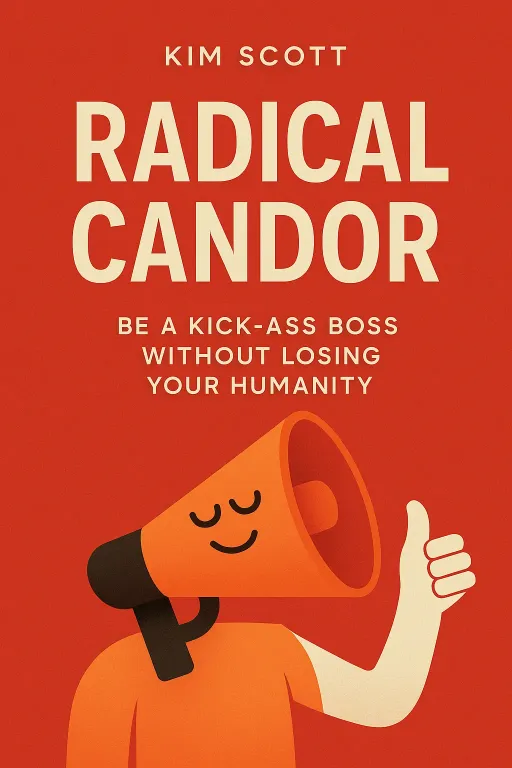
Nova: Ah, but that's the illusion, isn't it, Atlas? Keeping the 'peace' often means stifling growth and, ironically, breeding resentment under the surface. Today, we're diving into an incredibly powerful approach to team building, drawing insights from a book that truly gets to the heart of this: it's called.
Atlas: Interesting. "Radical Honesty" sounds intense. What's the core idea here?
Nova: Well, a huge part of it comes from the work of Kim Scott, an author who knows a thing or two about high-stakes environments. She literally built her framework for "Radical Candor" after her experiences as a successful executive at Google and Apple. She saw firsthand the damage done by both overly aggressive and overly empathetic, but ultimately unhelpful, feedback. Her journey was about finding that sweet spot, that practical middle ground.
Atlas: So, she's not just theorizing; she's been in the trenches, navigating those complex corporate dynamics. That immediately gives it more weight.
Nova: Absolutely. And her core insight is that you need a way to give feedback that truly helps, not just adds headcount but multiplies effectiveness.
The Power of Radical Honesty: Caring Personally While Challenging Directly
SECTION
Nova: Many leaders shy away from tough conversations, fearing conflict. But Scott argues that the most compassionate thing you can do for your team is to be brutally honest. She calls it 'Radical Candor,' which is about two things: 'Caring Personally' and 'Challenging Directly.' Imagine a leader who genuinely cares about their team member, not just as an employee but as a person. They want them to succeed, to grow.
Atlas: Okay, I can see the 'Caring Personally' part. That resonates with anyone trying to nurture potential within their team. But then you throw in 'Challenging Directly.' For someone in a high-pressure, strategic role, that can sound like a recipe for demotivation or even outright conflict. How do you balance that, Nova? Where's the line?
Nova: That's the crucial tension, isn't it? Let me give you a classic example that Scott herself often recounts. She once had a brilliant employee, a software engineer, let's call him 'Bob,' who was incredibly talented but often came across as arrogant in meetings, interrupting people and dismissing ideas. Scott, in her early leadership days, avoided giving him direct feedback because she liked him, she valued his talent, and she didn't want to hurt his feelings. She thought she was 'caring personally' by being 'nice.'
Atlas: Oh, I know that feeling. It's like you're trying to protect them, even from themselves.
Nova: Exactly. But what happened? Bob continued to alienate colleagues, hindering team collaboration. Eventually, his behavior became so problematic that despite his talent, Scott had to fire him. And as she was letting him go, Bob was genuinely shocked. He said, "Why didn't anyone tell me?" Scott realized her 'niceness' wasn't kind; it was cruel. She cared personally, but she failed to challenge directly. The outcome was painful for both, and the team suffered from the prolonged dysfunction.
Atlas: Wow, that's kind of heartbreaking. So, her mistake was not prioritizing his growth over her own discomfort. It makes me wonder, for a strategic innovator, how do you ensure 'challenging directly' doesn't just sound like aggression? How do you deliver that message of constructive criticism without it being perceived as a personal attack, especially when your team might be sensitive to critique after pouring their passion into a project?
Nova: It's all in the intent and the delivery, Atlas. When you truly care personally, your challenge comes from a place of wanting to help them improve, not to criticize for criticism's sake. It's about being specific with your feedback, focusing on the behavior, not the person, and making it clear you're on their side. Scott emphasizes that if you challenge directly without caring personally, you're just being obnoxious. But if you care personally without challenging directly, you're engaging in ruinous empathy, which was her 'Bob' situation. The sweet spot, the radical candor, is caring enough to be direct. It's about saying, "Because I respect you and believe in your potential, I need to tell you something that might be hard to hear, but it's essential for your growth."
Building Trust: Overcoming the Five Dysfunctions of a Team
SECTION
Nova: Radical candor is incredibly powerful, but it only truly thrives on a bedrock of trust. And that naturally leads us to the second key idea we need to talk about, which often acts as a counterpoint to what we just discussed: Patrick Lencioni's profound insights on team dynamics.
Atlas: Lencioni, the 'Five Dysfunctions of a Team' guy, right? So, if Scott is about how we talk, Lencioni is about the fundamental structure underneath that conversation?
Nova: Precisely. Lencioni identifies the root causes of team failure, and it all starts with an 'Absence of Trust.' Imagine a team where members are afraid to be vulnerable with each other. They're hesitant to admit mistakes, to ask for help, or to express genuine opinions.
Atlas: I’ve been thinking about this. In complex, rapidly evolving fields, isn't building deep personal trust a luxury? When the stakes are incredibly high and time is short, leaders are often focused on deliverables, not group therapy. How do you cultivate that foundational trust when there's so much pressure?
Nova: That's a critical question, and Lencioni would argue it's not a luxury; it's a necessity. The fear of vulnerability, this absence of trust, creates a cascade of dysfunctions. Because people don't trust each other enough to be vulnerable, they avoid 'Conflict.' They won't engage in passionate, unfiltered debate around ideas. Instead, they opt for artificial harmony.
Atlas: So, it's like a team where everyone nods in agreement in the meeting, but then they're all complaining about the decision in the hallway afterward?
Nova: Exactly! And that lack of healthy, constructive conflict then leads to a 'Lack of Commitment.' Without robust debate, people don't truly buy into decisions. They might feign agreement, but they won't truly commit because their voices weren't heard or respected.
Atlas: I can see how that would be a nightmare for a strategic innovator trying to get everyone aligned on a new direction. If people aren't truly committed, execution is going to be a mess.
Nova: Absolutely. And that lack of commitment then allows teams to 'Avoid Accountability.' If people haven't committed, they can't hold each other accountable for results. It becomes a blame game, or worse, a culture where mediocrity is tolerated. And finally, all these dysfunctions culminate in an 'Inattention to Results.' The team prioritizes individual agendas, ego, or departmental goals over the collective success.
Atlas: Wow, that's kind of sobering. So, it's a domino effect, starting with that initial fear of vulnerability. But for a nurturing guide, for someone who truly wants to foster potential, how do you even begin to build that vulnerability-based trust? It feels counterintuitive to project vulnerability when you're expected to be the confident leader.
Nova: Lencioni argues that the leader has to go first. They have to demonstrate vulnerability. Admitting a mistake, asking for help, acknowledging a weakness – these are acts of courage that signal to the team that it's safe to do the same. It's not about being weak; it's about being human and creating psychological safety. When team members see their leader being real, it gives them permission to lower their own guard. It's about moving from a culture where mistakes are hidden to one where they're discussed and learned from.
Synthesis & Takeaways
SECTION
Nova: So, when you put these two powerful ideas together – Kim Scott's Radical Candor and Patrick Lencioni's Five Dysfunctions – what emerges is a really profound insight. They're not just 'soft skills' for better team dynamics; they are strategic imperatives. Avoiding these tough conversations, sidestepping vulnerability, and neglecting trust has a tangible, negative impact on team performance, individual growth, and ultimately, the entire organization's ability to innovate and scale.
Atlas: That’s actually really inspiring. It frames courageous communication not as a burden, but as the ultimate accelerator for high-performing teams. It's about multiplying effectiveness, not just adding headcount. And for our listeners, especially those balancing ambition with empathy, what's a tiny, tangible step they can take this week to start building this culture?
Nova: That’s a perfect question to end on, Atlas. Our tiny step for this week is this: Identify one team member. Just one. And give them one piece of candid feedback. Focus on both care and directness. Make sure they know you're coming from a place of genuine support for their growth, while also being clear about the challenge. It’s about taking that first brave step towards a more honest, more effective team.
Atlas: That's an actionable challenge. It's about starting small, but with a mighty purpose.
Nova: Exactly. It's about transforming fear into a foundation for incredible growth.
Atlas: This is Aibrary. Congratulations on your growth!