Building Resilient Teams & Cultivating Coaching Excellence
Golden Hook & Introduction
SECTION
Nova: Most people think a strong team is built on clear objectives, brilliant individuals, and flawless execution. But what if the actual secret ingredient, the one thing that underpins all high-performing groups, is something far messier, far more uncomfortable, and ultimately, deeply human?
Atlas: Hold on. Messy, uncomfortable, human? That sounds less like a strategic playbook and more like… a family holiday dinner. Are you telling me the path to peak performance is actually through awkward conversations?
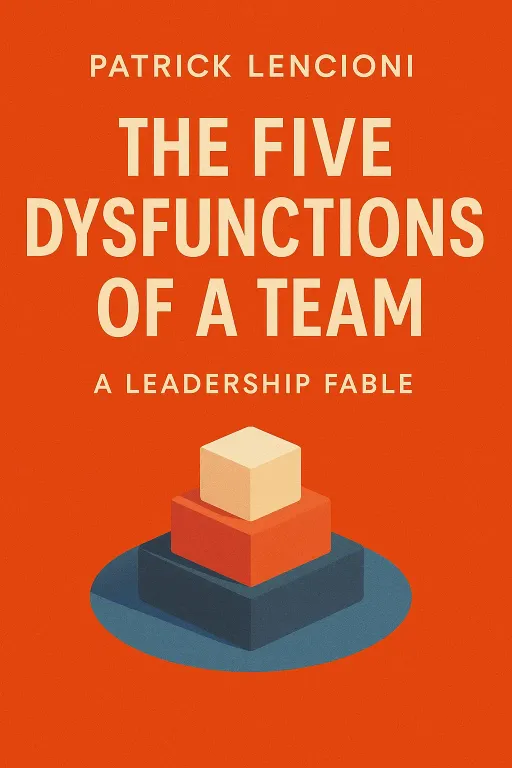
Nova: Exactly, Atlas! And it’s a revelation that underpins the work of two giants in the world of leadership and team dynamics. Today, we’re diving into the core ideas from Patrick Lencioni's seminal work, "The Five Dysfunctions of a Team." It’s a book that’s become a classic, widely adopted by organizations for its deceptively simple yet profoundly powerful framework for understanding why teams falter.
Atlas: Oh, Lencioni. His ideas are everywhere now, and for good reason. They cut right to the chase of what often goes wrong. But we're not stopping there, are we? Because building a healthy team is one thing, but then you need to actually those people.
Nova: Precisely. And that's where we bring in the legendary Bill Campbell, the "Trillion Dollar Coach," whose wisdom, captured in the book by Eric Schmidt, Jonathan Rosenberg, and Alan Eagle, influenced titans of Silicon Valley like Steve Jobs and Larry Page. Campbell was revered for his ability to coach leaders not by telling them what to do, but by asking powerful questions and fostering a culture of unwavering support and direct feedback. This book, released after his passing, finally pulled back the curtain on his methods, revealing the hidden wisdom behind some of the world's most innovative companies.
Atlas: A coach whose principles were so impactful they were literally worth a trillion dollars. That’s a serious legacy. So today, we're not just looking at makes a team work, but you cultivate the kind of leadership that helps those teams, and the individuals within them, truly thrive. It sounds like two sides of the same coin: the team's foundation and the leader's touch.
Building Foundational Team Resilience
SECTION
Nova: Absolutely. And Lencioni starts with a concept that, on the surface, sounds almost… soft. He says the fundamental dysfunction, the one that undermines everything else, is an Absence of Trust. He’s not talking about predicting someone’s behavior; he’s talking about something deeper: vulnerability-based trust.
Atlas: Vulnerability-based trust. That makes me wonder, for a strategic leader who’s constantly navigating high-stakes decisions and competitive environments, isn't being vulnerable seen as a weakness? How do you even begin to foster that kind of trust without feeling exposed or risking your authority?
Nova: That’s a brilliant question, Atlas, and it hits on the core challenge. Lencioni argues it’s not about emotional outpourings, but the willingness of team members to be transparent about their weaknesses, mistakes, and fears. It’s the belief that your colleagues have good intentions, and that you can be open with them without fear of retribution or judgment. Think of a team I once observed, let's call them the "Apex Innovators." They were brilliant, individually. Each person was a top performer in their field. But their meetings were eerily polite. No one ever challenged an idea, no one admitted they were struggling with a deadline, and certainly no one pointed out a potential flaw in the CEO's grand vision.
Atlas: Oh man, I’ve seen that movie before. Everyone's nodding, smiling, but you can almost hear the internal screaming. And the end result? Missed deadlines, diluted ideas, and a lot of passive aggression.
Nova: Exactly. Because without vulnerability-based trust, you can’t have the next crucial element: a Fear of Conflict. If you don't trust your teammates, you won't engage in healthy, ideological debate. You'll avoid difficult conversations, leading to artificial harmony. In the Apex Innovators’ case, their polite meetings meant critical issues were never debated. Decisions were made by consensus that wasn't genuine.
Atlas: So the "uncomfortable conflict" you mentioned earlier isn't about personal attacks, it’s about the honest, robust exchange of ideas that makes a team stronger. It's like sharpening a sword; you need friction to make it effective.
Nova: That’s a perfect analogy. And when you don't have healthy conflict, you get a Lack of Commitment. How can you commit to a decision if you haven't had the chance to voice your concerns or fully understand the rationale? The Apex Innovators would leave meetings with vague agreements, and then everyone would go back to their desks and do what they thought was best, often undermining the collective effort.
Atlas: Right, like that classic feeling of "I wasn't really bought into that, so I'll just half-heartedly implement it." And I imagine that leads directly to the next dysfunction.
Nova: It absolutely does. The Avoidance of Accountability. If there’s no clear commitment, how can you hold anyone accountable? Team members hesitate to call out their peers on non-performance, because they haven't genuinely committed to the plan themselves. And finally, all of this leads to Inattention to Results. Individual agendas, ego, or departmental goals take precedence over the collective success. The Apex Innovators were all chasing individual metrics, while the overall project floundered.
Atlas: It’s a domino effect, isn't it? One dysfunction inevitably triggers the next. For a leader focused on developing future leaders and strategic planning, it sounds like the first step isn't about grand vision, but about digging into the messy, human dynamics of the team itself. What's one practical step a leader can take to start building that vulnerability-based trust, especially if their team is already stuck in that polite, conflict-averse cycle?
Nova: A simple, yet powerful exercise Lencioni recommends is the "Personal Histories Exercise." During a team meeting, have everyone share three things: where they grew up, how many siblings they have, and their most challenging childhood experience. It sounds basic, but it allows team members to see each other as human beings with backgrounds and struggles, not just job titles. It opens a door to empathy, which is the bedrock of trust.
Cultivating Coaching Excellence & Unlocking Potential
SECTION
Nova: Once you have that healthy foundation, where trust allows for genuine conflict and commitment, how do you then individual growth and truly unlock the potential of your emerging leaders? This is where the wisdom of Bill Campbell, the Trillion Dollar Coach, becomes incredibly relevant.
Atlas: A "trillion-dollar coach." That sounds almost mythical, especially in a world often driven by hard metrics and immediate results. What made his approach so incredibly effective that it shaped entire generations of Silicon Valley leadership? Was he just exceptionally charismatic, or was there a deeper methodology at play?
Nova: That’s the key, Atlas. It wasn't just charisma, although he had plenty. His approach was deeply rooted in a profound belief in people and a few core principles. The authors of "Trillion Dollar Coach" reveal that Campbell built trust through unwavering support and genuine empathy, but he paired that with radical candor. He’d give incredibly direct, sometimes uncomfortable, feedback.
Atlas: So it’s not about being a guru who dispenses all the answers, but being a guide who helps others find their own. But how do you give without eroding the trust you've worked so hard to build, especially to an emerging leader who might be sensitive to criticism? That feels like a tightrope walk for someone trying to develop future leaders.
Nova: It absolutely is a tightrope, but Campbell mastered it by operating from a place of "caring personally, challenging directly." He made it clear he was in your corner, that he believed in your potential, but he wouldn't let you settle for less than your best. He once coached a CEO who was struggling to deliver tough news to a product team about a necessary pivot. The CEO was delaying, trying to soften the blow. Campbell didn't tell him to say. Instead, he asked: "What’s the worst thing that could happen if you tell them the truth, directly and with empathy? And what’s the worst that could happen if you?"
Atlas: That’s powerful. It forces the leader to confront their own fears and the real consequences of inaction, rather than just getting a pre-packaged solution. It shifts the responsibility for the solution back to the person being coached.
Nova: Exactly. Campbell also emphasized fostering courage. He pushed leaders to make tough decisions, to take risks, and to learn from failure, always with the understanding that he was there to support them. And crucially, he always prioritized the team. He’d remind leaders that their job was not just to manage, but to develop the people reporting to them, to ensure the team’s collective success over any individual’s ego.
Atlas: So, it's about building a culture where people feel safe enough to be vulnerable, know they'll get honest feedback, and are empowered to take risks, all while keeping the collective goal in sight. It sounds like Campbell’s approach actually reinforces Lencioni’s pyramid. If you have trust, you can give direct feedback. If you have direct feedback, you can challenge effectively, and that builds commitment and accountability.
Nova: Precisely! They are two sides of the same coin. Lencioni gives us the framework for a healthy team structure, and Campbell provides the coaching mindset that breathes life and growth into that structure. One creates the fertile ground, the other plants the seeds and nurtures them.
Synthesis & Takeaways
SECTION
Nova: So, bringing it all together, we're talking about a holistic approach to leadership. It’s about building an environment where vulnerability isn't a weakness but a strength, where conflict is productive, and where commitment and accountability drive results.
Atlas: And then, within that incredibly healthy environment, you have leaders who aren't just managers, but true coaches. They're not just delegating tasks; they're asking the powerful questions that unlock individual potential, pushing people to be courageous, and always prioritizing the team. It’s about creating psychological safety AND pushing people to be their best. It's not one or the other, it's both.
Nova: It’s the ultimate synergy for any visionary leader, strategic navigator, or empathetic catalyst listening today. How can you proactively address the foundational dysfunctions within your team to create an environment ripe for growth, while simultaneously adopting a coaching mindset to unlock the individual potential of your emerging leaders?
Atlas: That's a question that fundamentally shifts how we think about leadership. It moves from simply managing tasks to actively nurturing human potential. It’s a journey, not a destination.
Nova: Indeed. And it’s a journey worth embarking on, one difficult conversation, one powerful question, and one act of vulnerability at a time.
Atlas: Absolutely.
Nova: This is Aibrary. Congratulations on your growth!