

Beyond the Org Chart: Cultivating High-Performance Teams as a Leader
Golden Hook & Introduction
SECTION
Nova: What if I told you that most high-potential teams fail, not because they lack talent or smarts, but because of something far more insidious, something you might be overlooking in your own organization?
Atlas: Whoa, insidious? That's a strong word, Nova. Most leaders I know are obsessed with hiring the best and brightest. Are you saying we're focusing on the wrong thing?
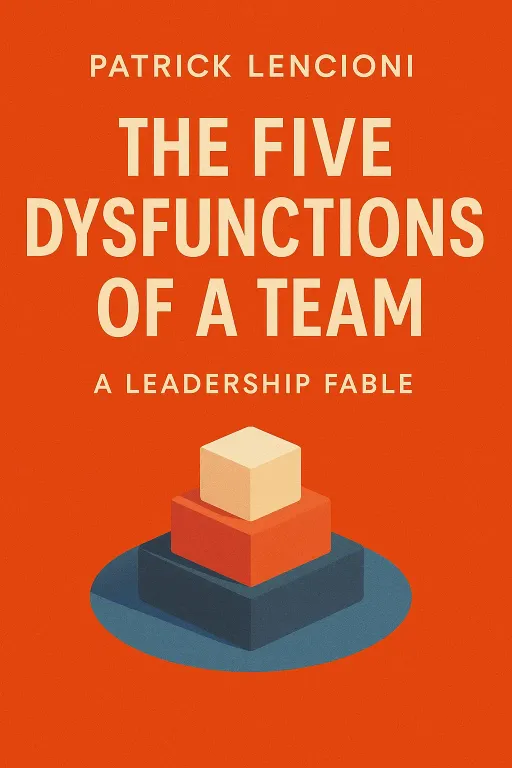
Nova: Absolutely. The cold, hard fact is that a team's performance often suffers not from a lack of skill, but from unresolved interpersonal issues. It's the human element, the messy, complex relationships that can either elevate or absolutely torpedo collective goals. Today, we're diving into two brilliant minds who cracked this code: Patrick Lencioni, with his foundational work, "The Five Dysfunctions of a Team," and Kim Scott, who gave us the incredibly practical framework of "Radical Candor."
Atlas: So, we're talking about the invisible strings that pull a team apart, or hold it together? Lencioni's known for those business fables, right? He makes complex ideas so accessible. And Scott, she's from the high-stakes world of Google and Apple, so her insights come from environments where performance is everything.
Nova: Exactly! Lencioni distills complex organizational behavior into these compelling, relatable narratives that have become a staple in leadership development. And Scott's philosophy was honed in those intense, high-performance tech environments, bringing a very real, practical edge to her work. It's about bridging the gap between theory and real-world impact.
Atlas: That makes perfect sense. I've seen incredibly talented groups just... fizzle, and it's always felt like there was an unspoken undercurrent sabotaging them. I'm curious to unmask these invisible barriers.
Unmasking the Invisible Barriers: Lencioni's Five Dysfunctions
SECTION
Nova: Well, Lencioni brilliantly lays out five specific dysfunctions that create this undercurrent. He starts with the absolute bedrock: the absence of trust.
Atlas: Absence of trust. I guess that makes sense, but what does that really look like in a team? Isn't trusting someone just about them being reliable? What's this 'vulnerability' talk Lencioni brings up?
Nova: It's deeper than just reliability, Atlas. Lencioni talks about vulnerability-based trust. It's the willingness of team members to be completely open with one another about their weaknesses, mistakes, and fears. Imagine a team where people are afraid to admit when they don't know something, or when they've made an error. They put up a front.
Atlas: Oh, I know that feeling. It creates this artificial sense of perfection, where everyone's walking on eggshells. So, if you don't trust each other enough to be vulnerable, what happens next?
Nova: You get the second dysfunction: fear of conflict. Because if you can't be vulnerable, you certainly can't engage in passionate, unfiltered debate around important issues. You avoid the tough conversations, which leads to artificial harmony. Everyone nods along, but deep down, resentments fester, and the best ideas never see the light of day.
Atlas: So, fear of conflict isn't just about yelling; it's about avoiding the necessary friction that sparks innovation and progress. That sounds incredibly common. And then, I'm guessing, comes a lack of commitment?
Nova: Precisely. When there's no healthy conflict, there's no real buy-in. Decisions are made without robust debate, leading to ambiguity and a lack of genuine commitment. People might verbally agree, but if they haven't truly weighed in, they won't truly commit. They'll hedge their bets.
Atlas: But how does a leader get commitment when people have different opinions? Is it just about forcing consensus, or is there something more nuanced?
Nova: It's absolutely more nuanced. Commitment isn't about everyone agreeing with a decision, but everyone committing to on it, even if they initially disagreed. It requires clarity and buy-in for the decision itself. And this naturally leads us to the fourth dysfunction: avoidance of accountability.
Atlas: Ah, the tough one. Nobody wants to be the 'tattletale' or the 'bad cop' among peers. How do you create a culture where accountability isn't seen as punitive or gossipy?
Nova: It's about peer-to-peer accountability, where team members hold each other to high standards because they're all genuinely invested in the team's success. If there's no commitment, there's no incentive to hold others accountable. And finally, all these dysfunctions culminate in the fifth: inattention to results.
Atlas: So, individual status or departmental silos become more important than the collective success of the entire team. It's a cascade, isn't it? One dysfunction feeds the next, slowly eroding the team's ability to perform.
The Art of Constructive Connection: Radical Candor in Action
SECTION
Nova: It is. So, if Lencioni brilliantly diagnoses the illness, Kim Scott offers a powerful prescription for recovery with "Radical Candor." It's about balancing two critical dimensions.
Atlas: Balancing what? I’ve heard 'candor' can just mean being a jerk, or giving brutal feedback without much thought.
Nova: That's a common misconception! Radical Candor is about balancing "Caring Personally" with "Challenging Directly." Imagine a leader who genuinely cares about an employee as a human being, understands their aspirations, and offers support. But that same leader also gives incredibly direct, even tough, feedback when performance isn't up to par.
Atlas: So it's not just about being 'nice,' but about being truly helpful, even if it's uncomfortable? How does this build trust, that fundamental layer Lencioni talked about?
Nova: Exactly. When you challenge directly you care personally, you build a profound level of trust. It shows you're invested in their growth and success, not just their immediate output. It's the opposite of "ruinous empathy," where you're nice to avoid discomfort but allow someone to fail. And it's also the opposite of "obnoxious aggression," where you challenge directly without caring, which just makes you a jerk.
Atlas: That makes sense. It sounds like it cultivates a psychological safety net, allowing for productive conflict rather than avoidance. If I know my leader genuinely has my back, I'm more likely to hear tough feedback and engage in a healthy debate. It’s about creating an environment where people feel safe enough to be vulnerable, to engage in conflict, to commit, to hold each other accountable, and ultimately, to focus on results.
Nova: Precisely. Radical Candor is a practical tool that helps leaders actively cultivate the conditions that overcome Lencioni's dysfunctions. It's how you build a team environment where trust thrives, conflicts are productive, and everyone is committed to shared success.
Atlas: That's a powerful framework. What's the tiny step a leader can take right now to start implementing this, to really see where they stand?
Synthesis & Takeaways
SECTION
Nova: A great tiny step, right out of the content, is to think about your current team. Which of Lencioni's five dysfunctions might be subtly impacting your team's effectiveness right now? Just identifying it is the first crucial move.
Atlas: That's a very practical question. It’s about looking beyond the surface, beyond the org chart, and really understanding the human behavior at play. It's not just about managing tasks; it's about leading people, fostering an environment where they can truly excel.
Nova: Exactly. These insights allow you to build a team environment where trust thrives, conflicts are productive, and everyone is committed to shared success. Cultivating high-performance teams is a journey, not a destination. It requires constant attention, intentional leadership, and a deep understanding of human dynamics.
Atlas: And it sounds like it's a journey well worth taking for any leader who wants to make a significant mark. It's about creating a legacy of impact, not just hitting quarterly numbers.
Nova: Absolutely. The leader's role in shaping that culture is paramount. It’s not just about what you do, but how you enable others to do their best work together.
Atlas: This has been incredibly insightful. For everyone listening, take that tiny step. Reflect on your team. You might uncover the key to unlocking its full potential. We'd love to hear what dysfunctions you identify or how you've applied these concepts in your own teams.
Nova: This is Aibrary. Congratulations on your growth!









