

Beyond the Org Chart: Cultivating High-Performance Teams as a Leader
Golden Hook & Introduction
SECTION
Nova: What if your team's biggest problem isn't a lack of talent or resources, but something far more insidious, lurking beneath the surface of every meeting and project? Something you, as a leader, might be inadvertently fostering?
Atlas: Whoa, Nova, that's quite the opening. I think a lot of our listeners, especially those driving strategic initiatives, immediately jump to skill gaps or budget constraints when performance lags. Are you saying it's... deeper than that?
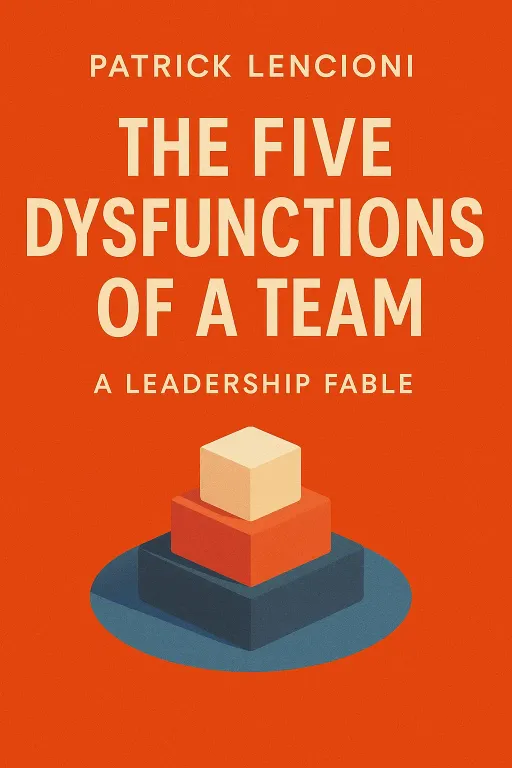
Nova: Absolutely, Atlas. It's often profoundly deeper. We're talking about the invisible strings of human interaction, the unwritten rules, and the unspoken tensions that can sabotage even the most brilliant individuals working together. Today, we're diving into a crucial leadership concept, inspired by foundational works like "The Five Dysfunctions of a Team" by Patrick Lencioni and "Radical Candor" by Kim Scott. These aren't just management theories; they're blueprints for understanding why brilliant people often fail to perform brilliantly together, and what to do about it.
Atlas: That's a powerful statement. For a leader who's all about impact and driving results, ignoring these 'invisible strings' seems like a huge blind spot. But how do you even begin to these hidden issues when everyone's just trying to hit their targets?
The Hidden Iceberg: Diagnosing Team Dysfunctions
SECTION
Nova: That's precisely where Lencioni's work becomes invaluable. He gives us a diagnostic tool, a pyramid of what he calls the "Five Dysfunctions." And they're built one upon the other, meaning if the base is shaky, everything above it crumbles.
Atlas: Okay, so what's at the very bottom of this pyramid, the absolute foundation?
Nova: It's the "Absence of Trust." This isn't about whether you trust someone to do their job, but whether team members feel safe enough to be vulnerable with each other. Can they admit mistakes, ask for help, or share their weaknesses without fear of retribution or judgment?
Atlas: That makes me wonder, a lot of high-stakes environments, especially in fast-paced innovation, can feel pretty cutthroat. Is it even realistic to expect that level of vulnerability? I imagine many leaders would see that as a sign of weakness.
Nova: That's a common misconception, but Lencioni argues it's the bedrock of a truly resilient team. Without trust, you get the next dysfunction: "Fear of Conflict." When people don't trust each other, they're unwilling to engage in passionate, unfiltered debate around important issues. They'd rather maintain artificial harmony than have a productive disagreement.
Atlas: So, it's not that conflict is inherently bad, but that a of it leads to problems? I guess that makes sense – if you can't challenge ideas, you can't innovate effectively. You just get 'yes-men' or silent resentment.
Nova: Exactly. And that leads directly to the third dysfunction: "Lack of Commitment." If people haven't openly debated and bought into decisions, they rarely commit to those decisions wholeheartedly. They might nod along in a meeting, but their follow-through in action will be lukewarm at best.
Atlas: I’ve been there. You leave a meeting thinking everyone's on board, then weeks later, nothing's moved because people weren't really committed. It's frustrating for an impact driver.
Nova: It absolutely is. And that lack of commitment then fuels the "Avoidance of Accountability." If team members aren't committed to a clear plan, they're not going to hold each other accountable for delivering on it. They'll avoid difficult conversations about underperformance, leading to lowered standards.
Atlas: That sounds rough, but it makes perfect logical sense. It’s like a domino effect. And the final piece?
Nova: The capstone, and the ultimate result of all these dysfunctions, is "Inattention to Results." When there's no trust, no healthy conflict, no genuine commitment, and no accountability, the team's focus shifts from collective results to individual status or departmental goals. The big picture gets lost.
Atlas: So, basically, a team can have all the right pieces, all the skilled individuals, but if that interpersonal foundation is crumbling, they're never going to build anything truly great. It's like trying to build a skyscraper on quicksand.
Radical Candor: Building High-Performance Through Honest Feedback and Trust
SECTION
Nova: A perfect analogy, Atlas. And understanding that problem isn't enough; we need solutions. This is where Kim Scott's "Radical Candor" steps in as a powerful antidote to those dysfunctions.
Atlas: "Radical Candor" sounds great, but how do you implement it without just being a jerk? Especially for leaders who need to drive results but also maintain morale and keep their best people. It sounds like a tightrope walk.
Nova: It absolutely is a tightrope walk, but it's a necessary one. Radical Candor is about balancing two crucial elements: "Caring Personally" and "Challenging Directly." It's not about being blunt for the sake of it; it's about caring enough about someone's long-term success and well-being to tell them something difficult in the short term.
Atlas: Okay, so it’s not just about brutal honesty, it's honesty rooted in genuine care. That changes the dynamic significantly. Can you give an example of how this plays out?
Nova: Think of it this way: imagine a team member who is brilliant but consistently misses deadlines.
Atlas: I know that feeling. It's tough to have those conversations, so you rationalize away the problem until it's too big to ignore.
Nova: Exactly. Conversely, if a leader but, that's "Obnoxious Aggression." They might chew the person out publicly, leaving them demoralized and defensive. It gets results in the short term but destroys trust and morale.
Atlas: So, Radical Candor is the sweet spot where you care enough about the person to give them the tough feedback, but you also challenge them directly on their performance. It's like being a coach who believes in their athlete but isn't afraid to push them hard.
Nova: Precisely. It builds trust because people know you have their best interests at heart, even when the message is hard to hear. And that trust, in turn, allows for healthy conflict, genuine commitment, clear accountability, and ultimately, a focus on collective results. It breaks down Lencioni's dysfunctions by actively fostering their antidotes.
Atlas: That's a perfect connection. So, for a leader trying to foster this culture of radical candor, where do they even start? How do they build that initial trust enough to even begin challenging directly? It feels like a chicken-and-egg problem.
Nova: It starts small, Atlas. It begins with asking for feedback as a leader, demonstrating vulnerability yourself. "What could I do better?" And then, without getting defensive. Show, don't just tell, that caring personally means you're invested in everyone's growth, including your own. It's a continuous process, not a one-time event.
Synthesis & Takeaways
SECTION
Nova: When you connect Lencioni's work on team dysfunctions with Scott's framework for Radical Candor, you see a powerful blueprint emerge. It's about moving beyond simply managing tasks and truly leading people. It's understanding that the human element isn't a soft skill; it's the hard core of high performance.
Atlas: That’s such a powerful reframe. It makes you realize that as leaders, we're not just organizing boxes on an org chart; we're cultivating an ecosystem. And the health of that ecosystem directly dictates the results we achieve. It demands intentionality, not just reactivity.
Nova: Absolutely. It's about recognizing that innovation and collective goals are often derailed not by a lack of individual brilliance, but by the subtle, unresolved interpersonal issues that fester beneath the surface. Leaders who pay attention to these dynamics, who actively build cultures of trust and honest feedback, are the ones who truly future-proof their teams.
Atlas: So, what's a tiny step a leader can take today? Something tangible to start applying this wisdom?
Nova: Think about your current team. Which of Lencioni's five dysfunctions might be subtly impacting your team's effectiveness right now? Just identifying one is a massive step. Is it the quiet avoidance of conflict? The lack of full commitment? The reluctance to hold each other accountable? Awareness is the first step toward transformation.
Atlas: That's a brilliant challenge. It takes these complex ideas and grounds them in immediate self-reflection. Because if you want to make a significant mark, you have to start by understanding the ground you're standing on.
Nova: And that understanding, that journey, is what leadership is all about. This is Aibrary. Congratulations on your growth!









