The Ethical Trap: Why 'Good Intentions' Aren't Enough for Lasting Impact
Golden Hook & Introduction
SECTION
Nova: Everyone talks about "the road to hell is paved with good intentions," right? But what if those good intentions are actually the? What if trying to do good, without really understanding the whole picture, is precisely what sets us up for failure?
Atlas: Whoa. That's a provocative thought. We're often taught that as long as your heart's in the right place, everything will work out. You’re saying that’s not just naive, it’s potentially destructive?
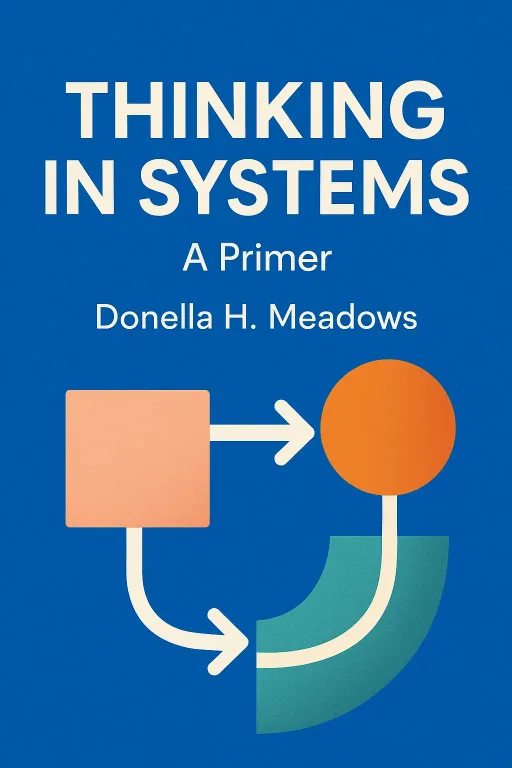
Nova: Precisely. Today, we’re diving into the ethical quagmire of that very idea, exploring why 'Good Intentions' Aren't Enough for Lasting Impact. And to guide us, we’re drawing wisdom from two foundational texts: Donella H. Meadows’ "Thinking in Systems" and Peter M. Senge’s "The Fifth Discipline." Meadows, in particular, was a pioneering environmental scientist and systems analyst. Her unique background gave her this incredible lens to look at global challenges, making her work absolutely foundational for understanding how everything is connected.
Atlas: That’s a powerful starting point. It makes me wonder, given her background, she must have seen countless examples of well-meaning initiatives creating chaos.
Nova: Absolutely. And that observation leads us directly into what we call "The Blind Spot."
The Blind Spot: Why Good Intentions Go Awry
SECTION
Nova: The blind spot is this insidious trap where we focus so intensely on an isolated problem that we completely miss the larger, interconnected patterns at play. It’s like trying to fix a leaky faucet by just patching the drip, without realizing the entire plumbing system is corroding.
Atlas: Oh, I get that. So, when we're trying to build something ethically, how do we even begin to spot this blind spot before we accidentally create more problems than we solve?
Nova: It often begins with a linear cause-and-effect mindset. We see a problem, identify a seemingly logical solution, implement it, and then pat ourselves on the back for the immediate, visible improvement. But the system, the larger context, has other plans.
Atlas: Give me an example. Something vivid that really paints this picture of good intentions gone sideways.
Nova: Think about well-meaning aid in developing countries. There’s a powerful desire to help, to alleviate immediate suffering. So, people donate mountains of used clothing. Sounds wonderfully charitable, right? Free clothes for those in need.
Atlas: Absolutely. On the surface, that’s pure altruism.
Nova: But here’s the rub. Those free clothes flood the local markets. They’re so cheap, often free, that local textile manufacturers, tailors, and garment sellers can’t compete. Their businesses collapse. People lose jobs. The very communities you intended to help by providing clothes now have a devastated local economy, making them dependent on external aid.
Atlas: Whoa. That’s devastatingly counterintuitive. It sounds like we're so eager to help, we forget to ask if our 'help' is actually making things worse in the long run. The immediate relief blinds us to the long-term systemic damage.
Nova: Exactly. The cause was a desire to help; the process was a direct, linear intervention; the outcome was systemic harm to an entire industry. Another classic is free food aid that, while stopping starvation in the short term, can decimate local farming communities by making their produce unsellable.
Atlas: That sounds rough. But in the real world, especially for those driven by impact—people striving to build sustainable systems, for example—isn't there immense pressure to show immediate, tangible results? How do you convince people, or even yourself, to slow down and look at the whole system when there's an urgent problem right in front of you?
Nova: That’s the core challenge, Atlas. The satisfaction of immediate results is incredibly seductive. It’s a powerful feedback loop. But Meadows and Senge argue that ethical leadership requires moving beyond that linear thinking, to embrace the dynamic, feedback-rich nature of the world. It’s about understanding that those quick fixes often just shift the problem elsewhere, or create new ones down the line.
Thinking in Systems: Unlocking Lasting Ethical Impact
SECTION
Nova: And that pressure to show immediate results is precisely what Meadows and Senge challenge us on. It leads us straight into the power of 'thinking in systems.' Instead of patching the leak, you understand the entire water network. Meadows' great contribution was the idea of "leverage points" – these aren't about big, dramatic interventions, but finding the right tiny tweak in a system that can produce massive, positive results.
Atlas: Leverage points? So it's not about pouring more resources into a problem, but about finding the right, often subtle, place to push that creates a ripple effect? Like acupuncture for a complex system?
Nova: That’s a fantastic analogy! It’s about understanding the system's structure, its flows, its feedback loops. It's about seeing the "dance" of the system, as Meadows would say, rather than just isolated snapshots. A small change in a leverage point can transform the entire dynamic.
Atlas: Can you give me an example of how this plays out in a more organizational context? How does this type of thinking truly unlock lasting impact, rather than just patching things up?
Nova: Absolutely. Consider a large manufacturing company that was struggling with efficiency. Each department—production, sales, logistics—was optimized for its own metrics. Production focused on output, sales on volume, logistics on cost per delivery. Sounds logical, right? But the overall company performance was stagnating.
Atlas: I can see how that happens. Everyone's doing their best, but they're not necessarily working in the most effective way.
Nova: Exactly. They were operating with a linear mindset within their silos. Then, inspired by Senge’s work on learning organizations and shared vision, they shifted to a systemic approach. Instead of optimizing individual departments, they focused on optimizing the to the customer across all departments. They created cross-functional teams, shared information freely, and incentivized collaboration over individual departmental wins.
Atlas: So they literally changed the mental model from "my department's success" to "our customer's success."
Nova: Precisely! The results were transformative. Waste dramatically reduced, innovation accelerated because ideas flowed freely, and employee satisfaction soared because people felt part of a larger, meaningful whole. They didn't just fix symptoms; they redesigned the system for inherent efficiency and collaboration. Senge emphasizes that true learning and sustained ethical practice come from understanding these systemic structures, fostering a shared vision, and challenging those ingrained mental models.
Atlas: This is fascinating. For ethical builders, who are always looking for sustainable systems, this feels like the holy grail. But how do you actually that kind of shared vision and challenge mental models in a team that's used to just hitting individual targets? That’s a huge cultural shift.
Nova: It absolutely is. It requires what Senge calls "personal mastery" and "mental models" as disciplines. It's not a one-time fix but a continuous process of learning, questioning assumptions, and collectively building a deeper understanding of how the system works. It's about moving from "I know the answer" to "Let's explore this together." It's hard, but the impact is profound and enduring.
Synthesis & Takeaways
SECTION
Nova: So, what we’ve really been exploring today is this fundamental shift. It’s moving from the immediate gratification of fixing a single problem to the deeper, more complex, but ultimately more rewarding work of understanding the entire system. True ethical impact, the kind that lasts, comes from seeing these dynamic, feedback-rich patterns, rather than just patching symptoms.
Atlas: It makes me think about that deep question from our content: Where in our current work might a focus on isolated problems be preventing us from seeing a larger, systemic solution? It feels like the real work isn’t just to do good, but to understand good truly happens, and to have the courage to look beyond the obvious.
Nova: It’s about embracing complexity, isn't it? And trusting that by understanding the whole, our smaller, more targeted actions can have exponential, positive effects. It truly is about shifting our mental models.
Atlas: Absolutely. And that’s a challenge I think many of our listeners, especially those driven by deep impact, will resonate with. It’s a call to pause, to observe, and to think differently about how we build and contribute.
Nova: A powerful call indeed. Thank you for joining us on this journey into systemic thinking.
Atlas: It was incredibly insightful, Nova.
Nova: This is Aibrary. Congratulations on your growth!