Stop Guessing, Start Structuring: The Guide to Actionable Problem-Solving.
Golden Hook & Introduction
SECTION
Nova: You know that feeling, Atlas? That relentless cycle where you're constantly putting out fires, solving the same problems over and over again, and you just feel like you're running in place?
Atlas: Oh, I know that feeling. It’s like trying to bail water out of a leaky boat with a teacup, and not realizing there’s a gaping hole in the hull. You just keep bailing faster.
Nova: Exactly! And that's precisely the trap we often fall into when it comes to problem-solving. We tackle symptoms, not root causes. But what if I told you the problem isn't that you're not working hard enough, but that you're looking at the problem entirely wrong?
Atlas: That sounds like a relief, frankly. I imagine a lot of our listeners feel that constant pressure. So, what's the secret to breaking that cycle?
Nova: Well, today we’re diving into a powerful framework that helps us do just that, drawing on the wisdom encapsulated in the guide, "Stop Guessing, Start Structuring: The Guide to Actionable Problem-Solving." This approach, profoundly influenced by thinkers like Donella H. Meadows and Peter Senge, promises to fundamentally shift your focus from merely reacting to building lasting solutions. It’s about moving beyond those reactive fixes to create impact that truly sticks.
Atlas: Okay, so it’s not just theory; it’s about actionable, lasting change. I’m curious, how exactly do these insights help us achieve that?
The Power of Systems Thinking: Seeing the Whole Picture
SECTION
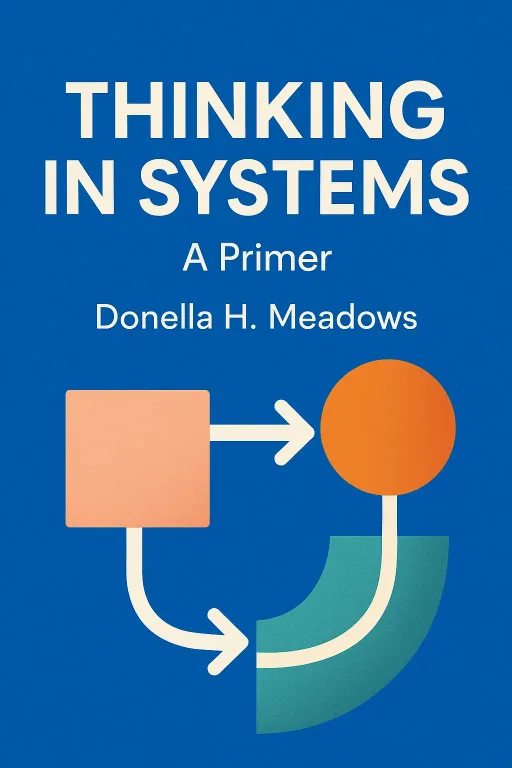
Nova: It all starts with what Donella H. Meadows called "Thinking in Systems." Imagine a complex machine, like a car engine. If a light comes on, you could just replace the bulb. But systems thinking asks: Why did the bulb burn out? Is it a faulty wire? An alternator issue? A deeper problem in the electrical system? It’s about seeing the interconnectedness, not just the isolated event.
Atlas: That makes sense. But how does "seeing the whole picture" actually help someone facing a deadline or a budget cut? It sounds a bit academic when you're in the trenches.
Nova: That’s the beauty of it. Systems thinking helps you identify what Meadows called "leverage points." Think of it like a massive see-saw. Instead of trying to push up the heavy side with brute force, you find the fulcrum – that tiny point where a small force can create a massive movement.
Atlas: Oh, I like that. So it’s about finding the strategic spot. Can you give me a common, everyday example where this reveals itself?
Nova: Of course. Let's take a recurring customer service issue. Many businesses might respond by just telling their customer service reps to "be nicer" or "work faster." That’s a symptom fix. A systems thinker would ask: What are the inputs to this problem? Is it a confusing product design that’s generating frequent questions? Is it marketing promising things the product can’t deliver? Is there a broken feedback loop where customer complaints aren't reaching the product development team?
Atlas: So it’s about questioning the entire chain, not just the last link. I imagine this approach could uncover some surprising culprits. Can you give me an example where a tiny shift created a massive, almost counter-intuitive impact that way?
Nova: Absolutely. I heard a story about a large manufacturing plant that was plagued by persistent quality control issues. They were constantly increasing the number of inspectors, adding more checks, but defects kept slipping through. It was a classic "bailing with a teacup" scenario.
Atlas: Sounds incredibly frustrating and expensive.
Nova: Exactly. But then a systems thinker came in. They realized the problem wasn't the inspectors; it was the feedback loop. The design engineers weren't getting clear, timely information about certain parts were failing on the assembly line. The data existed, but it was siloed.
Atlas: So the designers were essentially operating in a vacuum.
Nova: Precisely. By simply creating a direct, efficient communication channel between the assembly line and the design team, allowing for rapid iteration and adjustment, defects plummeted by 30% within a few months. It wasn't about working harder or hiring more people; it was about understanding and fixing a broken loop within the system. That’s a leverage point in action.
Atlas: Wow. So it's about understanding the 'why' behind the 'what,' and then finding the one pressure point that changes everything. That’s incredibly powerful for anyone trying to build something that lasts.
The Learning Organization: Fostering Collective Intelligence
SECTION
Nova: That's spot on. And that deep dive into interconnectedness naturally leads us to Peter Senge's work in "The Fifth Discipline," which takes that systems view and applies it to how and learn and solve problems together.
Atlas: Okay, 'learning organizations' sounds like a corporate buzzword that might be thrown around a lot. What does Senge mean by it, and how does it prevent us from just repeating the same mistakes, especially in a team setting?
Nova: It’s about more than just individuals learning. Senge argues that real learning, the kind that leads to lasting solutions, happens when a group develops "shared mental models." It’s about moving beyond individual perspectives – where everyone has their own piece of the puzzle – to a collective understanding of reality, where everyone sees the puzzle.
Atlas: So it's not just about individuals being smart, but the evolving their understanding? That sounds incredibly powerful, especially for high-stakes projects where collaboration is key. Can you give us an example of where this collective intelligence really made a difference, beyond just a theory?
Nova: Consider a hospital emergency room. Individual doctors and nurses are brilliant, highly skilled professionals. But if the patient flow is chaotic, if communication breaks down between departments, wait times soar, and staff burnout becomes endemic. The problem isn't the individuals; it's the lack of a cohesive, learning system.
Atlas: I can definitely relate to that. A lot of our listeners are in high-pressure environments where individual excellence often gets swallowed by systemic breakdowns.
Nova: Exactly. In one hospital, by adopting Senge's principles, they started holding regular, open dialogues involving – from receptionists to surgeons, even cleaning staff. Each person shared their unique perspective on patient bottlenecks. They weren't blaming; they were collectively mapping the system.
Atlas: And what did they find?
Nova: They collaboratively identified a key leverage point: the patient discharge process. It was slow and inefficient, creating a backlog that rippled through the entire ER. By redesigning that single process, not just by one department, but with collective input, they reduced average wait times by 20% and significantly improved staff morale. It was a testament to collective intelligence, where the sum was truly greater than its parts because everyone understood the whole system.
Atlas: That’s incredible. It’s like everyone suddenly gets a clearer map, and they're all drawing on it together, constantly improving it. It shows how much potential is unlocked when you move past individual silos.
Synthesis & Takeaways
SECTION
Nova: Precisely. When you combine Donella Meadows' "Thinking in Systems" with Peter Senge's "The Fifth Discipline," you get an incredibly potent toolkit. Systems thinking shows you to push – those leverage points – and the learning organization provides the and shared understanding to push effectively. It's about moving from frantic, often futile activity, to strategic, impactful action.
Atlas: This really resonates with anyone who wants to make a real, lasting impact, not just superficial changes. It’s about being an architect of solutions, not just a firefighter. So, for our listeners who are ready to stop guessing and start structuring, what's one tiny, tangible step they can take this week to begin applying this?
Nova: The simplest, yet most profound step is to pick just recurring problem you face this week. It could be anything, from a personal habit to a team challenge. Then, instead of jumping to a solution, map out its inputs, its outputs, and any feedback loops you can identify. Even a simple drawing on a napkin can reveal hidden connections and potential leverage points you never saw before.
Atlas: That’s a tangible challenge. It forces you to look beyond the surface and ask those deeper questions. I imagine a lot of our listeners, the strategists and builders among them, will appreciate that immediate focus on structure and impact.
Nova: Absolutely. It's about empowering yourself and your teams to be true architects of change, not just responders to chaos. It's about building lasting solutions that truly transform.
Atlas: Powerful stuff today, Nova. Thanks for helping us see the structure beneath the surface.
Nova: Always a pleasure, Atlas.