The Power of Psychological Safety: Unleashing Team Potential
Golden Hook & Introduction
SECTION
Nova: Atlas, quick game. Imagine you're leading a super-secret, high-stakes project. What's the absolute last thing you want to hear from your team?
Atlas: Oh, easy. “Uh, we’ve been pretending to understand the instructions for six months.” Or, “I accidentally deleted the entire project database, but didn’t say anything because I didn’t want to look stupid.”
Nova: Exactly! That gut-punch moment where you realize a crucial problem has been festering in silence. That's precisely what we're tackling today, and it's far more common than most leaders would admit.
Atlas: Oh, I totally know that feeling. For anyone who's ever led a team, big or small, the idea of someone holding back critical information because they're scared of the fallout… that’s a nightmare. It makes me wonder, how much innovation or problem-solving capability is just… locked away in people’s heads?
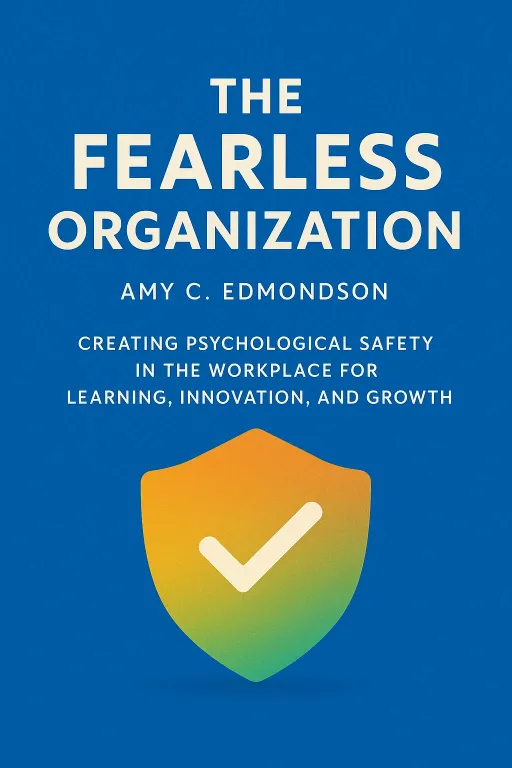
Nova: A staggering amount, it turns out. And that’s why we need to talk about two foundational books today: Amy C. Edmondson's "The Fearless Organization" and General Stanley McChrystal's "Team of Teams." Edmondson, a Harvard professor, basically coined the term 'psychological safety' and brought it into mainstream organizational thought, after her initial research on medical teams showed a counter-intuitive finding: the best teams reported errors, not fewer. It completely upended how we think about mistakes and transparency.
Atlas: That’s fascinating! So, it wasn't that they were making more mistakes, but that they felt safe enough to admit them? That's a huge distinction.
Nova: Precisely. And McChrystal, a four-star general, then showed how this kind of culture, where trust and transparency are paramount, was essential for the US military to adapt and overcome a decentralized, agile enemy. His career pivoted from traditional command to empowering small teams, which was a radical departure for the military. These aren’t just academic theories; they're proven strategies for survival and success in the most demanding environments.
The Foundation of Psychological Safety
SECTION
Nova: So, let's dive into Edmondson's core concept: psychological safety. It's not about being 'nice' or lowering performance standards, which is a common misconception. It's about creating an environment where people feel safe to speak up, ask questions, admit mistakes, and offer dissenting opinions without fear of punishment or humiliation.
Atlas: Okay, so you’re saying it’s not about coddling people, but about fostering a climate of candor? That sounds a bit out there for some traditional workplaces where admitting a mistake can feel like career suicide.
Nova: Exactly! Think of it like this: if you're in a high-stakes meeting and you see a potential flaw in a plan, but you know the boss has a short fuse or colleagues might ridicule you, what do you do? Most people stay silent. That silence is the enemy of innovation and problem-solving. Edmondson’s research, particularly in hospitals, found that the teams with the highest psychological safety actually reported medication errors.
Atlas: That seems counterintuitive at first glance. My initial thought would be, "Oh no, they're making more mistakes!"
Nova: Right? But the truth was, these teams weren't making more errors; they were simply more willing to them. They knew that reporting an error was an opportunity for the team to learn and improve, not a chance for individual blame. Teams with low psychological safety, on the other hand, might have had just as many errors, but they were swept under the rug, making it impossible to address systemic issues.
Atlas: So basically you’re saying, if you don’t know about the problem, you can’t fix the problem. And fear makes problems invisible.
Nova: Absolutely. It’s a silent killer of progress. Imagine a junior engineer on a complex project. They spot a minor anomaly but hesitate to raise it because they think, "I'm new, what do I know? I don't want to look foolish." That minor anomaly could escalate into a major crisis. Psychological safety is the lubricant that allows information, ideas, and concerns to flow freely, enabling collective intelligence to actually function.
Atlas: That makes me wonder, how do you even begin to build that? Because it sounds great in theory, but in practice, how do you get people to trust that they won't be punished for speaking up?
Nova: It starts with leadership modeling the behavior. Leaders need to explicitly invite input, acknowledge their own fallibility, and, crucially, respond constructively to bad news or mistakes. Edmondson gives examples of leaders who would say things like, "I might miss something, so I need everyone's eyes and ears." Or, when a mistake is reported, they focus on "What can we learn?" rather than "Who's to blame?" It's a continuous process of reinforcing that vulnerability is a strength, not a weakness.
Atlas: So, it’s about making the invisible visible, and then making it safe to discuss the visible. That’s a powerful reframing. It shifts the focus from individual perfection to collective learning.
From Fearless to Empowered Execution
SECTION
Nova: Now, this foundation of psychological safety leads us directly to our second core idea, beautifully exemplified by General McChrystal’s "Team of Teams." Once you have psychological safety, you can start building truly empowered teams, which is what McChrystal had to do out of necessity.
Atlas: Okay, so how does a military general, typically associated with strict command and control, teach us about empowering teams? That seems like a massive contradiction.
Nova: It’s a fantastic question, and it’s precisely why his insights are so potent. McChrystal was leading the Joint Special Operations Task Force in Iraq against Al-Qaeda. They were a highly skilled, traditional military unit, but they were losing to a decentralized, agile enemy. Their old command-and-control structure, designed for efficiency against a known enemy, was too slow and rigid. They realized they needed to fundamentally change how they operated.
Atlas: So, the enemy wasn’t playing by the old rules, and their own structure was holding them back.
Nova: Exactly. McChrystal's radical solution was to transform his force into a "team of teams." This involved two key pillars: "shared consciousness" and "empowered execution." Shared consciousness meant breaking down silos and ensuring everyone, from the lowest-ranking soldier to the general, had a holistic understanding of the mission, the enemy, and each other's roles. They achieved this through daily "operational update meetings" involving hundreds of people from different agencies, all sharing real-time intelligence.
Atlas: Whoa, hundreds of people in one daily meeting? That sounds like a recipe for chaos, or at least a very long meeting. How did that even work?
Nova: It wasn't about everyone speaking, but about everyone and gaining a shared, updated picture of the complex battlefield. This built trust and context. And it was coupled with the second pillar: empowered execution. Once everyone had shared consciousness, small teams on the ground were given unprecedented autonomy to make decisions and act quickly, without having to wait for layer upon layer of approval.
Atlas: So, they were essentially saying, “Here’s the full context, now go execute with what you know, and trust your judgment.” That's a huge leap from traditional military hierarchy. It sounds like they were pushing decision-making power to the edges of the organization, where the information was freshest.
Nova: Precisely. And this is where psychological safety becomes critical. Those small teams could only be empowered to execute if they felt safe enough to take calculated risks, to admit when something wasn't working, or to call for help without fear of reprisal. McChrystal’s shift wasn’t just structural; it was cultural. He had to explicitly foster an environment where people felt comfortable challenging assumptions, even his own, and where learning from failure was paramount.
Atlas: That’s actually really inspiring. It’s like they realized that the collective intelligence of the entire network was far greater than the intelligence of any single leader, no matter how brilliant. And that to tap into that, you needed both transparency and trust.
Nova: Absolutely. It allowed them to adapt at the speed of the enemy. The core message here is that in today’s complex, rapidly changing world, rigid hierarchies and cultures of fear are liabilities. Organizations need to cultivate environments where every voice is valued, every mistake is a learning opportunity, and every team member feels empowered to contribute their unique insights and act decisively, all within a framework of shared purpose.
Synthesis & Takeaways
SECTION
Nova: So, when we combine Edmondson’s psychological safety with McChrystal’s empowered execution, we see a powerful blueprint for building resilient, high-performing teams. It’s about creating a culture where candor isn't just tolerated, but actively encouraged, and where that candor then fuels agile, autonomous action.
Atlas: It makes perfect sense. You can’t have empowered execution without psychological safety, because if people are afraid to speak up, they won’t take the risks needed for true autonomy. It’s two sides of the same coin, really. And for our listeners who are navigating complex, fast-changing environments, this isn't just theory; it's a survival guide.
Nova: It truly is. The tiny step we can all take, starting today, is to explicitly invite dissenting opinions or questions in your next team meeting. And then, visibly reward someone for raising a concern or admitting a mistake. Watch how that subtle shift begins to transform the dynamic. It’s about being the leader who fosters an environment where your team feels safe enough to be brilliant, to be innovative, and to be truly empowered.
Atlas: That's actually really inspiring. It highlights that leadership isn't just about giving orders; it's about cultivating the very conditions for success. It’s about trust, transparency, and a willingness to learn, even from mistakes.
Nova: Exactly. It’s about understanding that the true power of a team isn't in individual brilliance, but in the collective intelligence that emerges when everyone feels safe to bring their whole selves, their whole brains, to the table. And that, in turn, builds a resilient organization capable of navigating any challenge.
Atlas: What a powerful idea. It’s not just about what you achieve, but how you achieve it, and the culture you build along the way.
Nova: This is Aibrary. Congratulations on your growth!