The Modern Architecture of Effectiveness
Golden Hook & Introduction
SECTION
Nova: The Modern Architecture of Effectiveness. Sounds like we're building skyscrapers of productivity, Atlas. Towering achievements, perfect blueprints, seamless integration.
Atlas: Or maybe just trying to find the blueprint for a functional desk! It feels like we're drowning in 'doing,' Nova, constantly busy, but are we actually? That’s the question that nags at me.
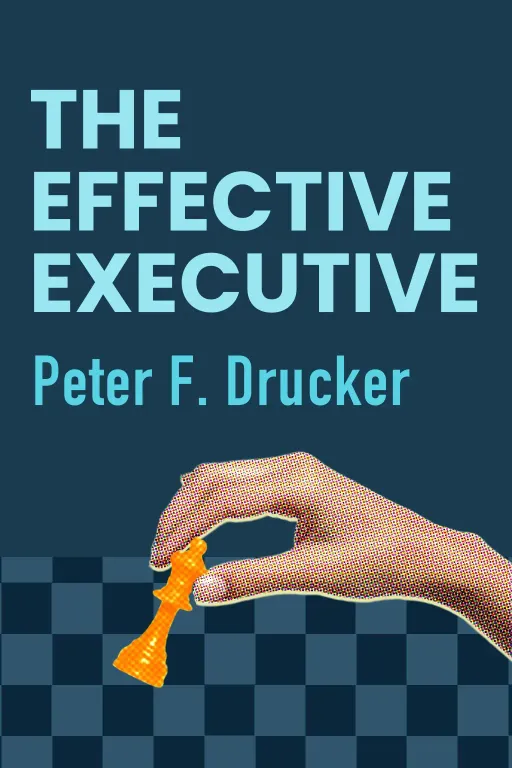
Nova: That's precisely the question we're tackling today. We're diving into "The Modern Architecture of Effectiveness," a concept that draws from some of the most influential minds on productivity and impact. We'll be unpacking foundational wisdom and then seeing how it’s been updated for our hyper-connected, digital-first lives. First up, we have to talk about the bedrock: Peter F. Drucker's seminal work, "The Effective Executive." Published way back in 1967, this book didn't just offer advice; it essentially wrote the rulebook on what it means to be truly effective, not just busy.
Atlas: And it’s genuinely wild to think that principles laid down by Drucker, an Austrian-American management consultant, in the mid-20th century are still the absolute cornerstone for how we approach productivity and effectiveness today. It's like finding an ancient map that still accurately points to buried treasure, even in a completely new landscape.
The Timeless Pillars of Effectiveness: Drucker's Five Practices
SECTION
Nova: Drucker’s core argument is profound and empowering: effectiveness isn't an innate talent; it’s a habit that can be learned and practiced. He identified five key practices that separate truly effective people from others. The first, and perhaps the most challenging, is.
Atlas: Ah, time management. The eternal struggle. For our listeners, especially those of us who are Pragmatic Learners, time feels like the most scarce resource. When you say "managing time," what does Drucker mean? Is it just about color-coding your calendar or using a fancy planner?
Nova: Drucker would argue it's far more fundamental. It's not about managing time itself, because time is constant; it's about managing in time. The first step is an honest. For 48 hours, you track where your time goes. Not where you think it goes, or where you it went, but the reality. And from that audit, you identify where your time is being frittered away on low-value activities.
Atlas: That audit sounds… potentially terrifying. I can imagine looking at that log and realizing I spent three hours scrolling through something completely unrelated to my actual goals. So, the "managing" part is then about that time deliberately, right? Protecting it fiercely for what truly matters?
Nova: Exactly. It's about understanding your most significant opportunities and then ruthlessly protecting the time needed to address them. This leads directly into Drucker's second practice:. This is where we shift from mere activity to impact. The question isn't "What can I do?" but rather, "What contribution do I, and only I, make that is significant?"
Atlas: Contribution. That resonates deeply with the drive for impact that many of us feel. But Nova, for listeners who are juggling multiple roles, perhaps in demanding corporate environments or as entrepreneurs wearing all the hats, how do you even that significant contribution when everything feels urgent and important? When your inbox is a firehose and your Slack is a constant siren?
Nova: That's the million-dollar question, and it’s precisely why Drucker’s third practice is so critical:. He believed you shouldn't waste energy trying to fix your weaknesses, but rather identify what you are naturally good at, what energizes you, what you do exceptionally well, and then build your effectiveness around those strengths.
Atlas: So, instead of spending an entire quarter agonizing over improving a skill you're inherently terrible at, you double down on what you’re already great at, and find ways to apply that strength to achieve your goals? For instance, if I'm a brilliant strategist but a mediocre presenter, I should focus on crafting stellar strategies and then find someone else to deliver them, or present my strategies in writing?
Nova: Precisely! Leverage your superpower. Then comes Drucker's fourth practice:. This is the essence of prioritization. You cannot do everything. The world presents you with an infinite number of tasks, opportunities, and demands. Effective people understand that they must decide what is most important and focus their energy there. It’s about saying "no" to the trivial many to say "yes" to the vital few.
Atlas: The "trivial many" versus the "vital few." That’s a powerful framing. But practically speaking, how do you navigate that when the "urgent" often masquerades as "important," especially when those urgent demands come from superiors or critical client needs? It feels like a constant battle against the immediate, the noisy, the demanding.
Nova: And this is where Drucker's fifth and final practice comes into play:. He argued that effective executives don't make a lot of decisions; they make a few, but they make the ones. They understand that a decision isn't just a choice; it's a commitment to change. They focus on the of the decision, on understanding the problem deeply, defining the necessary action, and then committing to it. It's not about constant, minor adjustments, but about making significant directional choices.
Atlas: So, it’s about recognizing that not every choice requires a grand decision. Many are just operational, routine. The truly effective decisions are the ones that steer the ship. This framework from Drucker sounds incredibly robust, almost like a timeless operating system for effectiveness. But these are principles from decades ago. How do we map this onto our current reality, where our primary tools are digital, and our work lives are constantly connected and often fragmented?
The Digital Age Upgrade: Stack's 3Ts for Modern Productivity
SECTION
Nova: That’s the perfect segue, Atlas. Because while Drucker gave us the timeless blueprint of makes an executive effective, Laura Stack, in her book "Doing the Right Things Right," takes those core principles and provides a crucial, modern upgrade for our digital age. She distills it into the "3Ts" of productivity: Training, Technology, and Teamwork.
Atlas: The 3Ts. Okay, I’m leaning in. Especially the "Technology" part, because frankly, my own technology often feels like it’s working me, not for me. It’s a source of endless distraction rather than a tool for effectiveness. How do these Ts actually help us become more effective in the way Drucker described?
Nova: Stack emphasizes that is paramount. This isn't just about formal courses or degrees, though that's part of it. It's about a commitment to continuous learning, equipping yourself and your team with the skills needed to navigate increasing complexity and master new tools. For our listeners who feel time is perpetually scarce, Stack would argue that investing in targeted, strategic training is not a time-waster, but a critical investment that time and dramatically boosts contribution in the long run. It's about working smarter, not just harder.
Atlas: I can intellectually grasp that. But the immediate pressure is always to, not to. How do you justify stepping away for an hour of training when there's a mountain of urgent tasks staring you down? Is it about finding hyper-efficient training methods, like micro-learning or focused skill-building sessions?
Nova: Exactly. It’s about training, and understanding its ROI. And then there's. This is where many of us stumble. Stack warns strongly against simply accumulating gadgets, apps, and subscriptions. True technological effectiveness means using the tools to amplify your strengths, streamline your processes, and connect your efforts, rather than getting lost in the endless digital noise. It’s about making technology serve your goals, not letting it dictate your workflow or become a constant source of interruption.
Atlas: Ah, the "shiny object syndrome" of productivity tools! It’s so easy to chase the next new app that promises to revolutionize your workflow, only to find it’s just another thing to manage. So, it’s not about having the most sophisticated tech stack, but the ones that genuinely support your core contributions? And how do we ensure technology doesn't just become another time-waster, another form of "low-value activity" Drucker warned against?
Nova: It’s about intentionality and discipline. Use technology to automate those low-value tasks you identified in your audit, improve communication clarity, and enhance your ability to focus. Critically, use it to distractions, not enable them. Think about how tools can help you batch tasks, manage information flow, or collaborate more effectively. And finally,.
Atlas: Teamwork makes the dream work, as they say. But in our modern context, what does teamwork look like, especially when teams are often geographically dispersed, working asynchronously, or when you're a solopreneur who the entire team? How does this principle apply?
Nova: Stack highlights that in a complex, interconnected world, no one person can be effective alone. Even as a solopreneur, your "team" can be your network of collaborators, your outsourced services, or even the automated systems you build. The principle is about leveraging external forces—people, or smart, integrated systems—to extend your reach, amplify your efforts, and achieve outcomes that would be impossible solo. It’s about not reinventing the wheel every single time, but building on the efforts and expertise of others.
Atlas: So, effective teamwork means clear communication protocols, shared vision, and leveraging complementary skills, whether those are human colleagues or well-integrated automated processes. It’s about building synergy. It sounds like Drucker gives us the foundational 'why' and the fundamental 'what' of effectiveness, and Stack provides the practical 'how' for navigating our current, digital landscape. It’s about deliberately building that architecture.
Synthesis & Takeaways
SECTION
Nova: Absolutely. Drucker provides that timeless blueprint of makes an executive truly effective – the discipline of managing time, the clarity of focusing on contribution, the power of making strengths productive, the necessity of first things first, and the impact of effective decision-making. Stack then shows us how to that structure, how to adapt and apply those principles in today's world using smart, targeted training, judicious use of technology, and robust teamwork.
Atlas: It’s a powerful synthesis. And for our listeners who, like us, are constantly seeking genuine value and maximum impact within the constraints of scarce time, the takeaway is incredibly actionable. The core idea here, echoing both Drucker and Stack, is to start small but act decisively. The "Tiny Step" they suggest is to audit your calendar for the next 48 hours. Just two days.
Nova: And during that audit, identify just one "low-value" task. Something that consumes your time and energy but doesn't significantly contribute to your core goals, your impact, or your overall effectiveness.
Atlas: Then, the critical, and often hardest, step: eliminate it. Whether you delegate it, automate it, or simply decide not to do it. And then, consciously reallocate that time, even if it’s just an hour, to a high-contribution project. It’s that single, focused "tiny step" that can begin to build a more effective architecture for your professional and personal life. It’s about embracing imperfection in the process, as our growth recommendations suggest. You don't need to overhaul your entire life overnight.
Nova: Precisely. Small, deliberate changes, focused relentlessly on contribution and impact, can lead to profound shifts over time. This is about strategic learning, cutting through the noise, and reclaiming those precious hours for what truly matters. It’s not just about being more productive; it’s about making your time count for something significant.
Atlas: It’s about cutting through the noise to synthesize information effectively, managing your time with intention, and learning strategically to maximize your output. This has been incredibly insightful, Nova. It’s a powerful reminder that effectiveness isn't a mystical trait; it's a skill we can all hone, with the right principles and the right approach.
Nova: Indeed. The architecture of effectiveness is within our reach, one deliberate practice at a time.
Atlas: This is Aibrary. Congratulations on your growth!