Mastering the Strategic Lens
Golden Hook & Introduction
SECTION
Nova: We're all told to 'hustle harder,' 'grind it out,' constantly be 'on' to get ahead. But what if all that relentless motion, that constant busyness, is actually keeping us from what truly matters – from real impact and genuine leadership?
Atlas: Oh, I know that feeling. It’s like we’re caught in this current, always swimming, always moving, but sometimes you look up and realize you haven’t actually gone anywhere meaningful. Just…. It's exhausting.
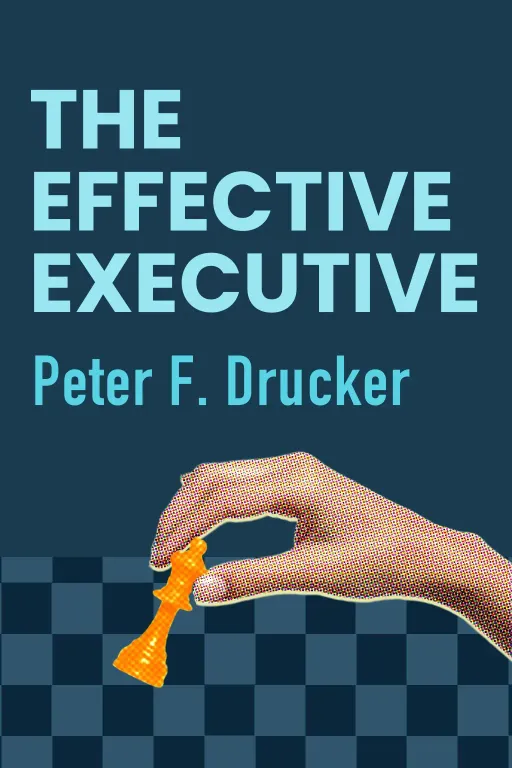
Nova: Exactly! It's a common trap. And today, we're diving into how two foundational works of thought challenge that very notion, offering a path to move beyond mere reactivity into truly proactive, impactful leadership. We’re talking about Peter F. Drucker's seminal work, "The Effective Executive," alongside the practical wisdom found in the "HBR Guide to Thinking Strategically."
Atlas: Drucker, the 'father of modern management.' His ideas are legendary. But how do these texts, one from the late 60s, and the other a collection of modern insights, help us stop splashing and actually steer the ship? I'm curious how they bridge that gap between personal effectiveness and grand strategy.
Nova: That's the magic, Atlas. Drucker's "The Effective Executive," first published in 1967, was revolutionary because it didn't focus on to manage others, but to be effective. It’s a timeless classic that really laid the groundwork for understanding that effectiveness isn't a personality trait you're born with, but a learnable discipline. And the HBR Guide then builds on that, providing those actionable frameworks for applying strategic thought in a world Drucker could only begin to imagine.
The Disciplined Path to Executive Effectiveness
SECTION
Nova: So let's start with Drucker. He argues that effectiveness is about doing the things, not just doing things. And it all begins with how you manage your most precious, non-renewable resource: your time.
Atlas: Wait, so it's not about being born a leader, but about practice? That’s empowering, actually. But time management… we hear that a lot. What’s Drucker’s unique twist on it? Because honestly, my calendar is already bursting.
Nova: That’s precisely where his genius lies. He doesn't just say "manage your time"; he says "know thy time." His radical suggestion is to meticulously track exactly where your time goes for a few weeks. Most executives are shocked by what they find. They they're spending time on priorities, but the data often reveals a fragmented day, peppered with interruptions and low-value tasks.
Atlas: That sounds like a brutal wake-up call for a lot of us. I imagine a lot of our listeners, the pragmatic visionaries and focused strategists out there, probably feel that constant pull towards 'urgent' but not necessarily 'important' tasks. So, once you've tracked it, what then? Just... feel bad about it?
Nova: Not at all. The next step is systematic analysis and elimination. Drucker prompts you to ask: "What tasks can be eliminated entirely without affecting results?" "What can be delegated?" "What am I doing that wastes others' time?" It’s about ruthlessly carving out blocks of concentrated time for meaningful work, because effectiveness demands sustained mental effort. Imagine a manager who diligently tracked their time. They discovered nearly 40% of their day was eaten by impromptu meetings and emails that could have been handled much more efficiently, or not at all. By applying Drucker's method, they reclaimed hours each week for strategic planning, transforming their output.
Atlas: That’s a stark example. It’s like clearing out the mental clutter to make space for the heavy lifting. But how does that connect to another one of Drucker's big ideas: focusing on strengths? Because often, we're told to improve our weaknesses.
Nova: Ah, a classic misconception! Drucker flips that on its head. He believed that building on strengths, both your own and those of your team, yields far greater results than trying to shore up weaknesses. Think of it this way: a champion runner doesn't spend all their time trying to become a better swimmer. They double down on running.
Atlas: That’s a great analogy. So, in a leadership context, it’s about identifying what you, or your team members, excel at, and then structuring roles and projects to maximize those natural talents?
Nova: Precisely. He even suggests that effective executives learn to make their superior's strengths productive, and to manage around their weaknesses. It’s about leveraging the unique contributions each person can make. I remember a case study about a project team leader who noticed one team member was a brilliant conceptual thinker but struggled with detailed execution, while another was a meticulous implementer but less innovative. Instead of forcing the conceptual thinker to do detailed plans, the leader paired them, allowing each to play to their strengths. The result was a project that was both groundbreaking in its vision and flawlessly executed.
Atlas: I can see how that would make a team more efficient and happier, but it also sounds like it requires a lot of self-awareness and trust within the team. What if you don't know your strengths, or you're leading a team where everyone is trying to be a generalist?
Nova: That's a valid challenge. Drucker would say it demands active self-reflection and candid conversations. It's about asking, "What results am I uniquely positioned to deliver?" and for teams, "What do each of my members do exceptionally well, and how can I amplify that?" It moves you away from just filling roles and towards orchestrating contributions.
Cultivating the Strategic Pause for Proactive Leadership
SECTION
Nova: And it’s this foundation of personal effectiveness—knowing your time, focusing on your strengths, contributing purposefully—that creates the mental bandwidth, the necessary space, for the. This is where the HBR Guide to Thinking Strategically really shines, showing us how to use that space.
Atlas: The 'strategic pause' – that sounds almost luxurious in our always-on, always-connected culture. For someone driven by progress and impact, the idea of might feel counterproductive. How is pausing actually a competitive advantage, rather than just falling behind?
Nova: It’s not about stopping work, Atlas. It's about stopping work to engage in thinking. The HBR Guide emphasizes that true strategic thinking isn't just problem-solving; it's problem and opportunity. Think of it like a chess master who pauses before every move, not just to react to their opponent, but to visualize several moves ahead, considering all possibilities.
Atlas: So it's not just about stopping, but about in that stop. What kind of frameworks are we talking about? Because "thinking strategically" can feel like a very abstract concept.
Nova: Exactly. The HBR Guide offers a toolkit for this. It might involve frameworks like asking critical "what if" questions, scenario planning, or even using a simplified SWOT analysis to understand internal capabilities and external opportunities. It’s about stepping back from the daily grind to look at the larger landscape. Consider a CEO, constantly bombarded with immediate operational issues. They decided to implement a mandatory "strategic morning hour" every day, no emails, no meetings, just dedicated time to review market trends, competitor moves, or long-term product roadmaps. This wasn't about catching up; it was about getting ahead.
Atlas: That makes sense. It's about intentionality. For a pragmatic visionary, it sounds like a way to ensure that their vision isn't just a dream, but a well-charted course, rather than just being swept along by events. How does this help us move beyond reactivity and into that proactive, impactful leadership?
Nova: Because reactivity is often a symptom of not having a clear, well-considered strategy. If you haven't taken the time to anticipate challenges or map out opportunities, you're always playing defense. The strategic pause, informed by these frameworks, allows you to identify emerging patterns, challenge underlying assumptions, and formulate robust plans a crisis hits. It moves you from responding to symptoms to addressing root causes and even shaping the future. A brilliant example is a company that dedicated specific, structured "foresight sessions" to analyze geopolitical shifts and technological advancements. This led them to pivot their entire supply chain strategy years before global events made it a necessity for their competitors, giving them an enormous advantage.
Atlas: That’s a powerful illustration. It transforms the abstract idea of "thinking strategically" into a tangible competitive edge. It makes me think that the strategic pause isn't just a luxury; it's a non-negotiable investment in future relevance and resilience.
Synthesis & Takeaways
SECTION
Nova: Absolutely. When we bring Drucker and the HBR Guide together, the message is clear: personal effectiveness isn't just about individual productivity; it's the bedrock upon which genuine strategic leadership is built. You manage your time, you leverage your strengths, and then you intentionally create space for that deep, proactive strategic thinking.
Atlas: It really comes down to carving out that dedicated space, even if it's just 10 minutes, to think rather than just do. It's about being deliberate.
Nova: Precisely. Drucker shows us how to be effective our work, and HBR shows us how to be strategic our work. The strategic pause isn't downtime; it's active, focused cognition that prevents reactive firefighting and unlocks true innovation. It’s the difference between merely reacting to the waves and learning to navigate the ocean.
Atlas: For our listeners who are pragmatic visionaries and focused strategists, this is gold. So, what’s one tangible step they can take, starting today, to integrate this habit of strategic pause into their daily routine?
Nova: Start small, but consistently. Dedicate just 10 minutes every morning, before your day truly begins, to a single, focused learning task or strategic reflection. Ask yourself: "What's the most important thing I need to achieve today, and why?" Or, "What emerging trend might impact my work in the next six months?" It’s about building that muscle, little by little.
Atlas: That's a tangible challenge. A small habit for massive impact. It’s not about perfection, but about embracing the journey of continuous strategic evolution.
Nova: Exactly. It's about progress, not perfection. And those small, consistent pauses will compound into profound clarity and impactful leadership.
Atlas: This is Aibrary. Congratulations on your growth!