Mastering the Art of Executive Leadership
Golden Hook & Introduction
SECTION
Nova: Forget what you think you know about leadership. It's not just about charisma or being the loudest in the room. It’s about something far more fundamental, and honestly, far more demanding.
Atlas: Oh, I like that. Demanding. Because I think a lot of people fall into the trap of thinking leadership is just about having the title, or barking orders. But what you're hinting at sounds like a deeper, almost internal game.
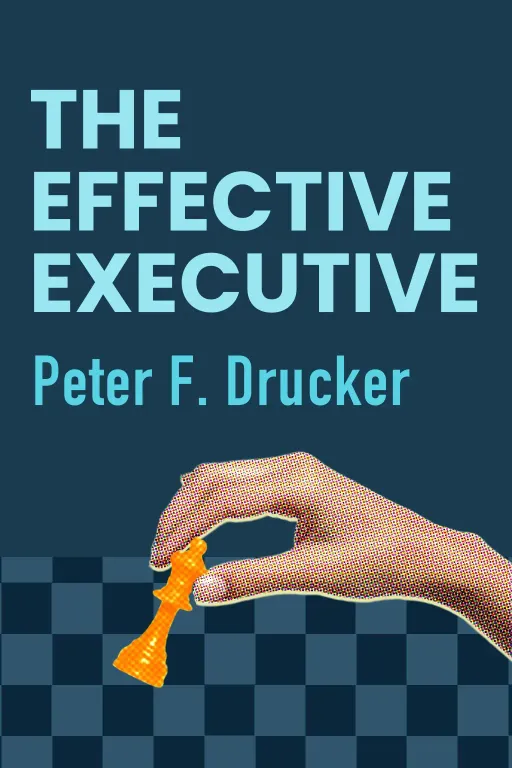
Nova: Absolutely, Atlas. It's less about the spotlight and more about the often-unseen work that creates genuine, lasting impact. Today, we're diving into two titans of leadership thought who, from vastly different worlds, converge on this very idea. We're talking about Peter F. Drucker, often hailed as the father of modern management, and his seminal work, "The Effective Executive." And then, we'll pivot to the uncompromising, real-world lessons from Jocko Willink's "Leadership Strategy and Tactics," straight from his decorated Navy SEAL career.
Atlas: That’s a fascinating pairing. One, a grand strategist and philosopher of business, the other, a combat-hardened tactician. It's like the ultimate brain-and-brawn combo for leadership. For anyone out there navigating their own path in their late twenties or early thirties, trying to make a real difference, this blend of strategic foresight and tactical grit feels incredibly relevant. It’s about getting past the theory and into the actual doing, right?
Nova: Precisely. Drucker gives us the intellectual architecture, the underlying principles that make an executive effective. He wrote this book decades ago, but its insights are shockingly timeless, almost prophetic in their understanding of organizational behavior and personal effectiveness. Willink then shows us how to take those high-level concepts and hammer them into actionable, decisive behaviors that get results when the stakes are highest.
Strategic Foresight & Foundational Principles: Peter F. Drucker
SECTION
Nova: Let's start with Drucker, then. His core premise in "The Effective Executive" is that effectiveness isn't an inborn trait; it's a learned discipline. He outlines five key practices. The first, and arguably most crucial, is "managing time."
Atlas: Managing time. Okay, so we're not just talking about fancy calendars or productivity apps here, are we? Because honestly, I’ve tried them all, and my time still seems to vanish into the ether.
Nova: Oh, that’s a common misconception. Drucker’s approach to time management is far more profound. It begins with self-awareness: knowing where your time goes. He suggests a rigorous practice of recording how you spend your time, without judgment, for a few weeks. What most executives discover is that their time is fragmented, constantly interrupted, and spent on things that aren't truly contributing to their core mission.
Atlas: That makes me wonder, how does someone even find the time to their time when they're already swamped? That sounds like adding another layer of busywork to an already overflowing plate.
Nova: Right? It seems counterintuitive, but it’s a foundational diagnostic. Once you have that data, you can move to systematically eliminating non-productive time, delegating, or simply deciding to do things that aren't critical. He talks about consolidating "discretionary time" into larger blocks, because meaningful work, especially strategic thinking, requires sustained, uninterrupted focus.
Atlas: So it's not just about filling your calendar, but emptying it strategically. That’s a powerful reframe. What's next on Drucker’s list?
Nova: Next is "choosing what to contribute." This is about focusing on results, not just effort. An effective executive asks, "What results are expected of me? What can I contribute that will make a significant difference to the performance and results of the institution I serve?"
Atlas: That’s going to resonate with anyone who struggles with feeling busy but not impactful. I imagine a lot of our listeners feel like they're constantly running on a treadmill, doing, but unsure if it's the something. How do you even begin to define that "significant difference"?
Nova: It often involves looking beyond your immediate job description. Drucker gives an example of a research director who was brilliant at pure science but failed to contribute anything useful to the company because he didn't connect his work to the company's business objectives. Only when he shifted his focus to what the needed, rather than just what him, did his contributions become invaluable. It’s about aligning your unique strengths with the organization’s strategic needs.
Atlas: That makes perfect sense. It’s like being a highly skilled chef, but if you’re cooking gourmet meals for a fast-food drive-through, you’re not really contributing to their core business model, no matter how good the food is.
Nova: Exactly! And that leads directly into his third practice: "knowing where and how to mobilize strength." This isn't about fixing weaknesses; it's about leveraging the strengths of people around you – your subordinates, your superiors, and your peers. Drucker believed that you build on strengths, not weaknesses.
Atlas: That’s actually really inspiring. Because so often in leadership, the focus becomes about identifying gaps, running performance reviews to highlight what's. But building on strengths? That feels more empowering.
Nova: It is. He would argue that effective executives staff from strength. They ask, "What can this person do uncommonly well?" and then design roles and teams around those strengths. This not only maximizes output but also builds confidence and morale.
Atlas: So it's about seeing the potential in people, not just their current limitations. That sounds like a fundamental shift in mindset for a lot of leaders.
Nova: It definitely is. And the final two practices are "setting priorities" and "making effective decisions." These are intertwined. Setting priorities means concentrating on the few important things, not trying to do everything at once. He famously said, "There is nothing so useless as doing efficiently that which should not be done at all."
Atlas: That’s a great way to put it. Because we can all be incredibly efficient at doing the wrong thing. But isn't it easier to just react to the loudest problem, the most urgent email? How do you resist that urge to just put out fires, especially in a fast-paced environment?
Nova: It requires discipline. Drucker advocates for making decisions based on principle, not just expediency. He emphasizes rigorous thinking: defining the problem, analyzing facts, developing alternatives, and making a choice. And crucially, following up to ensure the decision is actually implemented and effective. It's about a systematic approach to thinking, not just gut reactions.
Tactical Execution & Real-World Application: Jocko Willink
SECTION
Nova: So, Drucker gives us the strategic framework, the "what" and "why" of effective executive thought. But how do we execute those principles in the messy, often chaotic real world? That's where Jocko Willink comes in with "Leadership Strategy and Tactics."
Atlas: Extreme Ownership. That sounds intense. What does that actually look like in a team context, beyond just saying "it's my fault" when something goes wrong?
Nova: It is intense, because it's absolute. Willink, drawing from his Navy SEAL experience, argues that true leaders take "Extreme Ownership" for everything in their world. If your team fails, if targets are missed, if communication breaks down, it is ultimately fault as the leader. Not your subordinate's, not the conditions, not the weather. Your fault.
Atlas: That sounds rough, but I can see how that would be incredibly clarifying. It eliminates excuses. But it also sounds like a heavy burden. How do you prevent that from crushing a leader, or making them micromanage out of fear?
Nova: It's not about self-blame in a debilitating way. It's about empowerment. When you accept 100% ownership, you also accept 100% of the power to change the outcome. It forces you to look inward, analyze actions, communication, planning, and identify where can improve to prevent future failures. It shifts the focus from fault-finding to problem-solving.
Atlas: So it's not just about being tough, but about building a culture where everyone to meet those standards because they understand the mission and their own role in it? That makes me wonder about his emphasis on "decisive action."
Nova: Absolutely. In combat, indecision is deadly. In business, it's often equally fatal to progress. Willink stresses that a good plan executed violently now is better than a perfect plan executed next week. This doesn't mean being reckless. It means assessing the situation, making the best decision with the available information, and then driving that decision forward with conviction.
Atlas: I can definitely relate to that. The paralysis of analysis, just constantly trying to gather more data, more opinions, until the opportunity passes. But how do you balance decisive action with not making rash, uninformed decisions?
Nova: It comes down to disciplined thought the action, much like Drucker's decision-making process. But once the decision is made, there's no second-guessing, no wavering. You commit fully. And this ties into his principle of "setting high standards." Willink believes that low standards are a direct path to mediocrity and failure. Leaders must set, communicate, and enforce exceptionally high standards for themselves and their teams.
Atlas: But wait, for someone in a growing team, isn't there a risk of just burning people out with "high standards" and "discipline"? Especially if they're already stretched thin?
Nova: That’s a critical question. Willink would argue that true discipline isn't punitive; it's empowering. He says, "Discipline equals freedom." Freedom from chaos, freedom from mistakes, freedom to innovate and excel. When everyone adheres to high standards and disciplined processes, the team becomes more efficient, more effective, and ultimately, more capable of handling pressure without burning out. It creates a predictable, high-performing environment.
Atlas: That’s such a hopeful way to look at it. It's not about being a drill sergeant just for the sake of it, but about creating an environment where people can truly thrive because the groundwork is solid. It's about trust.
Synthesis & Takeaways
SECTION
Nova: What we're seeing here, Atlas, is that strategic foresight from Drucker, without Willink's tactical execution, is just philosophy. It's brilliant thinking, but it stays on paper. And tactical execution, without Drucker's strategic guidance, is just busywork – a lot of intense effort, but perhaps in the wrong direction.
Atlas: That’s a powerful distinction. So, for our listeners who are trying to make a bigger impact in their roles right now, trying to refine their professional path and enhance their influence, what's one tiny step they can take this week to bridge that gap between strategy and tactics?
Nova: I would say: first, pick of Drucker’s practices. Maybe it's just observing where your time goes for a day or two. Don't change anything, just observe. Then, from Willink, identify one area where you can take "extreme ownership" for a problem you might typically blame on external factors or others. Maybe it's a project that's stalled, or a communication breakdown. Own it completely.
Atlas: That’s incredibly actionable. And the deep question that follows from this, as we discussed earlier, is: How can you integrate both strategic foresight and tactical execution to address a current leadership challenge in your role? That makes me think about that 'healing moment' from the content – acknowledging that effective leadership is a continuous learning process. It’s not about being perfect from day one, it’s about blending wisdom with decisive action, consistently.
Nova: Absolutely. It's a journey, not a destination. Both Drucker and Willink, despite their different backgrounds, ultimately teach us that leadership is a craft honed through deliberate practice, self-awareness, and relentless commitment to improvement. It's about being both the thoughtful architect and the determined builder of your vision.
Atlas: That’s a profound thought to end on. It's about showing up, thinking deeply, and then acting decisively. If this episode resonated with you, and you’re inspired to blend your own wisdom with decisive action, we’d love to hear about it. Share your insights and join the conversation in the Aibrary community.
Nova: This is Aibrary. Congratulations on your growth!