The Architecture of Psychological Autonomy
Golden Hook & Introduction
SECTION
Nova: You have spent years building a resume that looks perfect on paper, yet you feel like you are living inside a hollow shell. You are the person everyone relies on, the one who never drops the ball, the one who always knows the right thing to say. But here is the uncomfortable truth. That reliability is often a survival mechanism, not a personality trait.
Atlas: Oh, that is a sharp way to start. It feels like you are describing half the people I know in high-stakes industries. We wear that reliability like armor, but you are suggesting it might actually be keeping us from the very thing we are trying to build.
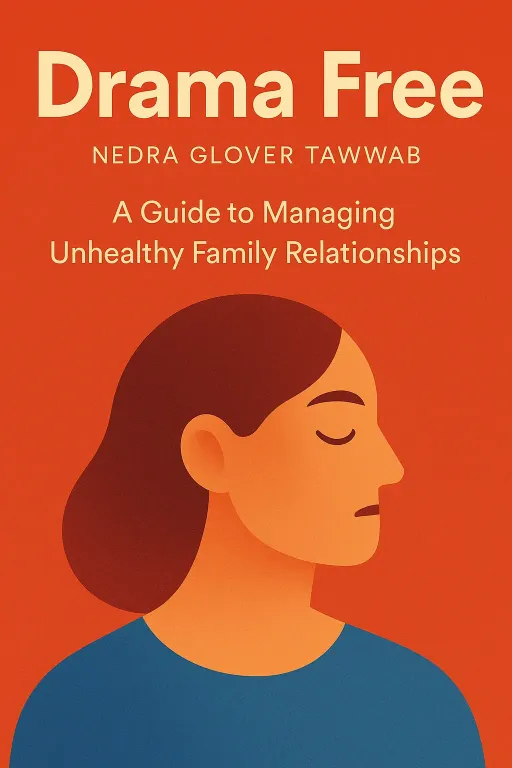
Nova: Exactly. Today, we are exploring the architecture of psychological autonomy. We are looking at why so many of us are experts at managing everything except our own internal lives. We are pulling insights from two heavy hitters. First, we have Alice Miller’s classic, The Drama of the Gifted Child. Miller was a Polish-Swiss psychologist who completely changed how we understand childhood trauma by showing that the trauma isn't just about what happened to you, but about what you had to suppress to survive. Then, we are layering that with Nedra Glover Tawwab’s modern, incredibly practical work, Drama Free. Tawwab is a licensed therapist who has mastered the art of taking these complex, messy generational patterns and turning them into actionable, compassionate boundaries.
Atlas: I love that combination. You have the deep, psychological archaeology of Miller, and then the modern, tactical manual from Tawwab. It is the difference between knowing why the foundation of your house is cracked and having a blueprint for how to fix it.
Nova: Precisely. Because if you do not understand the architecture of your own mind, you are just going to keep building the same structures over and over again, regardless of the tools you are using.
The Shadow of Excellence - Unpacking the Gifted Child
SECTION
Atlas: Let’s start with the foundation. I have always been fascinated by the term gifted child. In a corporate or professional setting, we treat that like a badge of honor. It means you are smart, you are capable, you are the one they pick for the hardest project. But Miller defines it very differently, right?
Nova: She does, and it is a definition that makes many high-achievers uncomfortable. Miller argues that the gifted child is simply one who has learned to read the emotional needs of their parents with laser precision. You become a master at sensing the atmosphere in a room before you even speak. You adapt your personality to be exactly what is needed to keep the peace, to gain approval, or to prevent a breakdown.
Atlas: So, it is not actually about being talented at math or music. It is about being talented at emotional surveillance.
Nova: You nailed it. It is hyper-vigilance disguised as excellence. The child learns that their value is contingent on their ability to meet someone else’s expectations. They develop what Miller calls a False Self. This is the persona that is always helpful, always steady, always high-performing. The True Self—the one that feels sadness, anger, or even just boredom—gets pushed into the basement because it is too risky to show.
Atlas: That resonates deeply. I imagine a lot of our listeners are nodding along right now, thinking about their own careers. When you reach adulthood, that False Self is still running the show. You are in a meeting, and you are sensing the emotional temperature of your boss or your stakeholders, and you automatically pivot to accommodate them, even if it is at your own expense.
Nova: And that is the mechanism of burnout. You are not burning out because you are working too hard. You are burning out because you are performing a role that is disconnected from who you actually are. Miller points out that this leads to a specific kind of internal emptiness. You achieve the goals, you get the title, you hit the metrics, but you feel nothing. You are a highly successful, highly competent, deeply lonely person.
Atlas: That is a tough pill to swallow. It makes me wonder, how does one even begin to catch that? If you have been doing this for twenty or thirty years, this pattern is your operating system. You do not even know it is running in the background.
Nova: You catch it by looking for the moments where you feel resentment. Resentment is the primary indicator that you are operating from your False Self. When you find yourself thinking, I did all of this for them, and they do not even care, that is the moment your True Self is trying to break out. Miller’s work is about reclaiming those suppressed feelings. It is about realizing that you do not need to be the perfect child, the perfect employee, or the perfect partner to be worthy of existence.
Atlas: I can see how that connects to the high-stakes environments we talk about. If you are constantly scanning for what others need, you are not making decisions based on strategy or objective reality. You are making decisions based on fear of abandonment or fear of conflict.
Nova: Exactly. And that brings us to the next layer of this architecture. Once you realize you have been performing, you have to find a way to stop without burning your whole life down. That is where Tawwab comes in.
The Mechanics of Boundaries - Moving from Drama to Autonomy
SECTION
Atlas: Right, because awareness is one thing, but execution is another. You can realize you are a people-pleaser, but then you are sitting in an office, and your boss asks for something unreasonable. If you just suddenly say no, the whole structure collapses. How does Tawwab suggest we bridge that gap?
Nova: Tawwab’s approach is refreshing because she treats boundaries not as walls, but as bridges. She defines boundaries as the way we communicate our needs and limitations to others. The reason we struggle with them is that we have been conditioned to view boundaries as a form of aggression. We think if I set a limit, I am being mean.
Atlas: Or even worse, I am being selfish. That is the big one. If I prioritize my own bandwidth, I am letting the team down.
Nova: But consider the alternative. If you do not have boundaries, you are eventually going to explode, or you are going to resent the people you are working with. You cannot sustain high performance without clear parameters. Tawwab suggests that we start with the smallest, lowest-stakes interactions. You do not start by telling your CEO that their management style is unsustainable. You start by saying no to the unnecessary meeting or the after-hours email.
Atlas: That sounds manageable, but I have to play devil's advocate here. In a fast-moving, competitive environment, isn't there a risk? If I am the only one setting boundaries, don't I look like I am not a team player?
Nova: That is the fear, isn't it? The fear of being seen as difficult. But here is the reality. People who set clear, calm, consistent boundaries are actually the most reliable people in the room. They are not the ones who say yes to everything and then drop the ball at the last minute. They are the ones who say, I can do this, but I cannot do that, and here is why. That is clarity. That is professional maturity.
Atlas: So, it is about moving from emotional reaction to logical communication.
Nova: Precisely. Tawwab talks about the idea of being drama-free. Drama usually happens when we have expectations that we have not communicated. We expect people to read our minds, and when they don't, we get upset, or we withdraw. Boundaries eliminate the guesswork. When you say, I am not available for calls after six, you are removing the ambiguity. You are not creating drama; you are preventing it.
Atlas: I love that shift in perspective. It makes boundaries look like a courtesy to others rather than a restriction on them.
Nova: Think about a time you worked with someone who never set boundaries. They were always stressed, always apologizing, always behind schedule. It was chaotic for everyone, right?
Atlas: Oh, absolutely. It is exhausting to work with someone like that because you never know where you stand. You are constantly walking on eggshells, wondering if they are about to burn out.
Nova: Exactly. So, setting a boundary is actually an act of service to your colleagues. It allows them to know exactly what they can expect from you. It creates a predictable, stable environment.
Synthesis & Practical Architecture
SECTION
Atlas: This is starting to click into a bigger picture for me. We have Miller, who helps us understand why we are prone to being the over-functioning, people-pleasing, high-achiever. And we have Tawwab, who gives us the tactical tools to stop performing and start living with intent.
Nova: That is the architecture of psychological autonomy. It is the ability to recognize your patterns, acknowledge your feelings without judgment, and then act in alignment with your own needs, even when it is uncomfortable.
Atlas: It sounds like we are building a new version of ourselves. One that isn't just reacting to the environment, but shaping it.
Nova: That is the legacy part of it. When you operate from a place of autonomy, you are not just helping yourself. You are modeling a different way of being for everyone around you. You are showing your team, your family, your peers that it is possible to be excellent without being self-sacrificial.
Atlas: So, for the listener who is sitting there thinking, okay, this makes sense, but what do I do tomorrow morning? What is the tiny step?
Nova: I want you to identify one professional or personal boundary you have let slip recently. Maybe it is the tendency to check emails before you have even had your coffee, or maybe it is the habit of saying yes to tasks that fall outside your actual role. Do not try to fix everything at once. Just pick that one thing. Draft a clear, drama-free statement to re-establish it.
Atlas: And keep it simple. Don't over-explain.
Nova: Exactly. Over-explaining is a sign that you are looking for permission. You do not need permission to own your time and your energy. Just state the boundary, state the reason if necessary, and then hold the line.
Atlas: I really appreciate how this conversation moved from the deep, internal work of healing the child to the external work of managing adult relationships. It feels like a complete cycle.
Nova: It is a cycle that we have to keep repeating. Autonomy isn't a destination you arrive at once and stay in. It is a practice. Every day, you are going to be tempted to slip back into that False Self, into that performance mode. And every day, you have the opportunity to choose differently.
Atlas: That is a empowering way to look at it. It takes the pressure off being perfect and puts the focus on being intentional.
Nova: And that is where the real growth happens. It is not about never feeling the need to please others. It is about noticing that feeling, honoring it, and then choosing to act in a way that respects your own architecture.
Atlas: I think that is the perfect note to end on. Taking ownership of our own design. Thank you for walking us through this, Nova. This has been a really illuminating conversation.
Nova: It has been a pleasure, Atlas. To all our listeners, remember that you are the architect of your own life. You have the power to renovate, to rebuild, and to create something that is truly, authentically yours. This is Aibrary. Congratulations on your growth!