The Remote Engagement Paradox: How to Build Connection Without Constant Presence
Golden Hook & Introduction
SECTION
Nova: What if I told you that trying to replicate your office's 'water cooler chat' online is actually sabotaging your remote team's connection?
Atlas: Whoa, Nova, that's a bold claim! I think a lot of our listeners, especially those leading teams, are probably nodding along right now, even if they're feeling a little attacked. We’re all trying so hard to foster that connection, but it often feels like we're just shouting into the void of a video call.
Nova: Exactly, Atlas! We instinctively try to port over old habits to a new environment, and it often backfires. Today, we're diving into what we're calling "The Remote Engagement Paradox: How to Build Connection Without Constant Presence." We're going to pull insights from two incredible books that redefine how we think about remote work.
Atlas: Oh, I'm ready for this. What are we unpacking first?
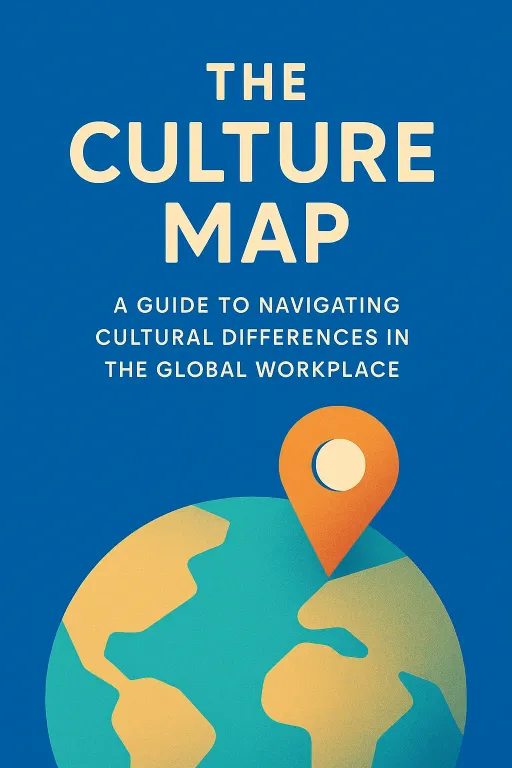
Nova: First up, we have "The Culture Map" by Erin Meyer. What's fascinating about Meyer is her unique perspective as an American professor living and teaching in France. This dual cultural lens profoundly shaped her insights into how different cultures perceive and communicate, which is absolutely critical for distributed teams. Then, we'll turn to "Remote: Office Not Required" by Jason Fried and David Heinemeier Hansson. These guys, the founders of Basecamp, were building a wildly successful, fully remote company years before it was mainstream, making them true pioneers in this space. They literally wrote the playbook for making remote work, well, work.
Atlas: That's incredible. So, these aren't just theoretical musings; these are insights from people who've lived and breathed remote work, or who have analyzed it from a deep, personal cross-cultural perspective. That makes me wonder, how do we even begin to untangle the complexities of remote communication when we're all coming from such different places, even if we're in the same country?
Decoding Remote Communication: The Cultural Nuances of Connection
SECTION
Nova: That's the perfect segue, Atlas, because that's precisely where Meyer shines. She gives us a framework to decode how different cultures—and I mean both national and organizational cultures—perceive time, communicate, and lead. When you apply this to remote teams, you start to proactively address potential misunderstandings.
Atlas: Okay, so, how does a team leader even begin to identify these invisible cultural rules on their remote team? It sounds a bit overwhelming to try and understand every nuance.
Nova: It’s not about memorizing every cultural dimension for every nationality, but understanding the. Think about high-context versus low-context communication. In a high-context culture, meaning is often embedded in unspoken cues, shared history, and subtle gestures. In a low-context culture, communication is direct, explicit, and "say what you mean."
Atlas: Oh, I love that. So, if I'm from a low-context culture, I might send a very direct, concise email to a remote colleague, thinking I'm being efficient. But if they're from a high-context culture, they might read that as abrupt, rude, or even dismissive.
Nova: Exactly! Imagine a remote team with members from both ends of that spectrum. A low-context manager sends a two-line email to a high-context team member: "Project X needs review. Deadline Friday." The manager thinks, "Clear, concise, done." The team member, however, might feel undervalued, thinking, "Is everything okay? Why so brief? Did I do something wrong? There's no pleasantry, no context, just a demand." This isn't just about national cultures; it's about organizational cultures too. Some companies are inherently high-context, relying on implicit understanding, while others are very low-context, requiring everything in writing.
Atlas: Wow. That's actually really profound. I can immediately think of situations where I’ve been on either end of that. It's like we're speaking different dialects of the same language, and online, those subtle cues that bridge the gap in person are completely absent. So, what's the consequence of these misalignments? Disengagement? Resentment?
Nova: Absolutely, all of the above. It erodes trust, creates anxiety, and ultimately impacts productivity. Meyer's work helps us recognize these invisible forces. For instance, consider how different cultures approach negative feedback. Some are very direct, others might "soften the blow" or deliver it indirectly. If a direct feedback giver is managing someone who expects indirect feedback, the message might be entirely missed or, conversely, perceived as overly aggressive. Building inclusive remote practices means acknowledging these differences and adapting. It's about creating psychological safety where people feel comfortable clarifying expectations and expressing their communication preferences.
Atlas: That’s such a powerful point. It’s not just about what you say, but it's received, and remote work amplifies that challenge exponentially. It makes me wonder, if we're spending so much energy decoding these nuances, how do we actually get work done without constant meetings and check-ins?
Asynchronous Trust: Building Productive Remote Teams Beyond Face-Time
SECTION
Nova: That’s the perfect question, Atlas, and it leads us directly to our second core idea, which often acts as a counterpoint to the traditional mindset. This is where "Remote: Office Not Required" by Fried and Hansson comes in. They argue that the traditional office paradigm, with its emphasis on face-time and synchronous communication, actually productivity in a remote setting. Their philosophy champions asynchronous communication and trusting outcomes over constant presence.
Atlas: But if we're not constantly talking, how do we prevent people from feeling isolated or falling out of sync? What about that 'human element' that’s so important for engagement? I imagine a lot of our listeners, especially those trying to build connection, might worry about losing that personal touch if they go too asynchronous.
Nova: That's a valid concern, and it's a common misconception. Fried and Hansson argue that asynchronous work, when implemented thoughtfully, can actually foster collaboration, not less. Imagine a team that used to have daily, mandatory stand-up meetings. These often become performances, where people report what they rather than what they or.
Atlas: I've been there! It feels like a time sink sometimes, especially when half the updates aren't relevant to everyone in the room.
Nova: Exactly. Now, picture that same team shifting to a system where updates, questions, and decisions are primarily communicated through written channels – project management tools, shared documents, internal forums. Team members have the time to before they respond, to research, to craft a considered reply. This reduces interruptions and allows for deep work. Trust is built not by seeing someone at their desk, but by consistently delivering high-quality work.
Atlas: So you're saying it's about quality of communication over quantity, and trust in the results rather than the process? That makes sense, but how do you ensure clarity and avoid misinterpretation in purely written communication? Isn't that a big risk?
Nova: It’s a risk if you don't establish clear processes and expectations. Fried and Hansson emphasize clear writing, detailed documentation, and making decisions transparently. For instance, instead of a quick chat in the hallway, a decision might be documented in a shared project space, outlining the problem, the options considered, and the rationale for the chosen path. This creates a searchable, accessible record, reducing miscommunication and empowering everyone with context. It's about building systems that autonomy and responsibility, rather than requiring constant oversight.
Atlas: That’s actually really inspiring. It sounds like it shifts the focus from managing to managing, which for anyone focused on sustainable growth and impact, is a game-changer. It almost forces a higher level of intentionality in communication.
Synthesis & Takeaways
SECTION
Nova: Precisely, Atlas. The remote engagement paradox isn't solved by trying harder to recreate the office online. It's solved by fundamentally rethinking how we connect and work. My take is that true remote engagement cultivates a thriving team culture that values both individual contribution collective cohesion. It means understanding the invisible cultural maps that guide our interactions and then building trust through transparent, asynchronous systems that empower people to do their best work.
Atlas: That’s a powerful synthesis. So, for someone listening right now, leading a remote team, wanting to build sustainable growth and a stronger talent acquisition funnel, what's that they can take this week to start breaking down this paradox?
Nova: Here’s your tiny step, and it comes directly from Meyer's insights: Identify one communication habit in your team that could be improved by considering different cultural perspectives on directness or scheduling. Just one. Perhaps it's how feedback is given, or how meeting invites are structured. Observe it, reflect on the underlying cultural assumptions, and then consider a small adjustment.
Atlas: I love that. It’s not about an overhaul, but a thoughtful, surgical adjustment. It's a fundamental re-evaluation of how we define connection and productivity, acknowledging that the old rules simply don’t apply anymore. It’s about being deliberate and empathetic in our digital spaces.
Nova: Absolutely. The future of work demands a more nuanced, intentional approach to human connection. It's about building bridges, not just replicating cubicles.
Atlas: This is Aibrary. Congratulations on your growth!