

The Invisible Threads: Unraveling the Psychology of Cultural Influence.
Golden Hook & Introduction
SECTION
Nova: Most of us walk around assuming our common sense is, well, common. We think we all perceive the world in roughly the same way, right? But what if I told you that even the way you interpret a simple picture, or how you explain why your car broke down, is deeply un-common depending on where you grew up?
Atlas: Whoa, really? That's a bold claim. I mean, I'm all for understanding different perspectives, but are you saying our are wired differently based on culture? That feels like a huge leap.
Nova: It sounds wild, doesn't it? But that's precisely the fascinating, and frankly, mind-bending territory we're exploring today. We're talking about the invisible threads of culture that weave the very fabric of our minds, dictating not just what we think, but we think.
Atlas: That makes me wonder about so many interactions I've had. So, what's guiding us through this intellectual rabbit hole today?
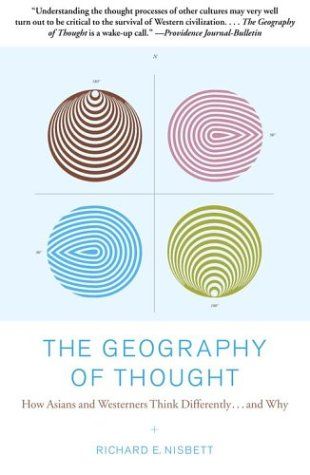
Nova: Well, we're drawing heavily from two incredibly insightful books that, when put together, give us a profound understanding of this phenomenon. First up, we have "The Geography of Thought" by Richard E. Nisbett. Nisbett is a renowned social psychologist whose groundbreaking research, comparing East Asian and Western cognitive styles, fundamentally shifted our understanding of human cognition. His work really challenged the deeply held belief in universal human thought processes.
Atlas: Okay, a social psychologist challenging universals. That already piques my interest. And what's the other guide on our journey?
Nova: The other essential text is "The Culture Map" by Erin Meyer. Meyer is a brilliant consultant who spent years working with global executives, gathering data and insights to build a practical framework for understanding how cultural differences play out in international business and communication. Her book is widely acclaimed for its clarity and real-world applicability, especially for anyone navigating diverse teams or global markets. It's truly a go-to guide for making sense of those subtle, yet powerful, cultural currents.
Atlas: That's a perfect pairing then – one for the 'why' and one for the 'how.' I imagine a lot of our listeners, especially those who are constantly analyzing complex ideas or trying to connect across different groups, are already leaning in. How do we even begin to unpack something as fundamental as how culture shapes thought?
The Invisible Architecture of Thought: How Culture Builds Our Minds
SECTION
Nova: We start by challenging the very notion of a universal way of seeing the world. Nisbett's work brings to light what he calls the "invisible architecture" of our minds. He argues that Eastern and Western cultures have developed fundamentally different cognitive processes – what he terms holistic versus analytic thinking.
Atlas: Holistic versus analytic. Can you break that down for me, like, what's the core distinction there?
Nova: Absolutely. Think of it this way: Western thought, influenced by ancient Greek philosophy, tends to be analytic. It focuses on individual objects, their attributes, and separating them from their context. We like categories, rules, and identifying discrete parts. Eastern thought, on the other hand, rooted in traditions like Confucianism and Taoism, is more holistic. It emphasizes relationships, context, and the interconnectedness of things. The whole is more important than its individual parts.
Atlas: So you're saying it's not just about what we, but how we literally? That's incredible. Can you give me an example that really illustrates this? Because it sounds a bit abstract.
Nova: I love this example because it’s so vivid. Nisbett and his colleagues conducted a famous experiment. They showed participants animated scenes, like an underwater scene with a large, solitary fish swimming among smaller fish, plants, and rocks. When asked what they saw, Western participants almost immediately focused on the largest, most prominent fish, describing its attributes: "I saw a big blue fish swimming to the left."
Atlas: Okay, that makes sense. It's the most obvious thing to focus on.
Nova: Exactly. But East Asian participants, when presented with the same scene, were much more likely to start by describing the: "I saw a pond, it had some rocks and plants, and then there were fish swimming around, including a big one." They noticed the background, the relationships between the elements, and the movement of the smaller fish far more readily. The individual fish was important, but only as part of the broader ecosystem.
Atlas: Wow. So it's not just that they noticed the background; they there. That's a foundational difference in perception. I imagine a lot of our listeners trying to analyze complex data sets or understand market trends might find this particularly relevant. If you're always looking for the individual 'big fish,' you might miss the entire ecosystem it's swimming in.
Nova: Precisely! And this extends beyond perception to how we understand causality. If something goes wrong, say, a computer crashes, a Westerner is more likely to pinpoint a single, direct cause: "The hard drive failed." An East Asian individual, however, might consider a wider range of factors: "The hard drive failed because the software update was buggy, which was installed by an overworked programmer, and the company rushed the release." They look for complex, multi-directional interactions.
Atlas: That's a huge difference in problem-solving. It's like one approach is looking for a single domino, and the other is looking at the entire Rube Goldberg machine. But wait, are you saying one way of thinking is than the other? Because that sounds like it could lead to some really skewed analyses if you're not aware of it.
Nova: That's a crucial point. It's not about one being inherently "better." Both cognitive styles have strengths and weaknesses. Analytic thinking excels at isolating variables, building discrete categories, and developing formal logic. Holistic thinking is brilliant at pattern recognition, understanding complex systems, and integrating seemingly contradictory information. The challenge, and the insight, comes from recognizing that our preferred lens is just way of seeing. It's a blind spot if we assume it's the way.
Navigating the Cultural Compass: Practical Frameworks for Global Understanding
SECTION
Nova: Understanding we think differently is one thing, but then what? How do we take these deep cognitive differences and translate them into effective communication and interaction, especially when we're trying to build bridges across different teams or countries? This is where Erin Meyer's "The Culture Map" becomes an indispensable guide.
Atlas: I can definitely see the connection. It's one thing to say, "Oh, people think differently," but it's another entirely to say, "And here's how to actually with that in a meeting." For a curious connector, that's the gold. What's one of Meyer's key dimensions that really stands out?
Nova: Meyer gives us eight scales to map cultural differences, but one of the most impactful, especially for our listeners who might be giving or receiving feedback, is the "Direct vs. Indirect Feedback" scale. In some cultures, like Germany or the Netherlands, feedback is often very direct, explicit, and sometimes even blunt. The message is delivered clearly, often without much softening.
Atlas: Okay, so "you did X wrong, here's how to fix it." No beating around the bush. I've definitely encountered that.
Nova: Exactly. But in other cultures, like Japan or Thailand, feedback is often delivered very indirectly. It might be implied, given through a third party, or wrapped in so much positive language that the actual criticism is barely perceptible to someone from a direct culture. The goal isn't just to convey information, but to preserve harmony and 'face.'
Atlas: Wow, I imagine a lot of our listeners struggle with giving feedback globally. So, if I'm from a direct culture and I'm giving feedback to someone from an indirect culture, I could completely alienate them without even realizing it? Or vice-versa, I could miss crucial feedback entirely.
Nova: Precisely. Meyer provides a brilliant, relatable example. She talks about a Dutch manager giving feedback to a French subordinate. The Dutch manager, being very direct, said something like, "Your presentation was terrible. You need to redo it entirely." The French subordinate, whose culture values more nuanced communication, was deeply offended and demotivated, feeling personally attacked rather than constructively criticized.
Atlas: That's such a clear example of how it can go wrong. It's not about malice; it's just a mismatch of cultural expectations. I can see how that would cause major misunderstandings in any team. So, for someone trying to build bridges across different teams or countries, what's one immediate, actionable takeaway from this? How can we apply this right now?
Nova: The immediate takeaway is to understand cultural default first. Are you naturally direct or indirect? Then, observe and adapt. If you're interacting with a culture that prefers indirect feedback, you might need to consciously soften your message, provide it in private, or frame it as a suggestion for improvement rather than a blunt critique. If you're receiving feedback from a direct culture, try not to take it personally; understand it's likely just their communication style.
Atlas: That makes so much sense. It's about self-awareness and then intentional adaptation. I've been thinking about how this relates to my own interactions. I tend to be quite direct, and now I'm reflecting on past conversations where I might have inadvertently caused friction. Are there any other subtle cues that can lead to major misunderstandings?
Nova: Absolutely. Another dimension Meyer highlights is "low-context" versus "high-context" communication. In low-context cultures, good communication is precise, explicit, and clear. You spell everything out. In high-context cultures, good communication is sophisticated, nuanced, and layered. Much of the message is conveyed through shared understanding, non-verbal cues, and reading between the lines.
Atlas: So, if I just send an email with bullet points to someone from a high-context culture, they might think I'm being rude or simplistic, even if I'm just trying to be efficient?
Nova: Exactly! They might be looking for the unspoken meaning, the relationship context, the subtle nods to shared history, and your bullet points might feel cold and incomplete. Conversely, someone from a low-context culture might find high-context communication vague and frustrating. It all comes back to realizing that our mental frameworks aren't fixed; they're deeply intertwined with the cultural lenses through which we experience the world.
Synthesis & Takeaways
SECTION
Nova: So, what we've really uncovered today is that cultural influence isn't just about different customs or languages; it's about fundamentally different ways our minds are organized and how we interpret reality. It's not about right or wrong, but about diverse, equally valid lenses. The profound insight comes from recognizing our own 'blind spots.'
Atlas: That's actually really inspiring. It means that to truly understand the world, and each other, we have to first understand the lens through which we're looking. It makes me want to revisit so many past interactions.
Nova: And that's exactly the point. This isn't just academic theory; it's a powerful tool for personal growth and connection. When you understand these invisible threads, you can navigate the world with far greater empathy and effectiveness.
Atlas: It really shifts your perspective. So, if there's one thing our listeners should take away from today, one deep question to ponder, what would it be?
Nova: I'd ask everyone to reflect on a recent interaction – perhaps a disagreement, a misunderstanding, or even just a conversation that felt a little 'off.' How might cultural differences, even subtle ones, have shaped the perspectives involved? Just starting to ask that question, and truly considering the answer, can unlock a whole new level of understanding.
Atlas: That's a perfect call to action. It transforms abstract knowledge into immediate, practical self-reflection. It’s about embracing the journey of learning and applying it to build better connections.
Nova: Absolutely. It’s about moving beyond assumptions and truly seeing the world, and each other, with fresh eyes.
Atlas: This is Aibrary. Congratulations on your growth!









