The 'Culture Shock' Trap: Why You Need to Master Cultural Nuance to Thrive.
Golden Hook & Introduction
SECTION
Nova: Atlas, if you had to give today's topic – mastering cultural nuance – a five-word review, what would it be?
Atlas: Oh man, that's a brilliant way to start! Mine? "Don't offend, actually connect, please!"
Nova: Ha! I love it. The "please" really sells it. Mine would have to be: "Culture: it's not a suggestion."
Atlas: That's a good one too! So true. It feels like so often we just stumble through, hoping for the best, and then wonder why things went sideways.
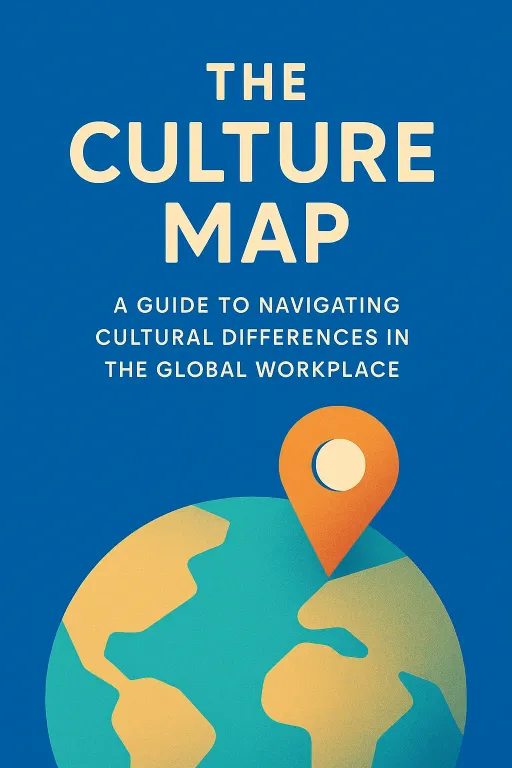
Nova: Exactly! And those five words perfectly encapsulate why we're diving into some truly essential wisdom today. We’re drawing primarily from Erin Meyer's groundbreaking work, "The Culture Map," and Terri Morrison's incredibly practical guide, "Kiss, Bow, or Shake Hands."
Atlas: Meyer’s book is phenomenal, it's widely acclaimed for giving people a real framework, not just anecdotes. It's like a Rosetta Stone for global interactions, especially in business, right? It helps you understand people from different places do what they do.
Nova: Absolutely! It’s become a go-to for anyone working internationally. And Morrison's book is the perfect companion, giving you the actual phrases and gestures for those moments when you're just not sure how to navigate a specific situation. So, Atlas, when you said "don't offend, actually connect," it really highlights the core problem we're tackling: how to move past cultural bewilderment and truly thrive in our interconnected world.
Atlas: Yes, because it’s more than just being polite, isn't it? It's about genuine collaboration and progress.
Nova: It really is. And the cold fact is, navigating different cultures can feel like walking through a minefield. Misunderstandings aren't just awkward; they actively hinder progress and connection. Understanding these cultural dimensions is crucial for effective collaboration.
Decoding the Invisible Cultural Operating System: Meyer's Eight Dimensions
SECTION
Nova: So, let's start with Meyer's "Culture Map" because it gives us the. She argues that culture isn't just about food or holidays; it's an invisible operating system, a set of unspoken rules that govern how people perceive the world, communicate, and even lead.
Atlas: An invisible operating system. I can definitely relate to that feeling of being in a new country or working with a global team, and it's like everyone else is running on different software. You just know something's off, but you can't quite put your finger on it.
Nova: Precisely. Meyer breaks this down into eight dimensions. Let's look at a couple that often cause immediate friction. One is "Communicating: Low-Context vs. High-Context." In low-context cultures, like the US or Germany, communication is direct, explicit, and clear. What you hear is usually what's meant.
Atlas: So, no hidden meanings, no reading between the lines. Straight to the point.
Nova: Exactly. But in high-context cultures, like Japan, China, or many Latin American countries, communication is nuanced, layered, and often implicit. The message is embedded in the context, body language, tone, and shared history. You're expected to read between the lines.
Atlas: Oh, I see how that would be a huge source of misunderstanding. Someone from a low-context culture might think a high-context speaker is being vague or evasive, while the high-context person might find the low-context speaker rude or even simplistic.
Nova: That's a perfect example of the clash. Let me give you a vivid case study from Meyer's book. She describes a situation with a French manager, Pierre, managing an American team. Pierre is giving feedback to an American employee, Sarah. In France, direct, critical feedback, especially when delivered in a group, is often seen as a sign of respect for your intelligence; it means they believe you can handle it and improve.
Atlas: Wow. That's already a complete flip from how typically Americans perceive feedback. We usually like it delivered privately, and often softened.
Nova: Right. So, Pierre, thinking he's being helpful, tells Sarah quite directly in a team meeting that her proposal has "significant structural weaknesses" and "lacks logical rigor." He then moves on, expecting her to absorb it and improve.
Atlas: Oh no. I can feel the tension in the room just hearing that. What was Sarah's reaction?
Nova: Sarah was devastated. She felt publicly humiliated, her confidence shattered. She interpreted Pierre's directness as a sign that he thought she was incompetent and that her career was over. She started to disengage, becoming less productive.
Atlas: That's heartbreaking, and such a classic example of cultural friction. Pierre thought he was being effective, even helpful, but entirely missed the mark because he didn't understand the American cultural operating system for evaluation. So, how does Meyer's framework help here?
Nova: It maps these differences. Another dimension is "Evaluating: Direct Negative Feedback vs. Indirect Negative Feedback." American culture, while low-context in communication, is often indirect in negative feedback, especially publicly. We use "feedback sandwiches" or soften the blow. French culture, on the other hand, is both high-context in communication direct in negative feedback.
Atlas: That's a fascinating nuance! So, it's not just about how you say things, but you criticize them too. Pierre wasn't just being direct; he was being direct in a way that was culturally appropriate for but completely alien and damaging for Sarah.
Nova: Exactly. Had Pierre understood these two dimensions, he could have adjusted his approach. He might have delivered the feedback privately, or framed it more constructively, or even understood Sarah's reaction not as personal weakness, but as a cultural response. The framework gives you the lens to see these interactions not as personal affronts or incompetence, but as predictable cultural clashes.
Atlas: That makes so much sense. It's like learning the grammar of a language before you try to write poetry in it. You need to know the basic rules of interaction first.
From Understanding to Action: Mastering the Art of Cross-Cultural Rapport
SECTION
Atlas: Okay, so we've got the map, we understand these differences exist and how they can cause friction. But how do we actually? How do we avoid those cultural potholes and build genuine rapport, especially when we're in the moment?
Nova: That's where the second layer comes in – moving from understanding the dimensions to mastering the art of cross-cultural rapport. This is where Terri Morrison's "Kiss, Bow, or Shake Hands" becomes invaluable. It's about knowing the specific customs and etiquette that can build or break rapport.
Atlas: So, it's the practical guidebook for navigating the terrain once you've studied the map. Give me an example. What's one of those small gestures that can make a huge difference?
Nova: Think about gestures as a form of non-verbal communication. In many Southeast Asian cultures, pointing with your index finger is considered rude. You might use an open hand or a slight nod of the head instead. Or consider the simple act of exchanging business cards in Japan. It’s not just a quick swap. You present your card with both hands, text facing the recipient, and then you receive theirs with both hands, studying it carefully before placing it respectfully on the table in front of you.
Atlas: Wow. I always just pocketed them. That could definitely be interpreted as dismissive or disrespectful in a high-context culture where every detail matters. So, a seemingly tiny action can have enormous implications for building trust.
Nova: Absolutely. It shows respect for the person, their company, and their culture. Another common one is the concept of personal space. In some Latin American or Middle Eastern cultures, standing closer during conversation is a sign of warmth and engagement. In others, like many North European or Asian cultures, a wider personal bubble is maintained.
Atlas: I've definitely experienced that! Sometimes you feel like you're constantly backing away in a conversation, and they keep stepping forward, and it creates this awkward dance. So, it's about being aware of these non-verbal cues and adjusting your own behavior.
Nova: Exactly. It's about showing respect through adaptation, not just memorization. Morrison's work is full of these specific insights, country by country, helping you understand the nuances of greetings, gift-giving, negotiation styles, and even table manners.
Atlas: That's incredibly helpful. But for a curious learner who wants to apply this, it feels like a lot to remember. Is there a universal "do" that works almost everywhere, or is it always context-dependent? I mean, how can someone start without feeling like they're performing or faking it?
Nova: That's a brilliant question, and it's key. The goal isn't to become someone you're not, or to memorize an endless list of rules. The "universal do" is genuine curiosity and respectful observation. Start by listening more than you speak, observing how others interact, and asking open-ended questions.
Atlas: So, instead of thinking, "What's the rule here?" it's more like, "What can I learn about how people connect in this environment?"
Nova: Precisely. And when in doubt, default to a slightly more formal, respectful approach. Overly polite is generally safer than overly casual. And always, always show genuine interest in understanding their perspective. That goes a long way.
Atlas: That's actually really inspiring. It frames it as a journey of discovery rather than a minefield to avoid.
Synthesis & Takeaways
SECTION
Nova: It truly is a journey. And when you combine Meyer's framework – understanding the underlying cultural dimensions – with Morrison's practical etiquette, you get a powerful toolkit. You move from culturally blind stumbling to culturally intelligent navigation. It's not about memorizing every single rule for every single country, but about developing a mindset of awareness and adaptation.
Atlas: So, it's about having the diagnostic tools to understand something felt off, and then having the practical guidance to know to do differently next time. For anyone who's ever felt that pang of confusion or awkwardness in a cross-cultural interaction, this really offers a path forward.
Nova: Absolutely. It helps you see that what might seem like a personality conflict or a lack of competence is often just a clash of invisible operating systems. And once you see that, you can adjust.
Atlas: That's a profound shift in perspective. Instead of blaming individuals, you can identify the cultural dimension at play. So, for our listeners, the curious learners out there, what's one tiny step they can take today to start applying this?
Nova: Here's a really actionable one, drawn straight from the content: Identify one recent cross-cultural interaction that felt off. Maybe it was a meeting, an email exchange, or even a casual conversation. Then, try to map it using one or two of Meyer's frameworks – like the communication or evaluation dimensions we discussed. See if you can pinpoint the cultural dimension at play.
Atlas: That's a brilliant exercise. It turns past awkwardness into a learning opportunity. And then, armed with that insight, maybe next time, try one small, intentional gesture inspired by what we discussed today – perhaps adjusting your feedback style, or how you handle a business card.
Nova: Exactly. Small steps, big impact. Because ultimately, mastering cultural nuance isn't just about avoiding offense; it's about building bridges, fostering genuine connection, and unlocking the immense potential of our interconnected world.
Atlas: And that's how we move from surviving cultural differences to truly thriving in them.
Nova: This is Aibrary. Congratulations on your growth!