The 'Culture Shock' Trap: Why You Need a Mental Toolkit
Golden Hook & Introduction
SECTION
Nova: Atlas, five words to describe the feeling of 'culture shock'?
Atlas: Hmm. Exciting, confusing, isolating, growing, ultimately rewarding.
Nova: Oh, I like that 'ultimately rewarding.' Mine is: 'Lost in translation, then found.'
Atlas: That’s a good one too! Because it really does feel like a journey, doesn't it? Like you're constantly trying to find your footing.
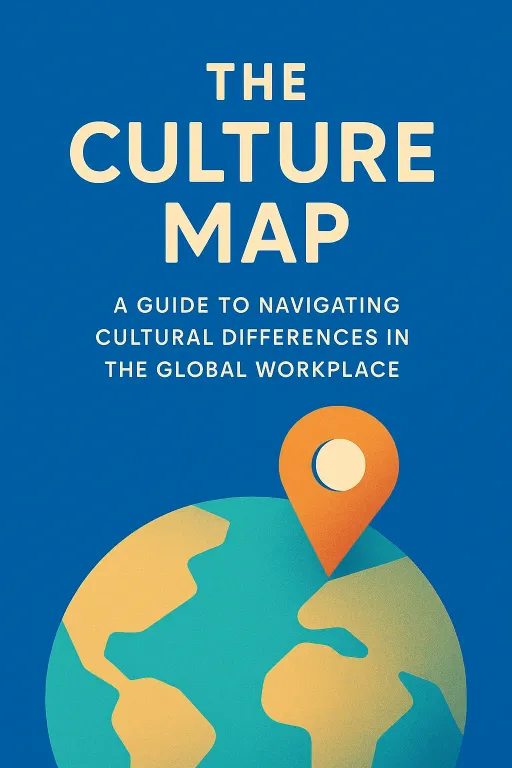
Nova: Exactly. And today, we're talking about navigating those cultural currents, drawing insights from two incredible books. We’re diving into Erin Meyer’s The Culture Map and Carol Dweck’s Mindset. These aren't just academic texts; they're literal toolkits for anyone stepping into a new cultural landscape.
Atlas: Meyer, a professor at INSEAD, literally created a framework that global executives now use to bridge divides. I mean, her work is a cornerstone for anyone in international business.
Nova: Absolutely. And Dweck’s work, well, it fundamentally shifted how we understand human potential and how we approach challenges. Together, these books offer a powerful one-two punch for anyone looking to not just survive, but truly thrive, in a new environment.
Atlas: I imagine a lot of our listeners, especially those planning big moves or already in a new country, feel this deeply. It’s not just about learning a new language, is it? It’s about the unseen rules.
Nova: It’s precisely about those unseen rules. And that brings us to our first core idea: using Meyer’s Culture Map as your personal compass.
The 'Culture Map' as Your Compass
SECTION
Nova: Think about it: you land in a new country, everything feels different. The way people talk, the way they lead, even how they disagree. It's not just a language barrier; it's a cultural one. Meyer's genius was to distill these vast differences into eight scales.
Atlas: Eight scales! That sounds incredibly practical. So it’s like a cheat sheet for human interaction?
Nova: In a way, yes! But a very nuanced one. Let’s take two of the most critical: "Communicating: Low-Context vs. High-Context" and "Evaluating: Direct Negative Feedback vs. Indirect Negative Feedback."
Atlas: Okay, lay it on me. What do those even mean?
Nova: Alright. Imagine you're an American manager, used to a low-context culture. You believe good communication is precise, explicit, and clear. You say exactly what you mean. Now, you’re managing a team in Japan, which is a high-context culture. For them, good communication is nuanced, layered, and often unstated. Meaning is embedded in shared history, subtle cues, and body language.
Atlas: Oh, I can already see where this is going.
Nova: Exactly. So, an American manager, let's call him Mark, needs to tell his Japanese employee, Kenji, that his recent report needs significant revisions. Mark, being from a low-context culture, thinks, "I need to be direct to be clear." He pulls Kenji aside and says, "Kenji, this report is not up to standard. The data is incomplete, and the analysis is weak. You need to redo it."
Atlas: Ouch. I imagine that doesn't go over well.
Nova: That’s an understatement. For Kenji, in his high-context culture, direct public criticism like that is incredibly humiliating. It's not just about the report; it's a public loss of face, a profound disrespect. He might nod, smile, and say, "Yes, I understand," but internally, he's crushed, demotivated, and might even consider resigning.
Atlas: Wow. So it’s not about being rude, but about the cultural wiring? It’s genuinely a misunderstanding of how respect and communication are conveyed.
Nova: Exactly. Mark thought he was being clear and efficient. Kenji felt shamed and disrespected. The intention was to improve the report, but the outcome was alienation. Meyer highlights that in high-context cultures, feedback is often delivered indirectly, wrapped in positive comments, or given privately through a trusted intermediary. It’s about preserving harmony and saving face.
Atlas: That’s a huge difference. I imagine a lot of our listeners, especially those in high-stakes professional environments, encounter this daily. How does someone even begin to decode these invisible rules when they’re new somewhere? It must feel like walking through a minefield.
Nova: It can, at first. But Meyer's map gives you the grid. Once you know these scales, you start observing. You see that in some cultures, people might say "That's an interesting idea" when they actually mean "That's a terrible idea." In others, "No" is a perfectly acceptable and common response. The map helps you predict and understand behavior, moving you from confusion to clarity. It’s about equipping yourself with the knowledge of how different cultures typically operate, so you can adjust your own approach, rather than just reacting.
Atlas: So, it’s not about changing who you are, but adapting how you interact. That's a critical distinction. So, what you're saying is, if you're an aspiring immigrant, you need to understand not just what people, but they say it, and what’s being said. It's like learning to read between the cultural lines.
Cultivating a 'Growth Mindset' for Cultural Adaptation
SECTION
Nova: Precisely. And that naturally leads us to our second key idea, which often acts as the internal counterpoint to these external cultural maps: cultivating a 'Growth Mindset' for cultural adaptation, as articulated by Carol Dweck.
Atlas: Okay, so Meyer gives us the external map, Dweck gives us the internal compass. I’m curious, what’s the biggest trap people fall into when adapting to a new culture?
Nova: The biggest trap is falling into a fixed mindset. When you're new somewhere, you’re constantly making mistakes—pronouncing words wrong, misunderstanding social cues, wearing the wrong thing. In a fixed mindset, you see these blunders as proof of your inadequacy. "I'm just not good at this," you think. "I'll never fit in."
Atlas: That sounds rough. I imagine a lot of us have felt that, even just moving to a new city, let alone a whole new country. It’s that feeling of being an outsider, and every mistake feels like a spotlight.
Nova: It does. Let's take an example: Sarah moves to Germany. She's at a formal dinner, and she accidentally uses the informal "du" instead of the formal "Sie" when addressing her host’s elderly mother. It’s a common mistake, but a significant social faux pas. In a fixed mindset, Sarah would be mortified. She'd think, "I'm so clumsy, I'll never learn this," and might withdraw from social situations, fearing more mistakes.
Atlas: But wait, isn't it just easier to stick to what you know when things get tough? It takes so much energy to constantly be "on" and learning.
Nova: That’s the allure of the fixed mindset, Atlas—it protects your ego in the short term by avoiding perceived failure. But with a growth mindset, Sarah would react differently. She'd feel embarrassed, yes, but she’d reframe it. She'd think, "Okay, that was a mistake, but it's a valuable lesson. Now I understand the importance of formal address. Next time, I'll be more careful."
Atlas: So, it’s about transforming that embarrassment into valuable data. How do you even begin to shift from feeling embarrassed to feeling empowered after a mistake, especially when you’re already feeling vulnerable in a new place?
Nova: It starts with awareness. Dweck shows us that adapting to a new culture is a continuous learning curve, not a test you pass or fail. Every cultural misstep isn't a sign of your incompetence; it's an opportunity to learn. It’s about seeing yourself as a work in progress, a cultural apprentice, rather than a finished product that's suddenly flawed.
Atlas: That makes sense. It’s about accepting that you’re going to make mistakes, and that’s part of the process. It’s a strategic reframing. For someone building a new life, a new foundation, that mindset is absolutely crucial. It's the difference between feeling defeated and feeling like you're on an adventure.
Synthesis & Takeaways
SECTION
Nova: Exactly. So, when we bring Meyer and Dweck together, we see a powerful synergy. Meyer's Culture Map gives you the 'what' to look for—the specific dimensions of cultural difference you'll encounter. It helps you anticipate where communication might break down, or where leadership styles might clash.
Atlas: And Dweck's Mindset gives you the 'how' to approach that learning process. It’s the resilience, the adaptability, the belief that you can grow and change, even when you inevitably stumble.
Nova: Right. You have the external framework to understand the environment, and the internal framework to navigate your own reactions and maintain your drive. It's not about becoming someone else; it's about expanding your capacity to connect and understand. It's about embracing the uncomfortable as the ultimate classroom.
Atlas: That’s actually really inspiring. Because moving to a new country can feel like a constant unknown, but what you’re saying is, with these tools, it becomes a predictable challenge you can learn from, rather than an overwhelming mystery. It's about building a strong foundation, not just hoping for the best.
Nova: Absolutely. It’s about equipping yourself to confidently bridge cultural gaps and build strong connections. It transforms the 'culture shock' trap into a launchpad for growth.
Atlas: So, for our listeners, here’s a tiny step. Think about one cultural norm you’ve observed recently, perhaps even in your own community, and try to place it on one of Erin Meyer's scales. Was it about directness in feedback? How decisions are made?
Nova: And we’d love to hear about your "aha!" moments, or even your biggest cultural challenges. What have you learned? What insights have these books sparked for you? Share your observations and experiences on our community platforms. We want to hear from you.
Atlas: Get out there, observe, learn, and grow.
Nova: This is Aibrary. Congratulations on your growth!