The Art of Seeing: How to Discern Culture's Invisible Threads
Golden Hook & Introduction
SECTION
Nova: Atlas, what if I told you that being 'polite' could actually be the most offensive thing you do in a business meeting this week?
Atlas: Oh, I like that. See, my immediate reaction is, "How is that even possible?" Isn't politeness universally good? Like, please and thank you, holding doors open—that's just good humaning, right?
Nova: Exactly! That's the common assumption. But here's the fascinating, often frustrating, truth: what's considered polite, efficient, or even logical in one culture can be completely misunderstood, or worse, deeply offensive, in another. We're talking about invisible barriers that trip us up every single day, especially in our increasingly globalized world.
Atlas: Wow. So it's not just about language, it's about something much deeper. I'm curious how we even begin to untangle that.
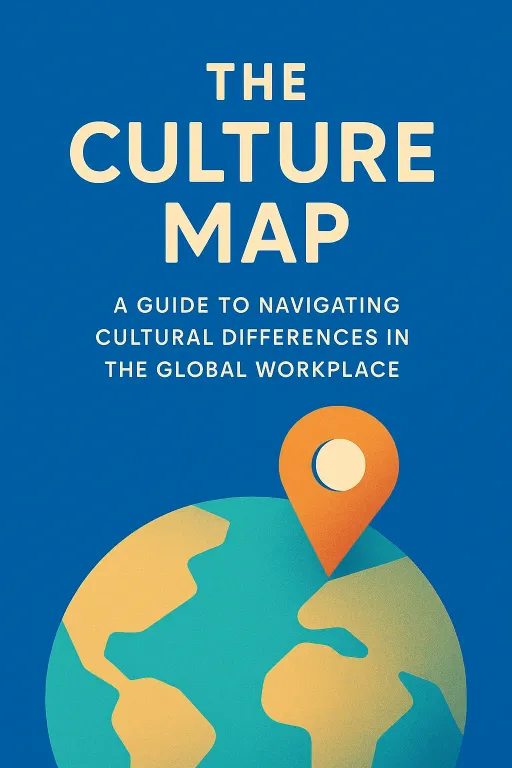
Nova: That's precisely what we're diving into today. We're exploring the art of seeing those invisible threads, thanks to two brilliant minds who gave us the tools to do it. First up, we're looking at by Erin Meyer. She's a professor at INSEAD, one of the top business schools globally, and her book is practically a field guide for executives navigating multinational teams. It's renowned for its pragmatic, actionable framework.
Atlas: So, a "map" for cultural nuances. I can already see how that would be invaluable for anyone working in diverse environments, trying to bridge those gaps.
Nova: Absolutely. And it's not just for big corporations. These insights apply to everyday interactions, too. But to truly understand the depth of these cultural forces, we also need to look at the pioneering work of Geert Hofstede, author of.
Atlas: Ah, Hofstede. That name rings a bell from some of my deeper dives into organizational behavior.
Nova: For good reason. Hofstede's research was revolutionary. He started this incredible journey back in the 1960s and 70s, collecting data from over a hundred thousand IBM employees across fifty countries. It was initially met with some skepticism, but his work has become the bedrock of cross-cultural psychology and management. It fundamentally changed how we understand national cultures, almost like discovering the operating system behind human societies.
Atlas: That’s a great way to put it, "the operating system." So, if Meyer gives us the practical map for navigation, Hofstede gives us the schematics for the engine itself. I'm ready to learn how these two pieces fit together.
Mapping Cultural Dimensions with Erin Meyer & Compelling Case Study 1
SECTION
Nova: Let's start with Erin Meyer's. She breaks down cultural differences into eight key dimensions, helping us understand how cultures vary in areas like communicating, evaluating, leading, and even disagreeing. It’s like a compass that points out where your cultural default might clash with someone else's.
Atlas: That makes sense. So, instead of feeling like you're just flailing in the dark, you have a framework to analyze specific interactions. Which of her dimensions do you think is the most common tripwire?
Nova: Oh, a huge one, and often the source of that "politeness as offense" conundrum, is the "Communicating" scale: low-context versus high-context cultures. In low-context cultures, like the U. S. or Germany, communication is explicit, clear, and direct. The message is in the words.
Atlas: Right, get to the point. Don't beat around the bush.
Nova: Exactly. But in high-context cultures, like Japan, China, or many Latin American countries, communication is nuanced, layered, and often implicit. The message isn't just in the words; it's in the tone, the context, the relationship, the shared history. You have to read between the lines.
Atlas: I can see how that would lead to immediate friction. A low-context person would think a high-context person is being vague, and vice versa.
Nova: Precisely. And it gets even more interesting when you layer on her "Evaluating" dimension: direct versus indirect negative feedback. Again, the U. S. tends to be direct, while many Asian cultures are highly indirect.
Atlas: So, you're saying if a manager from a direct, low-context culture gives feedback to an employee from an indirect, high-context culture, it could go spectacularly wrong?
Nova: Oh, it absolutely can. Let me paint a picture for you. Imagine an American software development manager, let's call him Mark, working in Tokyo. He's managing a brilliant Japanese engineer, Kenji. Mark believes in transparency and direct feedback, a hallmark of his culture. So, during a one-on-one, Mark says, "Kenji, your code for the new module is solid, but the user interface isn't intuitive enough. It needs a complete overhaul before launch." He thinks he's being clear, helpful, and direct, trying to improve the product.
Atlas: Okay, sounds like a pretty standard performance review, maybe a little blunt, but professional.
Nova: Now, for Kenji, who comes from a high-context, indirect feedback culture, this was devastating. In his culture, direct criticism, especially in front of others or without extensive prior hinting, is seen as a profound loss of face. It implies he failed the team, disgraced himself, and that his manager has lost faith in him. He might even hear it as a public rebuke, even though it's one-on-one.
Atlas: Wow. So Mark thought he was being efficient and transparent, but Kenji heard it as a personal attack, almost an insult to his honor. The intent and the reception are worlds apart.
Nova: They are. Kenji might nod politely, say "yes, understood," but inside, he might be feeling intense shame and demotivation. He might start to withdraw, avoid Mark, or even consider resigning, believing he's no longer valued. All because Mark, operating from his own cultural map, didn't realize the 'invisible threads' of indirect communication and evaluation.
Atlas: That’s actually really inspiring, because it shows how a simple misunderstanding can have such profound consequences. It's not about malice, it's about mismatch. So, Mark, in that situation, should have given feedback in a much more roundabout way, perhaps through a group discussion, or emphasizing team goals, without singling Kenji out?
Nova: Exactly. Or, if it had to be individual, perhaps framing it as a collective challenge, offering to work Kenji, or even delivering it through a third party. The point isn't that one way is right or wrong, but that understanding the is crucial for effective collaboration. It’s about adapting your style strategically, not abandoning your values, but expressing them in a way that resonates culturally.
Unearthing Deep Cultural Structures with Geert Hofstede & Illuminating Case Study 2
SECTION
Nova: That example of Mark and Kenji perfectly illustrates Meyer's practical application. But to understand cultures have such different communication and evaluation styles, we need to go deeper, into the foundational work of Geert Hofstede. While Meyer gives us the "what to do," Hofstede helps us understand the "why it matters," the deeply ingrained societal values.
Atlas: So, if Meyer is the practical navigator, Hofstede is the cultural anthropologist, digging into the bedrock of what makes us tick. And his research at IBM sounds like an incredible undertaking. How did he distill such vast amounts of data into usable dimensions?
Nova: He identified several key dimensions, but two particularly shed light on our earlier example: "Power Distance" and "Individualism versus Collectivism." Power Distance measures the extent to which less powerful members of institutions and organizations accept and expect that power is distributed unequally.
Atlas: Okay, so some cultures are more comfortable with hierarchies and authority, while others prefer a flatter structure?
Nova: Precisely. In high-power distance cultures, like many in Asia, Latin America, or the Middle East, there's a greater acceptance of hierarchical structures. Subordinates don't challenge superiors; decisions flow from the top down. In low-power distance cultures, like Nordic countries or Israel, there's less acceptance of unequal power, and people are more likely to challenge authority.
Atlas: That makes perfect sense. And Individualism versus Collectivism? That sounds like the classic "me" versus "we" dynamic.
Nova: It is. Individualistic cultures, like the U. S. or Western Europe, emphasize personal achievement, self-reliance, and individual rights. Collectivist cultures, common in Asia, Africa, and Latin America, prioritize group harmony, loyalty, and the well-being of the collective over individual desires.
Atlas: So, let's take your Mark and Kenji example and layer Hofstede onto it. Kenji's reaction wasn't just about politeness; it was about the deep cultural conditioning of collectivism and potentially higher power distance.
Nova: Exactly. In Kenji's collectivist culture, the group's harmony and reputation are paramount. Direct criticism, especially from a superior, could be perceived as threatening that harmony and causing Kenji to "lose face," which impacts not just him, but his family and his team. The collective shame is profound. This isn't just about a communication style; it's about deeply held values.
Atlas: That makes me wonder, are these dimensions static? With globalization, are cultures just blending into one big mash-up? Or do these foundational layers persist?
Nova: That's a great question, and it's something Hofstede himself addressed. While cultures are dynamic and evolve, these deep dimensions, the "software of the mind," tend to be incredibly persistent. They're shaped over centuries by history, religion, geography, and economic systems. So, while specific behaviors might adapt, the underlying values often remain remarkably stable. Think of it like a computer's operating system. You can install new apps, but the core OS is still running underneath.
Atlas: That’s a perfect analogy. So, even if we're all on Zoom calls together, the invisible cultural threads are still pulling us in different directions. And understanding that pull is key.
Nova: Absolutely. It's about recognizing that our own cultural software isn't the universal default. It's one of many equally valid, deeply ingrained operating systems. And that recognition is the first step towards true cultural intelligence.
Synthesis & Takeaways
SECTION
Nova: So, bringing Meyer and Hofstede together provides this incredibly powerful lens. Meyer gives us the practical map to navigate the immediate challenges in communication, evaluation, or leadership. Hofstede gives us the profound understanding of the underlying values and historical forces that shaped those differences.
Atlas: In other words, Meyer tells you to adjust your sailing, and Hofstede tells you about the deep ocean currents that are truly moving the ship. It's not just about avoiding offense, it's about building genuine trust and effective collaboration.
Nova: Precisely. It transforms abstract concepts into actionable insights. It makes you realize that cultural differences aren't just obstacles; they're opportunities for deeper understanding, for richer solutions, and for building stronger, more resilient global teams. When you understand the "software of the mind," you can write better programs for human connection.
Atlas: That’s such a hopeful way to look at it. Instead of getting frustrated by miscommunication, we now have tools to diagnose and adapt. So, for our curious listeners who want to start applying this, what's a tiny step they can take today?
Nova: The tiny step is simply to observe. Think about a recent cross-cultural interaction you observed, perhaps at work, in a news story, or even with a friend from a different background. Then, try to map it using one of Meyer's or Hofstede's dimensions. Was it about direct versus indirect communication? Power distance? Individualism? Just identifying it is a huge leap forward.
Atlas: I love that. It's not about memorizing rules, it's about developing an eye for the invisible. Start seeing those threads, and you start understanding the whole tapestry.
Nova: Exactly. It's a journey, but one that leads to profound personal and professional growth.
Atlas: Fantastic. Thank you, Nova. This has been incredibly insightful.
Nova: My pleasure, Atlas.
Nova: This is Aibrary. Congratulations on your growth!