The Accent Trap: Why 'Native-Like' Isn't Your True Goal
Golden Hook & Introduction
SECTION
Nova: What if the very thing you're striving for to sound more credible, more impressive, is actually holding you back from true influence?
Atlas: Hold on, are we talking about accents again? Because I thought the whole point was to sound... 'perfect.'
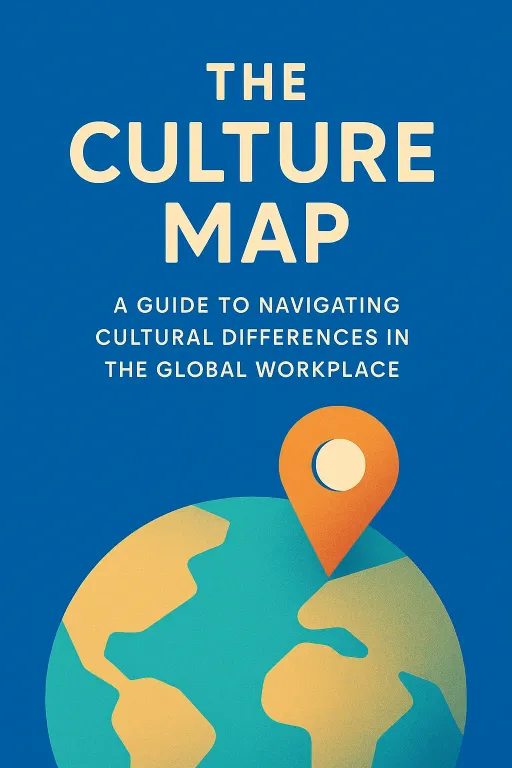
Nova: Precisely, Atlas. Today we’re diving into why that chase for 'native-like' isn't your true goal. Think of the groundbreaking work by people like Erin Meyer in "The Culture Map" and Terri Morrison and Wayne A. Conaway in "Kiss, Bow, or Shake Hands." These aren't just language guides; they're deep dives into how our messages truly land across the globe, often showing us that communication is far more nuanced than just pronunciation. It’s about so much more than just the sounds you make.
Atlas: Okay, so you're saying the 'accent trap' is a thing? Because I imagine a lot of our listeners, especially those in high-stakes professional environments, feel that pressure to conform.
Nova: Absolutely. It's a massive blind spot. Many professionals, driven by the desire for precision and impact, believe that sounding 'native' is the ultimate key to being understood and respected. But this often leads them down a path that overlooks far more critical elements of influence.
The Accent Trap: Why 'Native-Like' Isn't the Goal
SECTION
Atlas: So, if it's a blind spot, what exactly are we missing? What's the real problem with focusing so much on accent reduction, especially if someone just wants to be perfectly clear?
Nova: The problem is that while clarity is paramount, it’s not synonymous with accent reduction. You can have a strong accent and still be perfectly intelligible. The trap is believing that erasing your accent is the or way to achieve influence. Consider the story of a brilliant tech lead, let's call her Anya, originally from Eastern Europe, who was leading a diverse, global team. Anya was incredibly skilled, but she felt her accent was a barrier to her upward mobility. She invested thousands in accent reduction coaching, meticulously practicing intonation and vowel sounds.
Atlas: I can see how that would be a natural instinct for someone driven by mastery. You want to eliminate any potential friction, right?
Nova: Exactly. But here’s the kicker: despite her significantly improved pronunciation, her team still struggled to understand her strategic directives. It wasn't her accent; it was her communication style. Anya, coming from a high-context culture, often communicated indirectly, expecting her team to read between the lines or infer meaning from subtle cues. Her American-based team, accustomed to low-context, direct communication, found her approach vague and confusing.
Atlas: Wow, so she was fixing the wrong problem. That’s incredible. She was focusing on she sounded, not her message was structured for her audience.
Nova: Precisely. The outcome was a loss of trust and clarity, not because of her accent, but because of a mismatch in cultural communication expectations. She sounded 'more native,' but her message wasn't landing. The book "The Culture Map" by Erin Meyer details these exact scenarios—how communication styles vary greatly across cultures. Directness, context, even how feedback is given, all have different meanings.
Atlas: But wait, looking at this from a professional's perspective, isn't there a baseline of intelligibility that needs to be met? If I can barely understand someone, doesn't that inherently hinder communication, regardless of cultural context?
Nova: Absolutely, there's a baseline of intelligibility. Clarity in pronunciation, appropriate pacing, and clear articulation are foundational. The point is, achieving that baseline doesn’t require you to sound like you grew up in a specific region. It requires you to be understood. The trap is when the pursuit of a 'native-like' accent becomes an end in itself, rather than a means to genuinely connect and influence. It can actually distract from the more impactful work of understanding your audience’s cultural lens.
Cultural Intelligence & Authentic Voice: The True Levers of Influence
SECTION
Atlas: So, if the accent trap is a distraction, what truly drives influence and authentic connection in a globalized world? What’s the shift we need to make?
Nova: This leads us naturally to what actually works, beyond merely perfecting an accent. It's about a shift in focus towards what we call "cultural intelligence" and leveraging your authentic voice. Erin Meyer’s research vividly illustrates how different cultures process information and interact. For instance, in some cultures, direct feedback is seen as disrespectful, while in others, it’s a sign of clarity and honesty.
Atlas: Can you give an example of how that plays out? Because that sounds like it could be a minefield for someone trying to lead a global team.
Nova: Imagine a business negotiation between a Western executive, let's say, an American, and a Japanese counterpart. The American executive expects a clear "yes" or "no" to proposals. However, in Japanese business culture, direct refusal can be seen as impolite. So, the Japanese executive might respond with "that will be difficult" or a polite silence, which to the American could sound like hesitation or even agreement.
Atlas: Oh man, I’ve been there! You walk away thinking you have a deal, and then find out later it was a polite no. That wasn’t about anyone’s accent; it was about totally different ways of signaling intent.
Nova: Exactly. And this is where books like "Kiss, Bow, or Shake Hands" by Terri Morrison and Wayne A. Conaway become invaluable. They detail specific cultural nuances in business, highlighting that verbal clarity is just one piece of the puzzle. Non-verbal cues, like the depth of a bow, the firmness of a handshake, and cultural etiquette around gift-giving or personal space, play a massive role in how your message is received. An impeccably pronounced sentence can be completely undermined by a cultural faux pas.
Atlas: So, it's about being intelligible, yes, but then layering on this deep understanding of how communication works in different contexts. That makes me wonder, if I'm not chasing a 'native' accent, what I chasing? How do I leverage my 'unique perspective' without it being a barrier?
Nova: Your unique perspective is your power, Atlas. It's about adapting your and to your audience, not erasing your identity. Focus on clear articulation, appropriate pacing, and using a professional vocabulary relevant to your field. Then, actively develop your cultural intelligence. This means observing, asking questions, and learning the communication norms of those you interact with. It’s about building rapport by showing respect for their cultural context. Your accent is part of your unique voice, and when it's paired with clarity and cultural savvy, it becomes an authentic differentiator.
Atlas: That’s actually really inspiring. It sounds like an empowering mindset shift, moving from trying to camouflage yourself to strategically engaging with the world as you are, just with more tools.
Nova: Absolutely. It’s about being understood and respected across diverse cultures, embracing your unique voice while strategically adapting your message for maximum impact. It's a far more powerful and authentic path to influence than chasing an accent that isn't yours.
Synthesis & Takeaways
SECTION
Atlas: So basically, instead of trying to blend in, we should be learning to navigate the diverse communication landscape with our own voice. It’s about trust and influence, not just pronunciation.
Nova: That’s it. For professionals driven by impact, the goal isn't to sound like someone else. It's to be understood and respected, to connect authentically. That requires clarity, yes, but also a deep understanding of cultural nuances and the confidence to leverage your unique perspective. It’s a powerful message for anyone who's ever felt like they needed to change who they are to succeed.
Atlas: What’s one practical action our listeners can take to start this shift today?
Nova: Start small. For the next week, dedicate ten minutes a day not to accent reduction, but to actively listening to how people from different cultural backgrounds communicate. Observe their directness, their use of context, their non-verbal cues. And practice adapting your own message in subtle ways to connect more effectively with different individuals.
Atlas: That gives me chills. It’s about building bridges, not erasing your identity.
Nova: Exactly. Your unique perspective is your power. This is Aibrary. Congratulations on your growth!