Beyond Borders: Cultivating a Global Mindset for Deeper Connection
Golden Hook & Introduction
SECTION
Nova: What if I told you that simply being 'open-minded' isn't enough to truly connect across cultures? In fact, sometimes, that very open-mindedness can inadvertently lead to deeper misunderstandings.
Atlas: Whoa, really? That feels counterintuitive. I mean, we're always told to be tolerant, to be accepting. Are you saying that's not the full picture, or even a misleading one?
Nova: Absolutely. It's a fantastic starting point, Atlas, but it's like saying you're 'open-minded' about learning a new language without actually learning the grammar or vocabulary. You might listen, but you won't truly. And in our increasingly interconnected world, that gap between listening and understanding can create real friction.
Atlas: That makes me wonder, then, what the actual instruction manual for navigating those invisible cultural currents? Because "just be nice" clearly isn't cutting it.
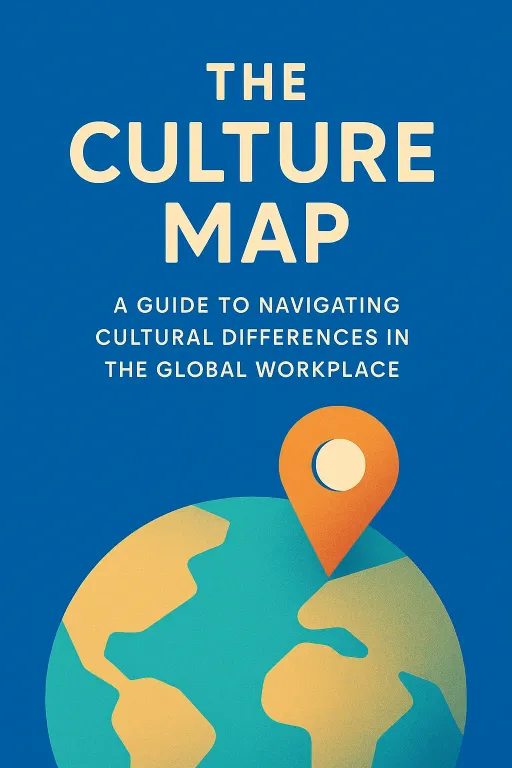
Nova: Exactly. And that's precisely what we're diving into today, inspired by the profound insights in the book "Beyond Borders: Cultivating a Global Mindset for Deeper Connection." We're going to explore how we can move beyond mere tolerance to genuine, deep connection. And our guides today are two brilliant minds: Erin Meyer, the author of "The Culture Map," renowned for her practical, data-driven approach to global business, and the Nobel laureate Daniel Kahneman, whose groundbreaking work on cognitive biases, "Thinking, Fast and Slow," reveals how our own minds can either help or hinder our understanding.
Atlas: Okay, so this isn't just about external cultural differences, but also about the internal wiring that shapes how we perceive them. That sounds like a journey for anyone who values wisdom and growth. So, how do we actually decoding these unspoken rules?
Decoding Unspoken Cultural Rules with Erin Meyer
SECTION
Nova: Well, let's start with Erin Meyer. Her work is a revelation because she gives us a framework, a literal 'map,' to understand these invisible cultural dynamics. Imagine you're on a team, and someone from a different country never gives direct negative feedback. You might think they're being passive-aggressive, or perhaps they're just not doing their job.
Atlas: I can completely picture that. I imagine a lot of our listeners have been in meetings where someone from one culture might be very direct, almost blunt, while someone from another seems to always beat around the bush, and it just creates this awkward tension.
Nova: Precisely. Meyer would explain this through her 'Direct vs. Indirect Negative Feedback' scale. In high-context cultures, like many in East Asia, feedback is often delivered indirectly, wrapped in positive comments, or communicated through non-verbal cues. The group harmony is paramount, and direct confrontation can cause immense loss of face. Contrast that with, say, Dutch or German cultures, where direct, explicit feedback is not only expected but appreciated as efficient and honest.
Atlas: So, it's like two people speaking different languages, but both they're speaking global business-speak. And then they get offended because the other person isn't following unspoken rules.
Nova: That's a perfect analogy! Let me give you a classic example Meyer often shares. A French executive was leading a team with a German colleague. The German colleague would send incredibly detailed, almost bullet-proof emails outlining issues and solutions. The French executive found this almost insulting, thinking, "Does he not trust me? Why is he dictating everything?"
Atlas: Oh man, I can feel the tension from here. The French executive probably thought the German was micromanaging, or being overly rigid.
Nova: Exactly. But from the German perspective, that level of detail and explicit instruction was a sign of respect, a thoroughness that ensured clarity and efficiency. It wasn't about micromanaging; it was about preventing errors and showing competence. The unspoken cultural rule for the German was "clarity is king," while for the French, it was "trust in competence through more implicit understanding."
Atlas: That’s a great way to put it. So, without Meyer's framework, you're just left with frustration and judgment, thinking the other person is difficult, instead of understanding they're just operating on a different cultural wavelength. But how do you avoid this just becoming a set of stereotypes? Because we don't want to put people into boxes.
Nova: That's a crucial point, and Meyer is very clear: these frameworks are descriptive, not prescriptive. They're tools to general tendencies, not to define individuals. They help us predict areas of misunderstanding, giving us a starting point for inquiry and adjustment, rather than making assumptions. It’s about understanding the default settings of a culture, so you can then consciously choose how to adapt your own communication.
Our Biased Cultural Lenses with Daniel Kahneman
SECTION
Nova: And that naturally leads us to the second key idea we need to talk about, which often acts as a counterpoint to what we just discussed: our own internal biases. Because understanding external cultural differences is one thing, but what about the invisible lenses we wear, the assumptions our own brains make before we even consciously register them? That's where Daniel Kahneman lights up the path with "Thinking, Fast and Slow."
Atlas: So, our own brains are actively working against us when we're trying to connect globally? That sounds like an even tougher challenge than just learning about other cultures!
Nova: It can be. Kahneman introduces us to two systems of thinking: System 1, which is fast, intuitive, emotional, and automatic; and System 2, which is slower, more deliberate, logical, and effortful. When we encounter someone from a different culture, our System 1 often jumps to conclusions based on our own cultural norms, past experiences, and ingrained biases.
Atlas: Can you give an example of how our System 1 might trip us up in a cross-cultural situation? Because I think we all like to believe we're very rational and thoughtful.
Nova: Absolutely. Imagine you're in a meeting, and someone from a different culture remains silent for a long time after you ask a question. Your System 1, based on your own cultural programming, might immediately interpret that silence as disinterest, confusion, or even passive resistance. You might think, "They're not engaged," or "They don't understand."
Atlas: Oh, I've definitely felt that internal alarm bell go off. My System 1 would be screaming, "Okay, awkward silence! Fill it! Move on!"
Nova: Exactly! But in some cultures, that silence is a sign of respect, a moment for deep reflection before offering a thoughtful response. Or perhaps, in a hierarchical culture, it's inappropriate for a junior person to speak before a senior one. Your System 1's quick interpretation, based on your own cultural default, leads to a misjudgment. This is where Kahneman's work intersects so powerfully with Meyer's. Meyer gives us the map of what to expect, and Kahneman explains our intuitive brain often misreads that map.
Atlas: So, the challenge isn't just knowing the cultural differences, it's also about recognizing that our own initial reaction is probably biased by our fast, automatic thinking. That’s a profound insight. How can we even begin to override these automatic biases? It sounds like it requires a lot of self-awareness and intentionality, which really resonates with the idea of cultivating a global mindset.
Nova: It absolutely does. The key is to engage System 2. When you feel that System 1 judgment arise—that feeling of "they're being rude" or "they're incompetent"—that's your cue to pause. To consciously ask yourself, "Is there another cultural interpretation for this behavior?" You then bring in Meyer's frameworks as a System 2 tool. You think, "Could this be a high-context communication style? Or a different approach to feedback?"
Atlas: That makes perfect sense. It's about slowing down our internal processing and applying a more deliberate, culturally informed lens. It’s about being an explorer of both the external world and our internal reactions.
Synthesis & Takeaways
SECTION
Nova: Precisely. So, when we put Meyer and Kahneman together, we get a powerful equation for cultivating that global mindset. Meyer gives us the – the dimensions of cultural difference we need to be aware of. Kahneman explains the – why our intuitive brains so often misinterpret those differences. True connection, then, comes from the conscious, deliberate effort to decode those unspoken rules, using frameworks as our guide, and constantly challenging our own System 1 biases.
Atlas: So, for anyone who values understanding, reflection, and growth, it really comes down to those small, conscious reflections. It's about pausing that immediate judgment and asking a deeper question. If we want to move beyond just tolerating differences to actually forging meaningful connections, what's one tiny step listeners can take today?
Nova: My challenge for everyone listening is this: Think of a recent cross-cultural interaction you had, perhaps even a minor one. Now, using just one of Meyer's dimensions—for example, direct versus indirect communication—try to re-evaluate it. Could a misunderstanding have stemmed from that specific cultural difference? And how might you approach it differently next time, engaging your System 2 to pause and interpret?
Atlas: That’s a brilliant way to put theory into practice. It turns every interaction into an opportunity for growth and deeper connection. This isn't just about business; it’s about becoming a better human in a global village.
Nova: Indeed. It's about transforming potential friction into profound opportunities for genuine understanding.
Atlas: Thank you, Nova. That was incredibly insightful.
Nova: My pleasure, Atlas.
Nova: This is Aibrary. Congratulations on your growth!