The Hidden Costs of Modern Life: Reclaiming Your Well-being
Golden Hook & Introduction
SECTION
Nova: What if the very path you're on to achieve more, to build more, to make a bigger impact, is actually the reason you're consistently feeling drained, unfocused, and out of sync? We're talking about the hidden sabotage built into modern life.
Atlas: Huh. That’s a bold claim, Nova. Because I think for many of us who are driven, who are constantly strategizing and building, the instinct is always to push harder, to work longer. Are you really saying that approach might be counterproductive to our ultimate impact?
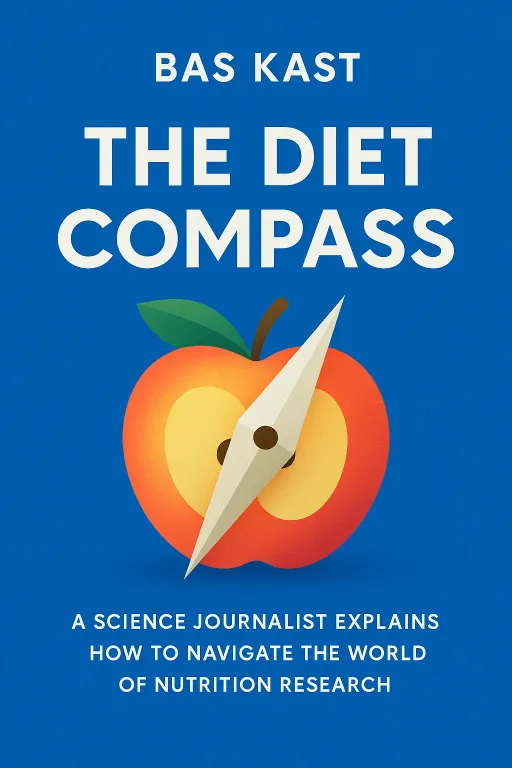
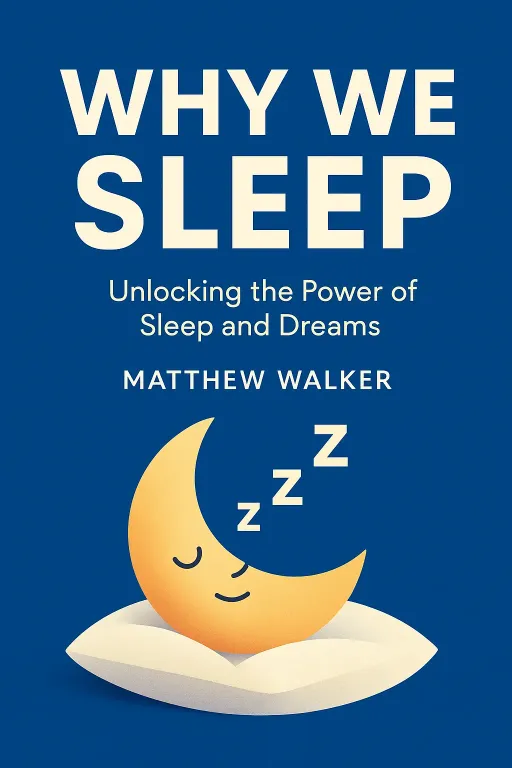
Nova: Absolutely, Atlas. Today, we're pulling back the curtain on that sabotage, drawing insights from two groundbreaking books: by Matthew Walker and by Satchin Panda. Together, these authors fundamentally solve the problem of chronic fatigue, offering science-backed strategies for anyone striving for optimal performance.
Atlas: So, we're not just talking about feeling a bit tired, we're talking about a fundamental re-engineering of how we approach our daily lives for sustained impact and lasting contributions? That's definitely something an architect of solutions would want to understand.
Nova: Precisely. And it all starts with what many of us consider a luxury, but is, in fact, a non-negotiable biological command: sleep.
The Non-Negotiable Power of Sleep: Why Rest Isn't Laziness
SECTION
Nova: Atlas, have you ever felt that intense pressure to "burn the midnight oil," to sacrifice sleep for what feels like a crucial deadline or a strategic advantage?
Atlas: Oh, I know that feeling. It's almost a badge of honor in some circles, isn't it? Like, if you're not sacrificing sleep, you're not committed enough. But honestly, the next day feels like navigating through thick fog.
Nova: Exactly! And that fog, that feeling of being "out of sync," is exactly what Matthew Walker dissects in. He reveals, with startling clarity, that sleep isn't merely rest for the weary. It's a powerful biological necessity that impacts every single aspect of our physical and mental health. Now, imagine a high-stakes architect, let's call her Sarah, working on a multi-million dollar project. She’s pulling all-nighters, fueled by caffeine, believing she's gaining an edge.
Atlas: Right, she thinks she’s being productive, getting ahead.
Nova: But what's actually happening? Walker shows that sleep deprivation undermines learning, memory, and emotional regulation. Sarah might like she's making progress, but her ability to connect complex ideas, to recall critical details from a historical precedent, or even to regulate her frustration when a design doesn't quite work, is severely compromised. Her problem-solving skills are dulled, her innovative thinking is stifled, and her judgment becomes clouded.
Atlas: Wait, so it's not just about feeling groggy. You're saying her actual to perform at a high level, to break down complex problems and build elegant solutions, is actively eroding? That's a much bigger cost than just being tired.
Nova: It's a hidden cost, indeed. Think of it this way: during deep sleep, your brain is literally cleaning itself, flushing out metabolic waste products that accumulate during wakefulness. It's also consolidating memories, moving them from short-term to long-term storage. Without enough sleep, that crucial maintenance work doesn't happen. It's like trying to run a supercomputer without ever clearing its cache or defragmenting its hard drive. Eventually, it just slows down, makes errors, and crashes.
Atlas: That’s a great analogy. So the perceived gain of those extra hours awake is actually a net loss in quality, in strategic thinking, in the very impact we're striving for. It makes me wonder about all those historical figures known for their minimal sleep habits – were they truly operating at their peak, or just pushing through exhaustion?
Nova: A fascinating question! Walker would argue they were likely sacrificing cognitive excellence for perceived endurance. The science is clear: chronic sleep deprivation diminishes our creative problem-solving, our ability to learn new things, and even our empathy, which is crucial for leadership and mentoring. It fundamentally makes us less effective versions of ourselves.
Harnessing Your Inner Clock: The Circadian Code for Peak Performance
SECTION
Nova: And that naturally leads us to the second key idea we need to talk about, which often acts as the perfect complement to optimizing sleep itself: the precise timing of our daily activities. Because it's not just we sleep, but we do everything else, that dictates our energy and focus.
Atlas: Okay, so we've established sleep is non-negotiable. Now you're saying there's an invisible conductor orchestrating all our other daily functions? That sounds like another layer of complexity for someone trying to manage a demanding schedule.
Nova: It sounds complex, but Satchin Panda's makes it incredibly accessible. He explains how our daily rhythms, or circadian clocks, are these master regulators governing cell function, hormone release, and metabolic health in virtually every cell of our body. Think of your body as a magnificent, incredibly intricate orchestra. Each section—your liver, your brain, your muscles—has its own clock, but they all take cues from a central conductor, your master clock, which is primarily set by light.
Atlas: So, if that conductor is off, the whole orchestra is out of sync, even if each instrument is technically in tune?
Nova: Exactly! And in our modern world, we've often thrown that conductor into chaos. Late-night screen time, erratic meal times, inconsistent sleep schedules—these are all signals telling different parts of your body different things, creating internal discord. Panda shows that aligning our daily habits with these clocks can dramatically improve energy levels, prevent disease, and sharpen our focus. Imagine a strategist who diligently plans their day, sets goals, but eats their largest meal late at night, or works under bright artificial lights until midnight.
Atlas: I know plenty of strategists who fit that description, myself included at times. We're thinking about the next quarter, the next big move, not necessarily the timing of our last snack.
Nova: And that's where the hidden cost lies. That strategist might be inadvertently telling their metabolism to store fat when it should be burning it, or confusing their brain about when to release melatonin, which impacts sleep quality. Panda's research suggests that simply shifting your eating window, for instance, to finish meals earlier in the evening, can have profound effects on energy, weight management, and overall metabolic health, even if the of food stays the same.
Atlas: So, it's not just about what you eat, but you eat it? That's a complete paradigm shift for how many of us approach diet and energy, especially if we're trying to optimize our physical and mental state for peak performance. It's like a strategic advantage you're just leaving on the table.
Nova: Precisely! It's about working your biology, not against it. By understanding these rhythms, we move from just hoping we feel good to actively designing our day to support optimal function. It's a strategic approach to personal well-being, which directly feeds into professional effectiveness.
Synthesis & Takeaways
SECTION
Nova: So, what we've uncovered today from Walker and Panda is that the chronic low energy, the poor focus, the general feeling of being out of sync—it's not some inevitable byproduct of modern ambition. It's the hidden cost of ignoring our biology.
Atlas: Right. It’s a systemic issue that impacts our ability to think deeply, to connect ideas, and ultimately, to make the lasting contributions we're driven by. You can't build groundbreaking solutions on a foundation of biological chaos.
Nova: Absolutely. Reclaiming your well-being by honoring your biology is not a luxury; it's a fundamental strategy for optimal performance and sustained impact. It's about designing your life with the same precision you’d design a complex system or a business strategy.
Atlas: That resonates deeply. For anyone who's a strategist or an architect, the idea of a "tiny step" to build a solution is incredibly appealing. So, what's one immediate, practical action we can take to start aligning with these biological truths?
Nova: Here's your mission for the week, straight from the tactical insights: commit to a consistent sleep and wake time for one week, even on weekends. Observe how your energy levels shift. It's a simple experiment, but the insights it provides can be profound.
Atlas: I love that. It’s not about an overnight overhaul, but a strategic, measurable shift. See it as a personal pilot project. Test the hypothesis. Understand the impact. Because ultimately, understanding and optimizing your inner workings is the ultimate competitive advantage, allowing you to build, create, and contribute with unparalleled clarity and energy.
Nova: Exactly. This is Aibrary. Congratulations on your growth!