Giants & Captains: Lessons in Extraordinary Leadership
Golden Hook & Introduction
SECTION
Nova: What if I told you that the most impactful leaders you've ever known weren't the loudest, the most charismatic, or even the most naturally talented? What if their true power lay in promises they made, not to others, but to themselves?
Atlas: Oh, I love a good myth-busting session! That goes against almost every glossy leadership book you see on airport shelves. Are we talking about some kind of secret handshake for extraordinary leaders?
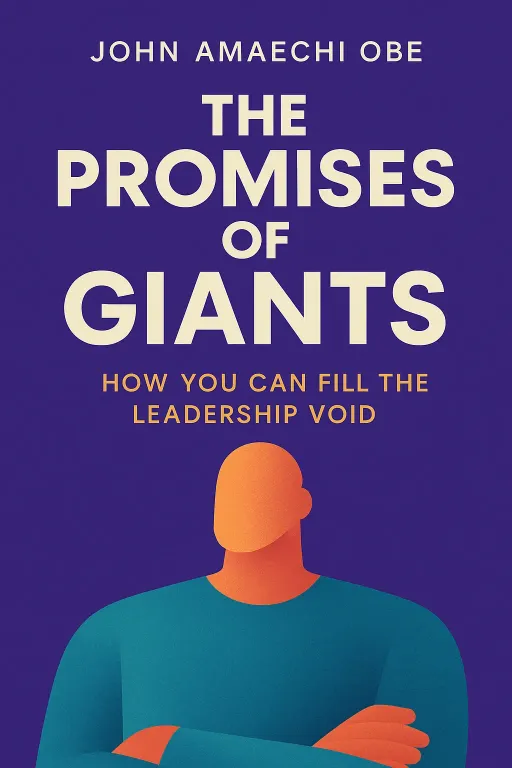
Nova: Not a secret handshake, Atlas, but rather a profound shift in perspective. Today, we’re peeling back the layers on two incredibly insightful books that redefine what it means to lead: John Amaechi OBE’s "The Promises of Giants" and Sam Walker’s "The Captain Class."
Atlas: Amaechi, the former NBA player turned organizational psychologist? That’s a fascinating pivot. And Walker's "Captain Class" sounds like a deep dive into what makes elite teams win.
Nova: Exactly! Amaechi, with his unique journey from professional athlete to psychologist, brings a powerful, often overlooked, ethical dimension to leadership. He truly understands the human impact. And Walker, a Wall Street Journal editor, meticulously researched sports teams to uncover universal truths about leadership that apply far beyond the field.
Atlas: So, we're not just talking about rah-rah speeches or the usual "lead from the front" clichés, are we? This sounds like a quest for deeper wisdom, something that truly impacts a legacy.
Nova: Precisely. It’s about moving beyond surface-level traits to understand the fundamental principles. And that journey begins with what Amaechi calls "the promises of giants."
The Moral Imperative of Leadership: Making "Giant" Promises
SECTION
Nova: Amaechi's core idea is that leadership isn't just a position or a title; it's a profound promise. A promise of responsibility, of impact, and a moral imperative to those you serve. He argues that true leaders are "giants" because they have a disproportionate influence on the lives of others—their team, their community, their organization.
Atlas: Okay, but in today's fast-paced, often cutthroat world, "moral imperative" can sound a bit... idealistic. How does a leader actually that promise when the bottom line is screaming, or the market is demanding impossible speeds?
Nova: That’s where the "giant" part truly comes in. Imagine a CEO, let's call her Evelyn. Her company is facing a downturn, and the easy solution is a massive layoff. The market expects it, the shareholders might even demand it. A conventional leader might just execute the cuts, focusing solely on the numbers.
Atlas: Right, the tough but necessary decision, as it's often framed.
Nova: But a "giant" leader like Evelyn, steeped in Amaechi's philosophy, would approach it differently. Her promise isn't just to the shareholders; it's to the people who trust her with their livelihoods. She'd spend countless hours exploring every alternative—restructuring, temporary pay cuts for executives, innovative cost-saving measures—before even considering layoffs. Her self-awareness would guide her to understand the long-term impact on morale, trust, and the company culture.
Atlas: So, it's not just about what you, but who you when no one's looking. The promise isn't just to the team, it's to yourself first, to uphold a certain standard of ethical decision-making.
Nova: Absolutely. It’s an internal contract. Amaechi emphasizes self-awareness as the bedrock. You can't make genuine promises to others if you don't understand your own values, biases, and the true weight of your influence. Consider a leader who lacks this self-awareness—they might make grand pronouncements, but their actions often betray their words, eroding trust and ultimately failing their "constituents."
Atlas: That's a powerful way to frame it. It cultivates genuine trust, which is invaluable for any leader looking to build a lasting legacy. It's about securing that deep, personal credibility that money can't buy.
Nova: Precisely. This moral foundation, this internal promise, often underpins the surprising traits we see in the most effective leaders. It’s that deep commitment that allows them to make unconventional choices, which brings us to Sam Walker’s "The Captain Class."
The Unexpected Traits of the "Captain Class"
SECTION
Nova: Sam Walker's research is absolutely fascinating. He didn't look at the most charismatic CEOs or the highest-scoring athletes. He analyzed the most consistently successful sports teams in history—from the New Zealand All Blacks rugby team to the San Antonio Spurs—and identified seven surprising, often unglamorous, traits shared by their captains.
Atlas: Hold on, so we're talking about leaders who necessarily the most skilled or charismatic? That goes against almost every leadership seminar I've ever attended, where "vision" and "inspirational speaking" are always at the top of the list.
Nova: Exactly! Walker found that the best captains were rarely the flashiest players. Instead, their traits included things like "aggressive play that tests the limits of the rules," "communicating with subordinates in nonverbal ways," and my personal favorite, the "tactical foul."
Atlas: A "tactical foul" in the boardroom? That's definitely thinking outside the box. Can you give me an example of how that translates outside of sports? Because that sounds like something that could get you fired in a corporate setting.
Nova: It's not about literally breaking rules, of course! Think of it as knowing when to strategically disrupt a dysfunctional process, or making an unpopular but necessary decision that shifts momentum. Imagine a project team stuck in endless, unproductive meetings. A captain might "commit a tactical foul" by, say, unilaterally cancelling a recurring meeting, or by forcing a critical decision that everyone has been avoiding, even if it creates temporary discomfort.
Atlas: So, it's about making strategic, sometimes uncomfortable, moves that serve the greater good, even if they look messy or unpopular in the moment? It's for impact, not popularity.
Nova: Exactly. It's about understanding the ecosystem and knowing when to apply pressure to force a beneficial change. Another trait is "quiet resolve." These captains aren't giving rousing speeches every five minutes. They lead by example, through sheer determination and consistent effort.
Atlas: That's actually really inspiring. It speaks to the power of consistent, grounded action over fleeting charisma. For our listeners navigating complex projects or leading a team through a challenging transformation, that kind of steady leadership is gold. It’s about the deep, quiet work that builds long-term success, not just the flashy wins.
Nova: And it’s often what truly inspires loyalty and sustained excellence. Imagine a tech startup facing a critical bug in their product just before launch. The charismatic founder might give a motivational speech, but the "captain class" engineering lead is the one quietly working through the night, debugging line by line, setting an unspoken standard that galvanizes the entire team through their sheer dedication.
Atlas: That makes perfect sense. Their actions become the rallying cry. It’s their internal Amaechi-esque promise to themselves—to deliver, to see it through—that manifests as Walker’s "quiet resolve."
Nova: You've hit on the perfect connection, Atlas. The "giant's promise" provides the inner compass, the moral commitment. The "captain's traits" are the often counter-intuitive, practical methods that bring that promise to life and drive sustained excellence.
Synthesis & Takeaways
SECTION
Nova: So, when we combine these two powerful frameworks, we see that extraordinary leadership isn't about being the loudest or the most talented. It's about embracing a profound responsibility, cultivating deep self-awareness, and then having the quiet resolve and strategic courage to make the difficult, sometimes unpopular, decisions that truly serve your team and your mission.
Atlas: So, it's about combining that deep sense of responsibility with the strategic grit to actually deliver. It's not enough to to make an impact; you need the wisdom to know and the courage to it, even when it's not popular. That’s a truly profound insight for anyone driven by impact and building a lasting legacy.
Nova: Absolutely. The "Tiny Step" takeaway from these insights is to reflect on a recent leadership challenge you faced. Consider: which "giant's promise"—that deep responsibility or self-awareness—or which "captain's trait"—perhaps that quiet resolve or a strategic, "tactical foul" approach—might have offered a fresh perspective?
Atlas: That's a fantastic challenge. It's about taking these profound insights and making them actionable, turning wisdom into tangible impact. It's about securing your legacy, one thoughtful action at a time, and I imagine a lot of our listeners can immediately apply that.
Nova: Exactly. How can you embody one of these principles in your very next interaction, your very next decision? Even the smallest shift can have a giant impact.
Atlas: We'd love to hear how these ideas resonate with you. Share your insights and how you're embodying these principles in your leadership journey.
Nova: This is Aibrary. Congratulations on your growth!