Crafting Irresistible Brands & Communities in the Digital Age
Golden Hook & Introduction
SECTION
Nova: Atlas, quick game. I'm going to say a book title, and you give me the five-word review, reflecting your persona. Ready?
Atlas: Oh, I like that! You know I'm always ready for a challenge, especially if it involves distilling something complex into a bite-sized insight. Hit me.
Nova: Alright, here we go: "Crafting Irresistible Brands & Communities in the Digital Age."
Atlas: Intentional narrative builds loyal ecosystems.
Nova: Whoa, that's good! "Intentional narrative builds loyal ecosystems." That perfectly encapsulates the spirit of what we're diving into today. Because, honestly, in a world drowning in noise, how do you even begin to build something that truly cuts through?
Atlas: Exactly. It's not just about being seen; it's about being felt. And for a lot of our listeners, the strategic innovators and connected builders out there, that's the holy grail: not just marketing, but connection.
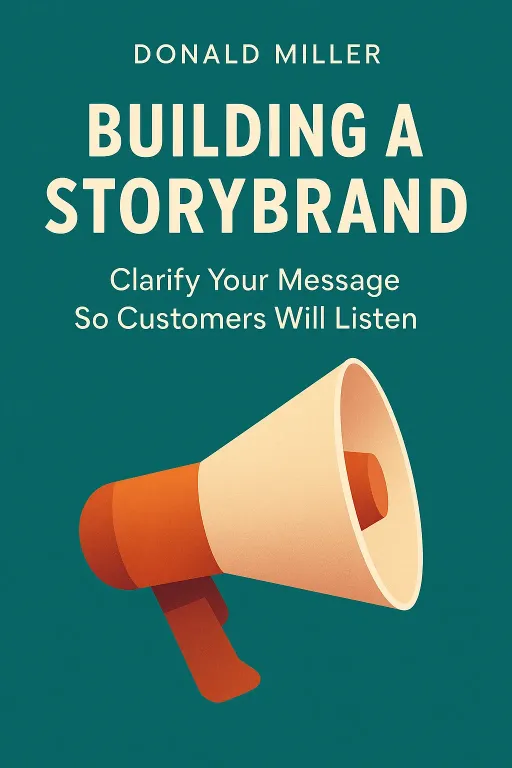
Nova: Absolutely. And that's precisely what we're dissecting today, pulling insights from two powerhouse books. First, we have by Donald Miller, a book that has profoundly shaped how businesses think about communication. Miller, a New York Times bestselling author and entrepreneur, really carved out a niche by simplifying complex marketing ideas into actionable frameworks. He wasn't just theorizing; he was building a movement, creating a vocabulary that businesses worldwide now speak.
Atlas: That's a great point. He took something abstract – brand messaging – and gave it a tangible structure. For those of us who appreciate a good playbook, that's invaluable.
Nova: It truly is. And then we pair that with by David Spinks, who is essentially the godfather of community building. Spinks has spent decades at the forefront of this movement, consulting with major brands, and really defining what it means to cultivate true belonging in a digital landscape. His work is about moving beyond mere followers to engaged participants. What's fascinating about Spinks is his relentless focus on the element behind every click and every connection. He's not just talking tech; he's talking psychology.
Atlas: Oh, I love that. Because for anyone trying to build something lasting, whether it's a product or a movement, you quickly realize it's all about people. It's about that deeper human need to connect and be part of something bigger.
Nova: Exactly. And that's where Nova's Take comes in: Your brand isn't just a logo; it's a narrative that invites people into a shared journey. Authentic community emerges when this narrative resonates deeply, fostering belonging and loyalty.
Atlas: That's powerful. So, we're talking about combining crystal-clear storytelling with genuine community building. That's a potent cocktail for impact.
The Narrative Architecture of Influence: Customers as Heroes
SECTION
Nova: So, let's kick things off with Miller's framework. At its core, it's a seven-part messaging framework designed to help businesses clarify their message so customers actually listen. But the fundamental, almost revolutionary idea it pushes is this: your customer is the hero of the story, not your brand.
Atlas: Wait, are you saying my brand isn't the star? That goes against pretty much every marketing campaign I've ever seen!
Nova: I know, right? It feels counterintuitive at first. We're so conditioned to put our products, our services, our amazing features front and center. "Look how great we are!" But Miller argues that people don't care about your story as much as they care about story. They're looking for solutions to problems, not for another hero to admire.
Atlas: Okay, so the brand isn't Luke Skywalker; it's more like Yoda. Or maybe Obi-Wan? The wise guide, not the one wielding the lightsaber.
Nova: Exactly! I knew you'd get it. The brand is the guide. Think about it: every great story has a hero who encounters a problem. They meet a guide who gives them a plan, calls them to action, and helps them avoid failure and achieve success. Most businesses accidentally position themselves as the hero, talking endlessly about their origin story or their incredible features. But customers tune out because they're thinking, "What about? What about journey?"
Atlas: So basically you’re saying, if I'm a software company, instead of saying, "We have the most innovative, AI-powered platform on the market," I should be saying something like, "Tired of wasting hours on manual data entry? Our platform helps reclaim your time and focus on what matters."
Nova: Precisely! You've just shifted the narrative from "we are great" to "we help achieve greatness." That's the magic. Miller's framework breaks it down into seven steps: A character has a problem, meets a guide, who gives them a plan, calls them to action, which helps them avoid failure and ends in success. It’s a narrative arc we all understand subconsciously.
Atlas: That’s a great way to put it. It's like tapping into our innate human understanding of story. But how do brands typically get this wrong? What's the biggest pitfall?
Nova: The biggest pitfall is what Miller calls "the fog of ambiguity." Brands often use jargon, vague statements, or simply too many messages, leaving customers confused. And when customers are confused, they don't buy. They don't engage. They just move on.
Atlas: Right, like that feeling when you land on a website and you have no idea what they actually within the first three seconds. You just bounce.
Nova: Exactly. Think of it like this: imagine a small business owner, let’s call her Sarah. She’s overwhelmed, trying to manage her marketing, sales, and operations all by herself. She feels like she’s constantly putting out fires. She’s the hero, and her problem is chaos and lack of time. Now, if a business automation software company comes along and says, "We have cutting-edge AI that optimizes workflows," Sarah might nod politely, but her eyes are glazing over.
Atlas: Because they're talking about themselves, not her.
Nova: Exactly. But what if that company says, "Sarah, are you tired of the endless to-do list? We help business owners like you automate those repetitive tasks so you can finally get back to growing your passion, not just managing it." Suddenly, Sarah leans in. is the hero, and this software is her wise guide, offering a clear path to get her time and sanity back. It’s a plan.
Atlas: That’s a perfect example. It's about empathy, really. Understanding the customer's struggle and then presenting your solution as the tool they need to overcome it. For me, as someone who's always looking to build for tomorrow, this framework feels like a foundational piece. It's not just about marketing a product; it's about crafting a purpose.
Nova: It really is. And the beauty of it is that it simplifies everything. Once you clarify your message, all your marketing, your website, your emails – they all become cohesive and powerful because they're all telling story: the customer's story.
Atlas: So, the tiny step here for our listeners is to actually outline their brand's story using this framework, putting their customer squarely in the hero role.
From Consumers to Community: The Business of Belonging
SECTION
Nova: And that naturally leads us to the second key idea we need to talk about, which often acts as a counterpoint to what we just discussed: building communities. Once you have that clear narrative, that hero's journey your brand is guiding them on, how do you transform passive consumers into active participants? This is where David Spinks' comes in.
Atlas: I mean, in an age where everyone's talking about "community," what does Spinks actually mean by building communities? Because it feels like a lot of brands just collect followers and call it a day.
Nova: That's a critical distinction, Atlas. Spinks argues that true community isn't just a group of people who like your product; it's a group of people who share a common identity, purpose, and values, and who feel a sense of belonging with each other, facilitated by your brand. It's about creating a space where they feel truly valued and heard, not just sold to.
Atlas: So it's not a fan club; it's more like a movement or a tribe where the brand is the common denominator, but the connection is among the members themselves.
Nova: Precisely. Spinks emphasizes that community is built on three pillars: shared identity, shared purpose, and shared experience. Think about it: a strong community provides psychological safety, a sense of meaning, and opportunities for mutual support. This is what drives business value, not just through direct sales, but through increased loyalty, advocacy, and invaluable feedback.
Atlas: Okay, but how does a brand actually that? How do you engineer belonging without it feeling forced or inauthentic? Because that's the tightrope walk, isn't it?
Nova: It absolutely is. And this is where the clear narrative from becomes so powerful. If your brand helps people achieve something meaningful in their lives – if they are the hero on a journey – then others on that same journey naturally want to connect. Spinks would say you start by identifying three key touchpoints where you can foster that sense of belonging. Is it a forum, a live event, a social media group, a mentorship program?
Atlas: Like, for a fitness apparel brand, instead of just selling leggings, they could create an online challenge group where people share their workout journeys, celebrate milestones, and offer encouragement. The brand becomes the platform, but the community is built around the shared goal of health.
Nova: That’s a fantastic example. The brand isn't just selling a product; it's facilitating a transformation, and the community provides the support system for that transformation. Spinks would point to examples like Harley-Davidson. They don't just sell motorcycles; they sell a lifestyle, a sense of freedom, and a brotherhood. Their H. O. G. is a prime example of a brand fostering deep community. It's about shared rides, shared stories, and a shared identity.
Atlas: That’s actually really inspiring. So the brand provides the narrative, the common ground, and then steps back a bit to let the community flourish amongst its members. That's a delicate balance.
Nova: It is. It requires a shift in mindset from "how do we get more customers?" to "how do we help our customers connect with each other and achieve their goals?" When you do that, loyalty isn't just transactional; it's emotional. It’s about being part of something bigger than themselves. For our future-focused learners, understanding this is key to building sustainable impact, not just fleeting trends.
Atlas: So the deep question becomes: how do you transform passive consumers into active participants within your brand's ecosystem, creating a space where they feel truly valued and heard? It sounds like it starts with giving them a story they can own.
Synthesis & Takeaways
SECTION
Nova: So, bringing it all together, what we've really explored today is the profound connection between clarifying your brand's story and cultivating genuine community. Miller gives us the blueprint for the story, making the customer the undeniable hero. Spinks shows us how that narrative foundation is essential for inviting people into a shared journey, fostering belonging, and transforming them from passive consumers into active, loyal participants.
Atlas: That's a really powerful synthesis. It's like the StoryBrand framework gives you the compass, and the community-building principles give you the map to navigate the digital landscape. For anyone out there who's a strategic innovator or a connected builder, this isn't just theory; it's a practical guide for creating something truly indelible.
Nova: Absolutely. It’s about recognizing that in an economy of attention, the deepest connection comes from shared purpose and a feeling of being understood. When you tell a story where your audience sees themselves as the hero, and then you give them a place to belong with others on that same journey, you’ve built something far more robust than just a brand; you’ve built a movement.
Atlas: And it’s not just about what you sell, but who you help people become. That's the real impact.
Nova: Indeed. The ultimate takeaway is that your brand's true power lies not in its self-aggrandizement, but in its ability to empower and unite its audience. It's about authentic connection and cutting-edge application, and that’s a journey worth taking.
Atlas: That gives me chills, honestly. It’s such a hopeful way to look at building in the digital age.
Nova: This is Aibrary. Congratulations on your growth!