

Positive Leadership: Inspiring Your Dealership Team
Golden Hook & Introduction
SECTION
Nova: Atlas, five words: 'Positive Leadership: Inspiring Your Dealership Team.' Go.
Atlas: Beyond sales: human connection wins.
Nova: Excellent! Mine: 'Purpose-driven profit, people-powered growth.' Today we're diving into two absolute powerhouses that, when combined, offer a profound blueprint for any leader, especially those navigating the dynamic world of dealerships.
Atlas: Oh, I'm intrigued. What are we unpacking today?
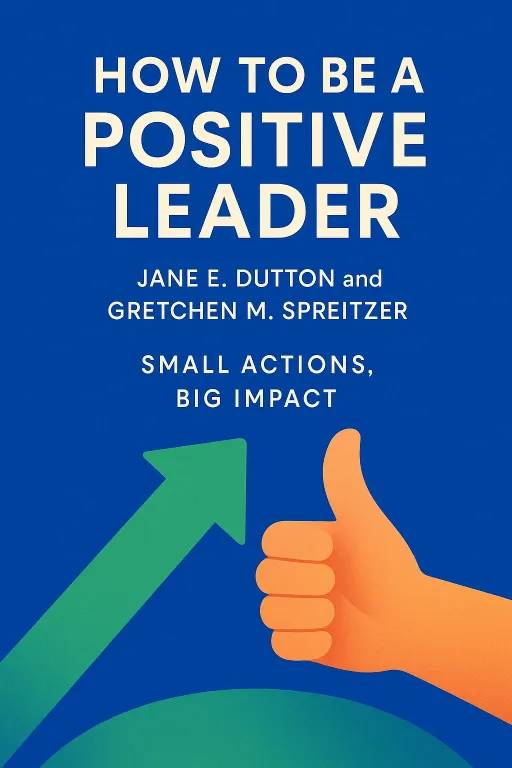
Nova: First up, we have Jane E. Dutton and Gretchen M. Spreitzer's seminal work, "How to Be a Positive Leader." Their insights come from their pioneering research in Positive Organizational Scholarship at the University of Michigan, offering a truly academic yet incredibly practical perspective on human flourishing in the workplace.
Atlas: So, the brainy side of leadership. That sounds like it could be a bit abstract for our listeners who are wrestling with quarterly targets and inventory management.
Nova: Not at all! It's about the tangible impact of human interaction. And then, we pair that with Douglas R. Conant's "The Blueprint," a book born from his incredible, real-world turnaround story as CEO of Campbell Soup. He took a company in crisis and rebuilt it through relentless focus on purpose and people.
Atlas: Okay, a real-world warrior alongside academic rigor. That's a compelling combination. So, we're talking about making people feel good... and making money? How do those two actually connect in the gritty, competitive reality of a dealership?
Nova: Exactly. We're breaking down how genuine connection and crystal-clear purpose aren't just 'nice-to-haves.' They're the actual engine for sustained success, customer loyalty, and team retention in an industry notorious for high turnover.
Fostering High-Quality Connections and Resilience
SECTION
Nova: Let's start with Dutton and Spreitzer, and the often-underestimated power of "high-quality connections." It's easy to think of leadership as strategy meetings and performance reviews, right? But they argue that the micro-interactions, the everyday moments, are where true leadership happens.
Atlas: Wait, are you saying that a quick chat in the breakroom is more important than the annual sales meeting? That sounds a bit out there for a strategic operator focused on the bottom line.
Nova: Not important, but equally foundational. High-quality connections aren't about superficial pleasantries. They're interactions that foster mutual regard, trust, and a sense of vitality. Imagine a dealership's service department. Historically, it can be a high-pressure environment, right? Technicians under the gun, advisors dealing with demanding customers, sometimes a high turnover rate.
Atlas: Oh, I know that feeling. Understaffed, overwhelmed, and the pressure is always on. It's a constant battle to keep good people and maintain customer satisfaction.
Nova: Exactly. Now, picture a new service manager, let's call her Sarah, who's read Dutton and Spreitzer. Instead of just barking orders, Sarah starts small. She makes eye contact, genuinely asks a technician about their weekend plans, remembers details about their family. When a new car comes in, she might specifically acknowledge a technician for their expertise on that model, saying, "Mark, your precision on these diagnostics is unparalleled. I know this one will be in good hands with you."
Atlas: So, it's not just "being nice," it's about being with recognition and respect. But how does that translate to improved service bay efficiency or closing a tough upsell on a maintenance package?
Nova: It’s the ripple effect, Atlas. These seemingly tiny, positive interactions build what Dutton and Spreitzer call a "relational reserve." Think of it like a bank account of trust and goodwill. When a massive, unexpected recall comes in, and the entire department has to work late, under pressure, that relational reserve pays dividends.
Atlas: I can see that. Instead of resentment and grumbling, there’s a foundation of trust.
Nova: Precisely. The team's psychological safety is higher. They’re more likely to share information, ask for help, and collectively problem-solve because they feel seen and supported, not just like cogs in a machine. They become more resilient. Instead of just enduring the stress, they might even find a sense of collective purpose in tackling the challenge together. The outcome? Lower turnover, improved customer satisfaction scores because the team is less stressed and more collaborative, and ultimately, increased efficiency. They help each other out more, leading to faster service times and better quality work.
Atlas: So it's not about being a pushover, it's about building a human network that withstands pressure and performs better, even under the intense demands of the automotive industry. That makes sense. It’s about creating an environment where people to contribute their best.
Articulating Purpose & Driving Results Through Consistent Engagement
SECTION
Nova: And once you have those strong, high-quality connections, Atlas, what do you point them? That's where Douglas R. Conant's "The Blueprint" comes in. Conant’s story is powerful: he faced a significant career setback, lost his job, and then came back to lead Campbell Soup out of a decade-long decline. His approach wasn't just about strategy; it was about purpose.
Atlas: That’s a massive undertaking. From personal setback to leading a corporate giant out of the doldrums. What was his secret sauce?
Nova: He realized that purpose articulation isn't just a mission statement gathering dust on a wall. It has to be a living, breathing guide that inspires daily action. Imagine a struggling dealership. Sales are stagnant, customer satisfaction is plummeting, and frankly, the team feels disconnected from any grander vision. They’re just selling cars.
Atlas: That sounds like a lot of dealerships I've seen. The purpose often feels like "hit your numbers or else."
Nova: Right. Conant would argue that's a recipe for short-term gains, if any, and long-term burnout. He'd urge that dealership GM to redefine their purpose beyond "selling cars." Perhaps it becomes "empowering community mobility" or "creating seamless ownership experiences" that truly enhance customers' lives.
Atlas: That sounds great on paper, Nova, but how do you make "empowering community mobility" resonate with a sales associate who just had a customer walk out on a deal, or a parts manager tracking inventory? Isn't that a bit... fluffy for the daily grind?
Nova: That’s the critical part – Conant’s emphasis on and crafting a. It’s not enough to just declare a purpose. You have to infuse it into every single interaction, every morning huddle, every customer conversation, every problem-solving session.
Atlas: So, you're constantly linking the daily tasks back to that overarching purpose?
Nova: Exactly. The sales associate isn't just selling a car; they're connecting a family with reliable transportation that opens up opportunities. The service technician isn't just fixing an engine; they're ensuring a customer's safety and peace of mind on their daily commute. Conant would say you need to be relentlessly, almost religiously, communicating this. He wrote over 30,000 personalized notes to employees during his tenure, reinforcing values and purpose. That's consistent engagement.
Atlas: Wow, 30,000 notes. That's dedication. So it’s not just the "what" of the purpose, but the "how" of embedding it into every single interaction and decision. Turning the abstract into the accountable.
Nova: Precisely. When employees understand how their individual efforts contribute to a larger, meaningful goal, they gain a sense of meaning beyond their paycheck. This leads to higher commitment, better problem-solving, and ultimately, improved financial results and lasting customer loyalty. They become advocates, not just employees.
Synthesis & Takeaways
SECTION
Nova: So, bringing these two powerful perspectives together, Atlas, we see that positive leadership isn't just about a single strategy. It's a dual-pronged approach.
Atlas: It sounds like positive leadership isn't just a philosophy, it's a strategic framework for sustained growth. For our listeners who are dealership leaders, struggling with turnover, customer loyalty, or just inspiring their team, what's the one thing they can do to start shifting that culture?
Nova: That's a fantastic question, and it brings us right back to our core takeaways. First, the tiny step: Identify one positive interaction you can initiate with a team member today. It could be a genuine compliment, a specific thank you, or actively listening to their concerns. Make it about building connection and reinforcing their value.
Atlas: That's incredibly tangible. No grand gestures, just genuine human interaction.
Nova: And for the deeper dive, ask yourself this question: How can you more consistently articulate your dealership's purpose to inspire daily action and commitment from every team member? Is your purpose just words on a page, or is it a living, breathing motivator in every corner of your operation?
Atlas: That makes it incredibly tangible. It’s about building the foundation through connection, and then giving that foundation clear direction through purpose. Not just managing, but truly leading.
Nova: Precisely. It's about recognizing that your greatest asset walks out the door every evening, and their engagement and commitment are fueled by how seen and purposeful they feel.
Atlas: Powerful stuff, Nova. This has been a masterclass in turning what might seem like soft skills into hard results.
Nova: Absolutely. This is Aibrary. Congratulations on your growth!









