Innovate or Be Disrupted: A Dual Perspective
Golden Hook & Introduction
SECTION
Nova: Atlas, quick, give me your five-word review of "disruption."
Atlas: Oh, that's easy: "Eat your lunch, or be eaten!"
Nova: Oh, I love that. It’s got a primal energy to it. Mine is: "Change, or get left behind."
Atlas: See, yours is more elegant, mine’s more… visceral. Which, honestly, might be the perfect metaphor for the topic we’re diving into today.
Nova: Absolutely. Because today, we’re tackling one of the most profound challenges for any leader, any innovator, any company trying to stay relevant: the relentless force of disruption. And we’re doing it through the lens of two incredibly influential books.
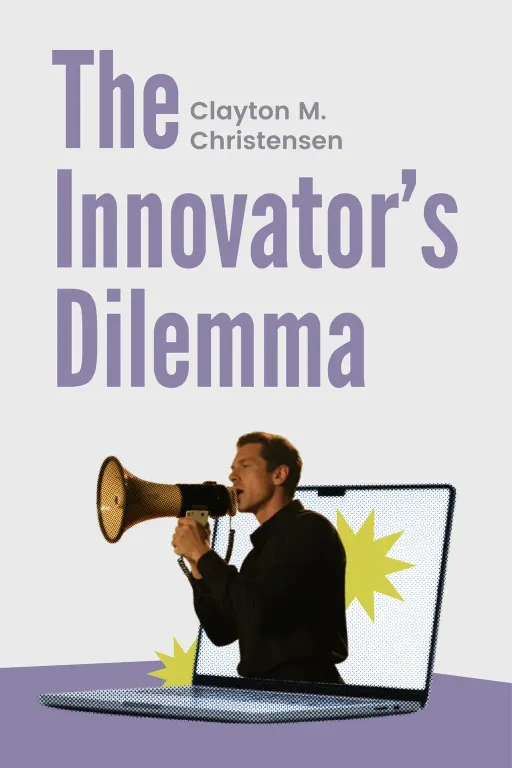
Atlas: That’s right. We're pitting, or rather,, Clayton M. Christensen’s seminal work,, with Ram Charan’s more proactive blueprint,.
Nova: Christensen, a brilliant Harvard Business School professor, penned back in 1997, and it became an instant classic, reshaping how we think about business strategy. It’s a book that's been widely acclaimed, cited by countless tech founders and executives, and it really solidified his legacy as a thought leader on innovation.
Atlas: And then you have Ram Charan, a renowned advisor to CEOs and boards, who offers a more hands-on, actionable approach in. He’s less about diagnosing the problem and more about handing you the surgical tools to fix it.
Nova: Exactly. One diagnoses the illness, the other provides the treatment plan. Together, they offer this comprehensive, almost dual-perspective on how to not just survive, but thrive, in a world where the only constant is change.
The Innovator's Dilemma - Why Success Breeds Failure
SECTION
Atlas: So, Nova, let’s start with Christensen. The title alone,, hints at a paradox. What’s the core insight he's revealing?
Nova: At its heart, it’s a counter-intuitive truth. Christensen argues that highly successful, well-managed companies, by doing everything, can still fail spectacularly when faced with disruptive technologies. It’s not about mismanagement; it’s about rational decisions leading to irrational outcomes.
Atlas: Wait, so it’s not that they’re incompetent? They’re actually at what they do?
Nova: Precisely. Think about it: successful companies listen to their most profitable, demanding customers. They invest in "sustaining innovations," which are improvements to existing products. Better screens, faster processors, more features. These make their current customers happier and secure their market share.
Atlas: I can see that. For our listeners leading high-stakes tech teams, that sounds like the most logical thing in the world. You serve your best clients, you make your product better.
Nova: It is logical! But here’s the dilemma. Disruptive innovations often start out as inferior products. They're cheaper, simpler, maybe even clunky, and appeal to a different, often underserved, market segment. They don't meet the performance demands of the established company's best customers.
Atlas: So, a profitable company looks at this new, clunky thing and thinks, "Why would we invest in that? Our main customers don't want it, and it barely makes money."
Nova: Exactly! Imagine a digital camera in its infancy. Low resolution, clunky. Kodak, a titan of film photography, actually invented the digital camera in 1975. They had the patent. But their core business was film, which generated massive profits and served professional photographers and mass-market consumers who valued quality prints.
Atlas: Oh, I know that feeling. Trying to convince a team to pivot to something that, on paper, looks like a step backward can feel almost impossible.
Nova: It's a classic example. Kodak’s management, making perfectly rational decisions, chose to protect their incredibly lucrative film business. They saw digital as a niche, inferior product that wouldn't satisfy their core customers or generate the same margins. They kept improving film, making sustaining innovations.
Atlas: So the cause was prioritizing existing customers and profitable sustaining innovations. The process was this gradual, almost invisible improvement of digital technology outside their purview. And the outcome?
Nova: The outcome was a dramatic shift in the market. Digital cameras, initially dismissed, gradually improved. They became cheaper, more convenient, and eventually surpassed film in accessibility and quality for the mass market. Kodak, by clinging to its successful model, found itself disrupted, ultimately filing for bankruptcy in 2012. It’s a tragic story of a company doing everything by the book, yet missing the future.
Atlas: Wow, that’s heartbreaking, but also incredibly insightful. It highlights how internal structures and incentives can inadvertently blind a company to its own demise. For anyone in leadership, it’s a stark reminder that what feels safe today can be a trap tomorrow.
The Attacker's Advantage - Proactive Disruption & Reinvention
SECTION
Nova: So, if Christensen diagnoses this inherent challenge, Ram Charan in comes in and says, "Okay, we understand the dilemma. Now, how do we it?"
Atlas: That’s the million-dollar question for our listeners. How do you avoid being the next Kodak?
Nova: Charan's answer is to adopt an "attacker's mindset." It’s a framework for leaders to proactively embrace disruption by continuously reinventing themselves, challenging their own assumptions, and, critically, being willing to disrupt their own business models others do.
Atlas: So, instead of being eaten, you become the one doing the eating? Even if it means eating your own product?
Nova: Precisely. It’s about strategic cannibalization. Charan emphasizes agility, speed, and a radical customer-centric approach to seize opportunities in a rapidly changing market. Think of it as a martial art for business, where you constantly adapt your stance.
Atlas: That’s a complete flip from the traditional approach. Can you give an example of a company that embodies this attacker's advantage?
Nova: Absolutely. Think about Netflix. They started as a DVD-by-mail service, directly disrupting Blockbuster. That was their initial attacker's advantage. But then, they saw the rise of streaming. Did they protect their incredibly successful DVD business?
Atlas: They didn't. They launched their streaming service, essentially disrupting their core business.
Nova: Exactly! They had the foresight and courage to cannibalize their own profitable model, understanding that streaming was the future. But they didn't stop there. When streaming content became crowded and expensive, they then pivoted to creating their original content, disrupting their licensed content model.
Atlas: That's incredible. So, they weren't just reacting to external threats; they were constantly looking for ways to disrupt themselves, even when they were at the top of their game. That's a true attacker's advantage.
Nova: It is. Their cause was a relentless focus on the future customer experience, even if it meant sacrificing short-term profits. Their process involved massive, calculated investments in new, unproven models. And the outcome? They remained a dominant force, transforming from a DVD rental company to a global entertainment powerhouse.
Atlas: That makes me wonder, how do you foster that kind of "attacker's advantage" mindset within your team or future organization, especially when current success makes it feel unnecessary? Because honestly, that’s the hardest part. You’re doing well, why rock the boat?
Nova: That's the crux of it, isn't it? It requires a culture that champions experimentation, tolerates failure, and rewards foresight over short-term gains. Leaders need to actively challenge assumptions, encourage diverse perspectives, and create "skunkworks" teams that are empowered to explore disruptive alternatives, even if they compete with existing products. It's about building organizational ambidexterity – the ability to manage the present while inventing the future.
Atlas: So it’s about having the courage to make decisions that might initially you money, for long-term vitality. That’s a tough sell for many established businesses.
Synthesis & Takeaways
SECTION
Nova: It is a tough sell, Atlas, but that's where these two books provide such a powerful combination. Christensen shows us the inherent trap that success can create – how our very rationality can lead us astray. Charan then offers the antidote, the proactive stance required to break free from that trap.
Atlas: So the real disruption isn't just an external force; it's often the internal inability to adapt, the fear of cannibalizing your own success.
Nova: Precisely. The fear of disrupting a successful model is natural; it's a deeply human response to protect what’s working. But embracing calculated risks, even if it means short-term pain, is absolutely key to long-term vitality. It's about understanding that the biggest risk isn't trying something new, it's standing still.
Atlas: That’s a profound insight. For our listeners who are leaders and innovators, that’s a powerful call to action. So, as a tiny step, identify one "sustaining" project in your current or desired field and brainstorm a disruptive alternative that could challenge its market.
Nova: And then, take that deep question from the book: how can you foster an "attacker's advantage" mindset within your team or future organization, even when current success makes it feel unnecessary?
Atlas: It’s a challenge, but one that could define your future. We’d love to hear your thoughts on this. What project would you disrupt? How do you plan to cultivate an attacker's mindset? Share your insights with us.
Nova: Because understanding the dilemma is the first step, but embracing the advantage, that's where true innovation truly takes hold.
Atlas: This is Aibrary. Congratulations on your growth!