The 80/20 Edge: Decoding Impact in Leadership and Life
Golden Hook & Introduction
SECTION
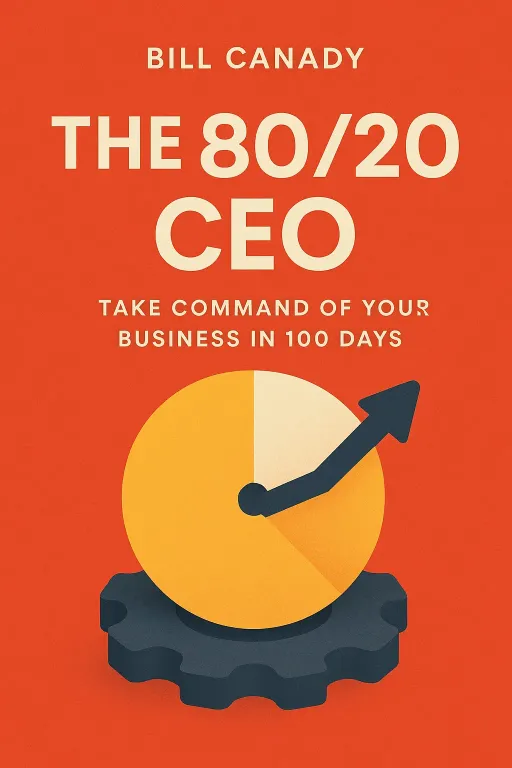
Socrates: What if I told you that four-fifths of what you do at work—80% of your effort, your meetings, your emails—is largely a waste of time? It’s a provocative thought, but it’s the reality at the heart of one of the most powerful and counterintuitive principles in business and life: the 80/20 Principle.
Victor: It’s an idea that feels wrong at first, doesn't it? We’re all taught that success comes from 100% effort, 100% of the time. The idea that most of that effort is low-impact is… unsettling.
Socrates: Unsettling, but also incredibly liberating if it’s true. And today, we’re going to explore this idea from Richard Koch’s classic book,. We'll dive deep into this from two perspectives. First, we'll explore the 80/20 principle as an 'Analyst's X-Ray' for uncovering strategic focus in any organization.
Victor: Which is right up my alley as a data analyst.
Socrates: Exactly. Then, we'll discuss how to adopt it as a 'Leader's Mindset,' learning the counterintuitive art of being 'intelligently lazy' to achieve more. And I can’t think of a better person to unpack this with than Victor. As a data analyst in the education sector with a keen interest in leadership, you live at the intersection of these ideas. Welcome, Victor.
Victor: Thanks, Socrates. I'm excited. This principle feels like it gives a name to something I've always intuitively felt but couldn't quite articulate.
Deep Dive into Core Topic 1: The Analyst's X-Ray
SECTION
Socrates: So Victor, let's start with that first idea: the 80/20 principle as an analyst's tool. The book argues that most businesses are flying blind. They busy, they see revenue coming in, but they don't actually know where their profit comes from. Have you seen that kind of thinking in your experience?
Victor: Absolutely. It's the danger of vanity metrics. Revenue is a classic one. It makes you feel good, it's a big number that goes up, but it tells you nothing about the health of the business. It's all noise until you dig deeper.
Socrates: Well, Koch provides a perfect, immersive story of this. He talks about a hypothetical company called 'Electronic Instruments Inc.' On the surface, they were doing fine. They had a hundred different products, and sales were decent across the board. But the management decided to do something radical: a true, deep-dive profitability analysis.
Victor: Meaning they allocated all the hidden costs? Not just the cost of materials, but the marketing spend, the sales team's time, the administrative overhead for each and every product?
Socrates: Precisely. They took the time to do the hard analytical work. And the results were stunning. They discovered their top three product groups, which made up only 20% of their total sales volume, were actually generating over 53% of their entire company's profits.
Victor: Wow. So a small fraction of their business was carrying almost everything else.
Socrates: It gets worse. They also found that two of their other product groups, which looked okay on a simple sales report, were actively them money once all the real costs were factored in. Every unit they sold dug them into a deeper hole. They were busy, but they were busy destroying value.
Victor: That's the classic signal vs. noise problem. As a data analyst, my first thought is that the raw sales data was the 'noise.' It told a story of broad activity, which felt productive. The real 'signal' was the profit-per-product after that true cost allocation.
Socrates: So what’s the lesson there for a leader?
Victor: The leadership challenge, then, isn't just finding the signal, but having the courage to act on the uncomfortable truth the data reveals. It's easy to support a profitable product; it's much harder to kill a product line that has a team and a history behind it, even if it's a financial drain. That takes real leadership.
Socrates: Exactly! Koch calls this process creating an 'underview,' not an overview. Peeking under the covers. And he says this applies not just to products, but to customers. The book gives another example where a firm found 20% of their customers generated 80% of the profit. What does that imply for a field like education, where you work?
Victor: It's a challenging but powerful idea for education. You could argue 20% of teaching methods or curriculum components drive 80% of student understanding. Or that 20% of students might require 80% of the support resources. The ethical dilemma in education, unlike in business, is that you can't just 'fire' your bottom 20% of 'customers'—the students.
Socrates: A crucial distinction.
Victor: Right. So instead, the 80/20 analysis becomes a diagnostic tool. It doesn't tell you who to abandon; it tells you where to focus your innovation and support systems most intensely. If a small group of students is struggling the most, that's where you pilot new, high-impact interventions. It’s about targeting resources for maximum positive effect, not just cutting losses.
Deep Dive into Core Topic 2: The Leader's Mindset
SECTION
Socrates: That's a brilliant distinction, and it leads perfectly to our second idea. Because once you have the data, the focus shifts from analysis to action—and to the mindset of the leader. The book makes this really provocative claim, based on a German general named Von Manstein, that the best leaders are 'intelligent and lazy.' What on earth could that mean?
Victor: It sounds like a recipe for disaster. Or at least, a recipe for getting fired.
Socrates: You'd think so! But here's the logic. Von Manstein categorized his officers into four types. First, the lazy and stupid. He said, "Leave them alone, they do no harm." Second, the hardworking and intelligent. He said these make excellent staff officers, the people who check every detail.
Victor: Okay, that makes sense. The reliable executors.
Socrates: Third, the hardworking and stupid. He called them a menace who must be fired at once because they create useless work for everyone. But it's the fourth category that's key: the intelligent and lazy. Von Manstein said, "They are suited for the highest office." The idea is that the intelligent-lazy person has the clarity to see what's truly important—that vital 20%—and the 'laziness' to avoid getting bogged down in the 80% of trivial work, which they delegate or simply ignore.
Victor: That resonates with me, actually. It connects to the INFJ 'Advocate' personality type. We're often more interested in the overarching vision and strategy than the minute details of execution. It also makes me think of the great figures I'm interested in, like Lincoln or Einstein.
Socrates: How so?
Victor: Well, Einstein wasn't 'busy' in a conventional, corporate sense. He wasn't answering emails all day. He was deeply focused on a few profound questions about the nature of the universe. His 'laziness' was actually a form of intense focus that ruthlessly excluded the non-essential.
Socrates: That's a perfect analogy. And Koch, the author, shares his own story of this. When he was a student at Oxford, he quickly realized that the only thing that mattered for his final grade was the big examination at the end of three years. So, he skipped most of the lectures—the 'busy' work—and instead, he did an 80/20 analysis on past exam papers.
Victor: He analyzed the data.
Socrates: He did. And he found that 80% of the exam questions were consistently drawn from just 20% of the potential topics. So, he focused his study exclusively on that vital 20%. He says he worked far, far less than his peers, but because his effort was so targeted, he graduated with a top-class degree. He was being 'intelligently lazy'.
Victor: So it's not about being idle. It's about strategic inaction. It's the discipline to say 'no' to the good ideas so you have the capacity for the great ones. For an aspiring leader, that's a profound lesson. Your value isn't measured by how many hours you work, but by the quality of your focus and the leverage of your few key decisions.
Socrates: And it requires trusting your team to handle the rest. You can't be 'intelligently lazy' if you're a micromanager.
Victor: That's the core of it. The laziness is the trust you place in others. It frees you up to think about the next big question, the next strategic move.
Synthesis & Takeaways
SECTION
Socrates: So we have these two powerful sides of the 80/20 coin. On one hand, it's a ruthless analytical tool to find the hidden leverage in any system, whether it's a business, a school, or a software program.
Victor: The 'Analyst's X-Ray'.
Socrates: And on the other, it's a personal philosophy for leaders to focus their own precious time and energy on what truly matters.
Victor: The 'Leader's Mindset'. For me, the biggest takeaway is the link between the two. The analysis tells you the vital few activities are. The 'intelligent-lazy' mindset gives you the courage and focus to act on that, and to ignore or delegate the rest. It's a complete system of thought and action.
Socrates: Beautifully put. It’s a cycle. The analysis informs the focus, and the focused mindset demands better analysis. So, for everyone listening, especially those of you who, like Victor, are driven by data and a desire to lead, here's a challenge from the book.
Victor: I'm ready.
Socrates: For one week, just observe. At the end of each day, ask yourself one question: 'What was the 20% of my time today that created 80% of the value or my happiness?' Don't judge it, don't act on it yet, just write it down. The pattern you discover might just be the start of your own 80/20 revolution.
Victor: I love that. It’s a simple data collection exercise on your own life. The results could be life-changing.
Socrates: They just might be. Victor, thank you for bringing such a sharp, analytical perspective to this.
Victor: It was my pleasure, Socrates. A fascinating conversation.