The Hidden Gears of Influence: Decoding Power Structures for the Strategist
Golden Hook & Introduction
SECTION
Nova: Everyone thinks power is about the corner office or the biggest army. But what if the real power, the truly effective kind, is almost entirely invisible, whispered, and understood only by a select few?
Atlas: Oh, I love that. It’s like the puppet master behind the scenes, pulling strings you can’t even see.
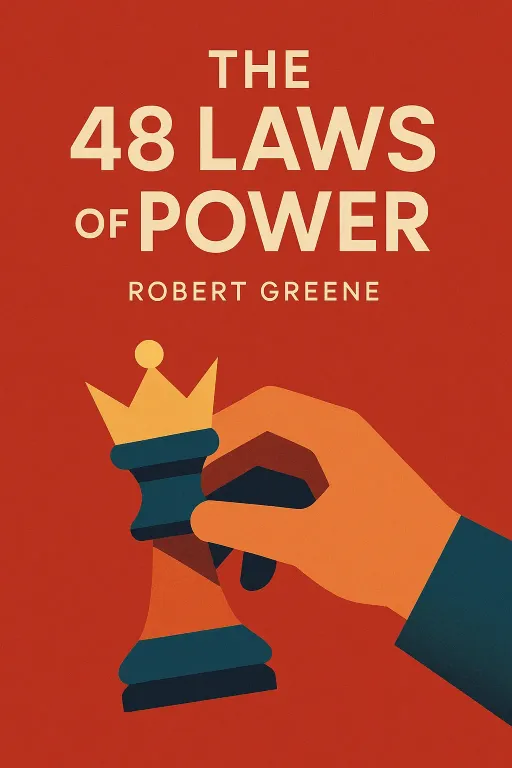
Nova: Exactly! And today we're pulling back the curtain on those hidden gears, diving into two absolute titans: Robert Greene's "The 48 Laws of Power" and Robert Cialdini's "Influence."
Atlas: Greene's book, I remember, caused quite a stir when it came out—some called it Machiavellian, even dangerous, but it was impossible to ignore. And Cialdini, he's the professor who literally infiltrated sales organizations to study persuasion firsthand. That's dedication!
Nova: Precisely! These aren't just academic texts; they're field guides for anyone who wants to truly understand how the world works, especially for our listeners, the architects and strategists who are always building and making an impact.
The Strategic Architecture of Power: Greene's Laws in Action
SECTION
Nova: Let's start with Greene. His book isn't a self-help guide in the traditional sense; it’s more a historical observation of how power has been gained, maintained, and lost across centuries. He’s essentially codified a dark art.
Atlas: That sounds rough, but essential for anyone trying to navigate complex environments. What's one of those laws that really hits home for a strategist?
Nova: "Never Outshine the Master." Greene illustrates this with numerous historical examples, but one that always sticks with me is the story of Nicolas Fouquet, the finance minister to King Louis XIV of France. Fouquet was brilliant, incredibly wealthy, and decided to throw a lavish party for the King at his magnificent château, Vaux-le-Vicomte.
Atlas: Oh, I know this one! It was the most opulent party France had ever seen.
Nova: Absolutely. He meant it as a tribute, a demonstration of his loyalty and capability. But Louis XIV, watching the spectacle—the fireworks, the fountains, the incredible art and architecture—didn't feel honored. He felt diminished. Fouquet's display of wealth and power, even in service, inadvertently overshadowed the King himself.
Atlas: Wow, that’s kind of heartbreaking. What happened next?
Nova: Within weeks, Fouquet was arrested on charges of embezzlement, his property confiscated, and he spent the rest of his life in prison. The King even hired Fouquet's architects and artists to build Versailles, ensuring no one would ever outshine him again.
Atlas: That's a brutal lesson in humility. So, it's not about being incompetent, but about managing perception, even when you're doing excellent work?
Nova: Exactly. It's about understanding the delicate ego of those above you. A strategist might be tempted to show off their brilliance, but Greene would argue that true strategic power lies in making your superiors feel indispensable and brilliant, even if you’re doing all the heavy lifting. It’s about strategic restraint, not just overt achievement.
Atlas: I imagine a lot of our listeners, especially those building solutions in complex organizations, feel that tension. How do you shine without burning down your own house?
Nova: It’s a constant tightrope walk. Greene's work, which has been embraced by everyone from hip-hop artists to business leaders, really highlights that these principles are universal, cutting across time and culture. You see them play out in boardrooms just as much as in ancient courts.
Atlas: That makes me wonder, is there a way to apply this without feeling… well, manipulative? Because the goal for our listeners is impact, not just personal gain.
Nova: That’s the critical question, isn't it? Greene presents these laws as amoral tools. The morality comes from the user. It's about understanding the game, so you can either play it more effectively or, perhaps more importantly, defend yourself against those who are playing it against you. Understanding the mechanics allows for conscious choice, which leads us beautifully to Cialdini, who focuses on the individual psychological levers.
The Psychology of Persuasion: Cialdini's Influence Principles for Everyday Impact
SECTION
Nova: While Greene gives us the grand chessboard, Cialdini gives us the individual pieces—the psychological levers that make people move. His work, "Influence," is revered because it's rooted in rigorous social psychology, not just historical anecdote. He spent years observing real-world persuaders, from car salesmen to cult recruiters.
Atlas: So you're saying, beyond the Machiavellian long game, there are scientific shortcuts to getting people to say 'yes'? What's one of Cialdini's most powerful principles?
Nova: Let's talk about "Social Proof." It’s the idea that when we're uncertain, we look to others for cues on how to think, feel, and act. It’s why you see long lines outside a popular restaurant, even if you don't know the food is good yet, or why testimonials are so powerful in marketing.
Atlas: Right, like when you’re choosing a restaurant in a new city, and one place is packed, the other is empty. You go for the packed one.
Nova: Precisely. Cialdini gives a fantastic example involving a study in a hotel. They wanted guests to reuse towels to save energy. Initial signs appealing to environmentalism were largely ineffective. But then they tried a sign that said, "75% of guests who stayed in this room reused their towels."
Atlas: Oh, I see! Instead of just "save the environment," it connected it to what were doing.
Nova: Exactly. The compliance rate shot up dramatically. It wasn't about the environmental appeal alone; it was the power of knowing that most other people, in that very specific context, were doing it. It’s a subtle nudge that leverages our inherent need to conform, or at least, to align with perceived group norms when we're unsure.
Atlas: That’s a great way to put it. For our listeners who are trying to get buy-in for a new strategy or product, it's not just about the features, it's about demonstrating that others are already on board or benefiting.
Nova: Absolutely. It’s about creating a perception of consensus or popularity. If you're launching a new initiative, highlighting early adopters or internal champions can be far more effective than just presenting data. It's a psychological shortcut that bypasses critical analysis and goes straight to "everyone else is doing it, so it must be good." Cialdini’s research, celebrated for its practical insights, shows us how deeply ingrained these triggers are in our decision-making.
Atlas: That makes perfect sense. So, for the strategist, it's about observing these moments. Not just the big power plays, but the small, everyday nudges.
Synthesis & Takeaways
SECTION
Nova: When you put Greene and Cialdini side-by-side, you see that influence isn't a single skill; it's a multi-layered art and science. Greene provides the grand strategic playbook for navigating power structures at a macro level, while Cialdini offers the precise, psychological tools for influencing individual decisions at a micro level.
Atlas: So, for our strategists out there, it's about understanding the long game of power dynamics, recognizing the invisible hierarchies, and then, armed with that awareness, deploying Cialdini’s principles to ethically persuade and build consensus. It's about being both the architect and the skilled craftsman.
Nova: That’s it. Both authors, in their own way, are revealing the operating system of human interaction. Greene shows you the motherboard, the deep-seated historical patterns of ambition and control. Cialdini shows you the software, the specific programs running in our minds that lead to compliance.
Atlas: That gives me chills. It’s like gaining x-ray vision for social situations. It makes you wonder, if you truly understood these principles, how much more effectively could you shape your environment, not through manipulation, but through profound understanding?
Nova: Exactly. The tiny step isn't just about identifying these principles; it's about asking, "How can I, as a strategist, integrate this understanding to create lasting, positive impact, while being mindful of the ethical implications?" It’s a powerful question for anyone seeking to build and contribute meaningfully.
Atlas: That’s a powerful challenge. For everyone listening, observe your next interaction. Can you spot a "Fouquet moment" where someone overstepped, or a "social proof" moment where you were swayed by the crowd?
Nova: And next time, think about how you might subtly shift the dynamics. This is Aibrary. Congratulations on your growth!