Unleashing Collective Genius: The Power of True Collaboration.
Golden Hook & Introduction
SECTION
Nova: What if everything you thought you knew about 'teamwork' was actually holding your team back from true greatness?
Atlas: Oh, I like that. "Holding us back from greatness." Because honestly, Nova, most of us think we're pretty good at teamwork. We divvy up tasks, we meet deadlines, we even have those weekly check-ins. What's the catch? What's this 'true greatness' you're hinting at?
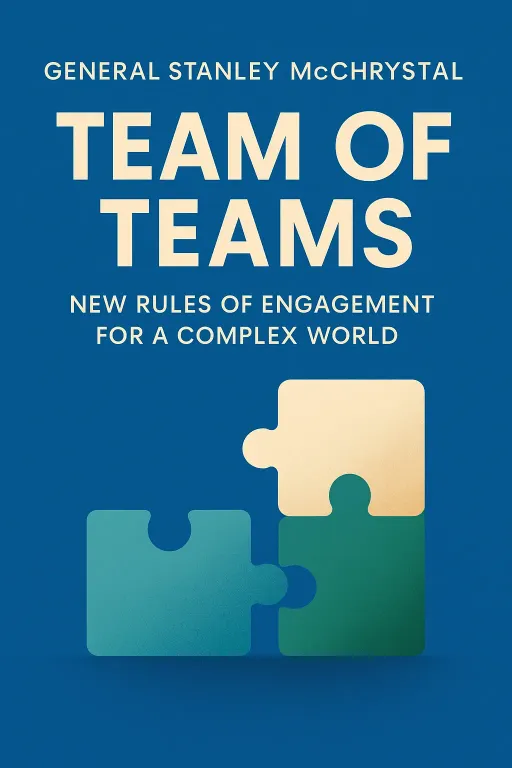
Nova: The catch, Atlas, is that for many of us, teamwork stops at "task sharing." We're efficient, yes, but are we truly innovative? Are we adaptable when the unexpected hits? Today, we're diving into a powerful concept, often called 'collective genius,' that goes far beyond simple coordination. And it's deeply explored in the insights from people like General Stanley McChrystal, whose work in "Team of Teams" fundamentally reshaped how we think about modern organizations.
Atlas: Hold on, a general? You're talking about military strategy for 'collective genius'? That sounds intense. I’m curious, what makes his perspective so relevant to, say, a tech startup or a design firm?
Nova: Exactly! What makes it so compelling is his background. McChrystal was tasked with transforming an elite military unit, the Joint Special Operations Task Force, which was incredibly skilled but too slow to counter a decentralized, agile enemy. He had to rethink everything, from rigid command structures to how information flowed. His journey from a top-down hierarchy to a fluid, interconnected network provides an incredible blueprint for any group aiming for rapid adaptation and innovation. It's about a fundamental shift in how teams operate.
Atlas: So, it's not just about getting people to work together, but getting them to… think together? To anticipate together? That sounds like a significant leap from just, you know, sharing a Google Doc.
Collective Genius vs. Task-Sharing
SECTION
Nova: Absolutely. That's the core of our first idea: moving beyond mere task sharing to something called 'shared consciousness.' Imagine a high-stakes scenario, like McChrystal's JSOTF in Iraq. Their traditional structure, while efficient for conventional warfare, was a liability against an enemy that moved like a networked organism. Intelligence was siloed, decisions went up and down a long chain of command, and by the time an order came back down, the target had moved. It was like trying to catch smoke with a fishing net.
Atlas: That sounds rough. I imagine a lot of our listeners who are managing complex, fast-moving projects can relate to that feeling of always being a step behind. What did McChrystal do to change that?
Nova: He realized the problem wasn't a lack of talent or effort; it was a lack of shared understanding across the entire force. His solution was radical decentralization, but not in a chaotic way. He fostered 'shared consciousness' – meaning every single member, from the analyst sifting through data to the operator on the ground, had a comprehensive, real-time understanding of the overall intent, the bigger picture, and how their piece fit into the constantly evolving puzzle.
Atlas: So, it wasn't about making everyone a general, but making sure everyone the general's intent, and the enemy's moves? That makes sense, but how do you actually achieve that in practice? It sounds almost like mind-melding.
Nova: It's less about mind-melding and more about radical transparency and deliberate information flow. McChrystal mandated daily "Operations and Intelligence" briefings that were open to thousands of people across the globe – not just senior leaders. Everyone heard the same intelligence, saw the same threats, and understood the same overarching goals. This built a collective intelligence, allowing individual teams to make rapid, informed decisions without waiting for approval from the top. The outcome was phenomenal: they went from being consistently outmaneuvered to operating with unprecedented speed and precision, adapting to threats in real-time.
Atlas: Wow, that’s actually really inspiring. So, you're saying that even the most disciplined, structured organizations can be their own worst enemy if they're not fostering this shared understanding. For someone leading a complex project, that sounds like a seismic shift in thinking from just optimizing individual performance to optimizing the awareness.
Nova: Exactly. It's a fundamental shift from a "command and control" mentality to "connect and collaborate," where trust and shared understanding replace rigid directives. It allows for what he calls "empowered execution" – individuals and small teams have the context and trust to act quickly and effectively, knowing their actions align with the broader mission.
Building the Foundation: Trust, Vulnerability, and Shared Purpose
SECTION
Atlas: That makes perfect sense on a strategic level, Nova. But how do you actually that shared consciousness? It sounds almost… organic. You can't just mandate 'shared consciousness' from a memo. That's where Daniel Coyle comes in, right? What does "The Culture Code" tell us about the human element of this?
Nova: Right, you can't just declare it. That's where Daniel Coyle's work in "The Culture Code" becomes indispensable. He identifies three crucial skills that highly cohesive, high-performing groups exhibit, and they are the bedrock for McChrystal's 'shared consciousness.' First, they. This isn't about physical safety, but psychological safety – creating an environment where people feel secure enough to take risks, make mistakes, ask "dumb" questions, and be their authentic selves without fear of reprisal or judgment.
Atlas: Okay, so for an innovator trying to push boundaries, 'safety' sounds great, but 'vulnerability' in a high-pressure environment? That’s Coyle’s second point, isn't it? Sharing vulnerability. Isn't that just inviting chaos or appearing weak, especially for leaders? How do you balance that with the need for decisive action and strong leadership?
Nova: That's a great question, and it's a common misconception. Coyle argues that sharing vulnerability, especially from leaders, is actually a superpower. It's not about being weak; it's a powerful signal of trust. When a leader says, "I messed up," or "I don't know the answer, I need your help," it creates a ripple effect. It tells the team, "It's okay to not be perfect, it's okay to ask for help, and we're all in this together." This act of opening up lowers defenses and invites others to do the same, deepening trust and connection.
Atlas: So basically, leaders showing their humanity actually makes the team stronger, not weaker. I can see how that would foster a deeper sense of connection among team members. And the third skill?
Nova: The third skill is. But not just any purpose. It needs to be a clear, compelling, and often emotionally resonant reason for the team's existence. It goes beyond just hitting quarterly targets or completing a task. It's about answering the question, "Why do we do what we do, and why does it matter?" When people understand that deeper 'why,' it provides a motivational anchor, especially when things get tough. McChrystal's JSOTF had a clear, life-or-death purpose. For other teams, it could be solving a critical problem, creating beauty, or serving a community.
Atlas: That makes me wonder, how do these three skills – safety, vulnerability, and purpose – actually connect back to McChrystal's 'shared consciousness'? It feels like Coyle is giving us the ingredients, and McChrystal is showing us the meal.
Nova: Exactly! Coyle provides the cultural bedrock. McChrystal's radical transparency, for example, built safety by ensuring everyone had the same information and felt included. His emphasis on empowered execution, where individuals could act without constant oversight, demanded a high degree of trust, which is fostered by vulnerability. And the JSOTF's clear mission against a dangerous enemy provided an undeniable, emotionally resonant purpose. These aren't separate ideas; they're two sides of the same coin, showing that effective collaboration is built on trust, shared purpose, and the freedom to act, not just on formal structures.
Synthesis & Takeaways
SECTION
Atlas: So, what we're really talking about here isn't just better project management, but a profound shift in how we conceive of team dynamics. It's about designing for human connection and shared understanding, not just efficiency. For an architect or strategist, this means looking beyond the organizational chart and into the actual human interactions.
Nova: Absolutely. It's about recognizing that the 'cold fact' is that collaboration often means just sharing tasks, but the 'collective genius' emerges when teams operate with a shared consciousness. This fosters adaptation and innovation at speed, and it's built on these deep human elements of trust, vulnerability, and purpose. It’s not just about getting things done, but about building teams that are resilient, creative, and profoundly impactful.
Atlas: I can definitely relate to that. The idea that a 'tiny step' could be identifying one recurring team discussion and implementing a 'shared consciousness' exercise, ensuring everyone understands the bigger picture before decisions are made, feels incredibly actionable. It’s a way to start chipping away at those silos and building that deeper connection.
Nova: Precisely. It’s about creating an environment where everyone feels psychologically safe enough to contribute their full genius, not just their assigned tasks. It’s about building teams that can truly adapt and innovate, making a real, tangible impact.
Atlas: That’s a powerful takeaway, Nova. This isn't just academic theory; it's a pathway to genuinely transform how we work and lead.
Nova: It truly is. This is Aibrary. Congratulations on your growth!