The Unseen Force: How Psychological Safety Fuels High-Performance Culture
Golden Hook & Introduction
SECTION
Nova: Most leaders think they know what truly drives high performance: individual talent, fierce competition, maybe a little fear to keep everyone on their toes. But what if the very opposite is true? What if the most powerful force isn't about pushing harder, but about feeling safer?
Atlas: Whoa, Nova. Safer? That sounds almost counterintuitive for "high performance." I mean, as strategists and builders, we're often wired to think about pushing boundaries, taking risks, and sometimes even a little productive tension. Are you saying we've got it all wrong?
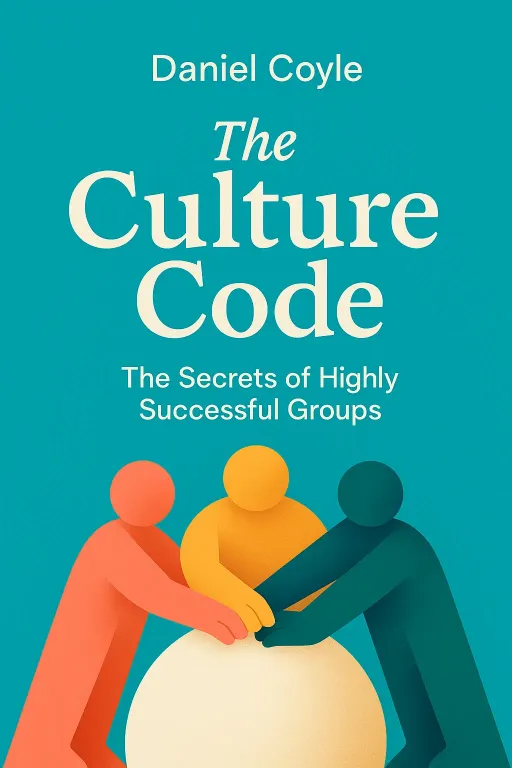
Nova: Absolutely not wrong, Atlas, but perhaps incomplete. We're talking about an unseen force, a blind spot that, once illuminated, transforms everything. Today, we're diving into that revelation with profound insights from Daniel Coyle's phenomenal book, "The Culture Code." Coyle, a journalist who spent years embedded with elite teams from Pixar to the Navy SEALs, shows us that the real secret isn't individual brilliance. It's something far more subtle, yet incredibly powerful.
Atlas: Okay, so it’s not about individual heroics then. You're hinting at something foundational, something that underpins all that individual brilliance. My analytical mind is already buzzing. What exactly is this unseen force Coyle uncovers?
Nova: He calls it psychological safety. It's the shared belief held by members of a team that the team is safe for interpersonal risk-taking. It's about feeling confident that you won't be punished or humiliated for speaking up with ideas, questions, concerns, or even mistakes. It’s the permission to be vulnerable without fear of judgment.
The Invisible Engine: Defining and Unpacking Psychological Safety
SECTION
Atlas: Permission to be vulnerable. Honestly, that sounds a bit… soft, doesn't it? For someone trying to build a lasting, significant organization, where the stakes are high, how does vulnerability translate into strategic excellence or actual high performance? I imagine a lot of our listeners leading high-pressure teams might wonder if this isn't just about making people "feel good" rather than delivering results.
Nova: That's the blind spot, Atlas, and it's precisely what Coyle unpacks so brilliantly. We've been conditioned to believe that showing weakness undermines authority or efficiency. But Coyle, and extensive research like Google's Project Aristotle, found the exact opposite. Google studied hundreds of their own teams and discovered that psychological safety was the number one predictor of team success, far more than individual talent, experience, or even role clarity.
Atlas: That’s incredible. So, it wasn't about who the superstars were, but how safe everyone felt to be a superstar all the time?
Nova: Exactly. Imagine a team where people are afraid to admit a mistake, or to ask a "dumb" question, or to challenge a senior leader's idea. What happens? Mistakes go uncorrected, opportunities for innovation are missed, and critical information stays hidden. The team operates at a fraction of its potential because everyone is playing it safe, protecting themselves. In that environment, even the most talented individuals hold back, stifling true innovation and collaboration.
Atlas: I can see that. I’ve definitely been in situations where the implicit fear of judgment kept crucial information from surfacing until it was too late. It’s like a silent tax on efficiency. But how does vulnerability actually bonds, as you said? What's the mechanism there?
Nova: It's about building trust through shared humanity. When a leader, for instance, admits they don't have all the answers, or openly shares a mistake they made, it signals to the team that it's okay to be imperfect. It creates a space for mutual learning and problem-solving, rather than individual blame. Coyle gives examples of teams where leaders actively solicit dissent, where the most junior member is expected to point out potential flaws in a plan. That's not soft; that's strategic genius for complex problem-solving.
Atlas: So, it’s less about being "soft" and more about creating a resilient, adaptive system where information flows freely and problems are surfaced early, not buried. That's a powerful reframe for someone like me who values understanding the 'why' behind performance. It's about foundational truth.
Building the Unseen: Practical Shifts for High-Performance Culture
SECTION
Nova: Precisely. And understanding psychological safety is, is just the first step. The real challenge for visionary leaders is knowing to build it, especially when traditional hierarchies often hinder it. That naturally leads us to the insights from General Stanley McChrystal's "Team of Teams."
Atlas: Okay, a military general talking about "psychological safety" sounds like a fascinating paradox. I mean, the military is the epitome of hierarchy and strict command. How does translate to building a lasting, high-performance culture in, say, a fast-paced tech company or any organization striving for strategic excellence? It feels like two completely different worlds.
Nova: That's where McChrystal's genius shines, Atlas. He realized that the traditional, hierarchical command structure, while effective for predictable problems, was utterly failing against a decentralized, agile enemy like Al-Qaeda in Iraq. He had to transform how his special operations forces operated, moving from a "command of teams" to a "team of teams." This required an unprecedented level of trust and open communication, even across different agencies and branches.
Atlas: So he had to break down silos, essentially? But how do you do that in an environment where information is literally life or death?
Nova: He fostered what he called "shared consciousness" and "empowered execution." Shared consciousness meant everyone, from the top general to the lowest analyst, had a holistic view of the operational landscape, understanding not just their piece but the entire puzzle. This required unprecedented information sharing, daily video conferences involving thousands, and radically transparent communication. Empowered execution meant giving frontline teams the autonomy to make decisions based on that shared understanding, rather than waiting for orders from above. This was only possible because they had built profound trust and psychological safety.
Atlas: That gives me chills. To relinquish that kind of control, especially in a military context, requires immense faith in your people. It sounds like he actively dismantled the fear of judgment for making a decision, as long as it was informed.
Nova: Exactly. He created an environment where vulnerability wasn't a liability but a necessity for survival and success. Leaders had to actively listen, admit when they didn't know, and foster a culture where everyone felt their input was valued. This allowed them to adapt at a speed their enemy couldn't match. For any leader aiming to build something lasting and significant, this is the blueprint for navigating complexity.
Atlas: So, for our listeners who are aiming to build strong foundations, who are driven by a need for clarity and strategic excellence, what's a concrete first step? The main content asks: what is one small action you can take this week to visibly increase psychological safety within your team, encouraging more open sharing and risk-taking?
Synthesis & Takeaways
SECTION
Nova: That's the deep question, isn't it? Bringing Coyle and McChrystal together, we see that psychological safety isn't a "nice-to-have"; it's a strategic imperative for innovation and resilience. It's about shifting from the lone genius to the collective wisdom, fueled by trust.
Atlas: And it’s not about grand gestures, right? It's about those small, consistent signals that redefine the rules of engagement. For a visionary leader, it’s about modeling the behavior they want to see.
Nova: Absolutely. So, my challenge to our listeners, to those visionaries, strategists, and builders out there: This week, commit to one visible action. Perhaps it’s starting a meeting by explicitly asking for dissenting opinions on a critical decision you've made. Or maybe it's publicly admitting a mistake you’ve made recently, and then sharing what you learned from it. It could even be a simple, genuine "I don't know the answer to that, what do you all think?" It's about demonstrating that vulnerability is a strength, not a weakness.
Atlas: That’s a powerful call to action. It forces us to step out of the traditional leadership comfort zone and actively invite the very things that make teams truly powerful. It demands authenticity.
Nova: Indeed. What small step will you take to build that unseen force? The impact might surprise you.
Atlas: This is Aibrary. Congratulations on your growth!