The 'Myth of the Lone Genius': Why Diverse Teams Outperform.
Golden Hook & Introduction
SECTION
Nova: Here’s a radical thought: the smartest person in the room might actually be holding you back. And the idea that great ideas only come from solitary brilliance? That's not just wrong, it's actively dangerous for innovation.
Atlas: Whoa, Nova, dangerous? That's a strong word. I think a lot of us, myself included, have been conditioned to revere the "lone genius" – the visionary who toils away and emerges with the breakthrough. Are you really saying that’s a myth?
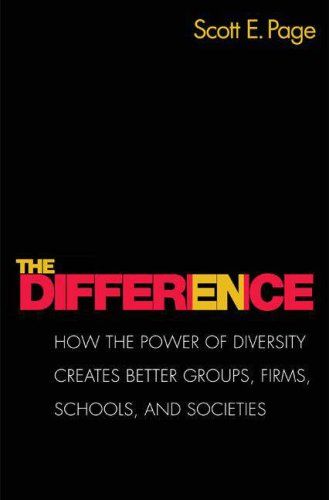
Nova: Absolutely, Atlas. And it's a myth that, while romantic, can lead to systemic failures and missed opportunities, especially when we're talking about the truly complex problems facing us today. This entire concept is rigorously explored in the underlying ideas that form the basis of what we're discussing today, particularly drawing from academic work like Scott E. Page’s mathematical proofs on why diverse groups consistently outperform. This isn't just a philosophical idea; it's proven mathematics.
Atlas: That's a powerful claim. For those of us who are constantly trying to innovate, to strategize in dynamic environments, or simply to build better solutions, the idea that our default understanding of "genius" might be a hindrance is pretty jarring. So, what’s really going on here? Why are we so drawn to this image of solitary brilliance, and what are its hidden costs?
The Flawed Logic of Solitary Brilliance
SECTION
Nova: It's a great question, Atlas, and it taps into something deeply ingrained in our culture. Think of the iconic figures: the lone inventor in their workshop, the brilliant artist in their studio, the visionary CEO with a singular insight. We celebrate individual achievement, and for good reason! But when the challenges become truly multifaceted, when they require navigating unknown territory, that singular perspective, no matter how brilliant, becomes a liability.
Atlas: Hold on. So, are you saying that even if you have a team of incredibly smart, highly skilled individuals, they can still fail if they all think alike? That sounds almost counter-intuitive. My gut reaction is always to put the "best and brightest" together.
Nova: Exactly! That's the core of the problem. Imagine a team of highly skilled engineers, all trained at the same elite institutions, all approaching problems with very similar cognitive toolkits, similar assumptions, similar ways of seeing the world. They might be individually brilliant, but when they face a truly novel problem—a project with a bottleneck that defies conventional solutions—they can get stuck in a loop. They'll keep applying the same excellent but ultimately limited approaches, missing crucial insights that fall outside their collective blind spot.
Atlas: That’s a bit like trying to fix a complex plumbing issue with only a hammer, even if it’s the best hammer in the world. You’re just going to keep banging away at the same spot, not realizing you need a wrench or a completely different approach.
Nova: Perfect analogy, Atlas! Let’s make it even more vivid. Picture a high-stakes tech startup, a team hand-picked for their individual brilliance in software development. They're trying to build a revolutionary new social platform. They spend months, years even, meticulously crafting the most elegant code, the most sophisticated algorithms. But they're all young, male, from similar urban backgrounds, and deeply immersed in tech culture. They launch their product, and it flops. Why? Because they completely missed how their target audience—a much broader, more diverse demographic—would actually the platform, how it would integrate into different lifestyles, or even the subtle social cues it might be sending. Their collective brilliance, ironically, was their undoing because it was too uniform. They were too busy admiring their own sophisticated hammer to realize they needed to understand the entire toolbox, and indeed, the entire house.
Atlas: That's actually really chilling. It highlights how expertise, when it's too homogenous, can become a kind of tunnel vision. It sounds like they were solving the problem, or at least, only of the problem. But for someone in a fast-paced, high-pressure environment, where every decision feels critical, assembling a team solely based on individual "rockstar" talent feels like a safe bet. It feels efficient.
Nova: It safe, Atlas, but it's often a mirage of efficiency. What you gain in initial speed from shared understanding, you lose in resilience, adaptability, and true innovation when the unexpected inevitably hits. The toughest challenges don't just need expertise; they need expertise, and critically, varied. And that brings us directly to the strategic imperative of cognitive diversity.
The Strategic Imperative of Cognitive Diversity
SECTION
Nova: This is where Scott E. Page's work, particularly his book "The Difference," becomes so illuminating. He doesn't just theorize; he offers mathematical proof. Page shows that a diverse group of problem-solvers, even if their individual skills are lower than a group of "geniuses," will, on average, outperform the homogenous group when tackling complex problems.
Atlas: Really? Even if they're individually? That’s a tough pill to swallow for anyone who values individual merit. How can that be mathematically true? It almost sounds like a paradox.
Nova: It’s not a paradox when you understand diversity functions. Page identifies what he calls "diversity of tools." These aren't just demographic differences, but cognitive differences: different heuristics, different interpretations, different predictive models, different ways of representing problems. A homogenous group might have one very good toolkit, but a diverse group has many different toolkits. When one approach fails, another is available. They can collectively explore a much wider solution space. It's about collective intelligence being greater than the sum of its individual parts.
Atlas: So it's not about having the single best wrench, but having a whole workshop full of different tools, and knowing when to use each one. I guess that makes sense. It’s like a complex circuit board; you need a variety of components, not just a dozen of the same super-capacitor.
Nova: Precisely! And we see this play out in real-world scenarios, particularly in high-stakes environments. General Stanley McChrystal, in his book "Team of Teams," provides a powerful military example. When he took command of the Joint Special Operations Task Force in Iraq, he faced an enemy, Al-Qaeda in Iraq, that was decentralized, networked, and incredibly adaptable. His traditional, hierarchical command structure, while efficient in its own way, was failing. It was a homogeneous system trying to fight a diverse, adaptive network.
Atlas: I can imagine. A rigid, top-down structure trying to outmaneuver something fluid and constantly changing. That’s like trying to catch smoke with a net.
Nova: Exactly! McChrystal realized their structure was the bottleneck. He fundamentally transformed his force into a 'team of teams.' He broke down silos, fostered radical transparency, shared information across different units—intelligence, special operations, conventional forces—and empowered junior leaders. He created a culture where diverse perspectives weren't just tolerated but actively sought out and integrated. This wasn't about individual brilliance; it was about collective intelligence, rapid information flow, and adaptive decision-making born from diverse inputs. And the results were transformative.
Atlas: That’s a phenomenal example, and it shifts the focus from individual heroics to systemic design. It suggests that the you build around people is as important as the people themselves. But I’m curious, how does one actually cultivate this? It's one thing to say 'be diverse,' but in practice, how do you actively encourage those different perspectives, especially when there's pressure to conform or achieve rapid consensus?
Nova: That's the strategic imperative Nova's Take emphasizes: actively cultivating diverse perspectives isn't just ethical; it's a strategic necessity. It means moving beyond superficial diversity metrics and intentionally seeking out cognitive diversity. It's about designing processes that force different viewpoints to the surface. It’s about creating psychological safety so that the quietest voice with the most unusual perspective feels comfortable speaking up. It could be as simple as changing how you run meetings, ensuring everyone contributes, or even explicitly assigning a "devil's advocate" role.
Synthesis & Takeaways
SECTION
Nova: So, what we're really seeing, Atlas, is that the future of problem-solving, of innovation, doesn't lie in finding the next singular genius. It lies in building complex adaptive systems—teams—that are robust enough to tackle problems no single mind could comprehend. It's about understanding that collective intelligence, fueled by diverse perspectives, is the ultimate competitive advantage in a world of ever-increasing complexity.
Atlas: That's actually really inspiring. For anyone who's driven to create solutions and make a real impact, this redefines what "brilliance" truly means. It’s not just about your own individual horsepower, but about how you assemble and empower the collective. So, if we want to move beyond the myth of the lone genius and truly foster this kind of dynamic team, what’s one tangible, tiny step someone could take right now?
Nova: I love that you're asking for a tiny step, Atlas, because that's exactly what the book suggests. Think about a current project you're working on, especially one with a bottleneck or a sticking point. Now, intentionally invite someone from a completely different department, or even a different background altogether, to offer input. Don't just ask for a review; ask for their raw, unfiltered perspective. You might be shocked at the insights they bring from their unique cognitive toolkit.
Atlas: That's brilliant. It's a low-risk way to test the power of diverse thought and break out of our own echo chambers. It forces us to actively seek out those different perspectives, rather than just hoping they'll spontaneously appear. This is really about shifting how we define and pursue innovation.
Nova: Absolutely. It's about understanding that the most profound solutions often emerge from the collision of different viewpoints, not from a single, isolated spark.
Atlas: What a powerful idea to leave our listeners with.
Nova: This is Aibrary. Congratulations on your growth!