The Culture Code: Unlocking High-Performing Groups
Golden Hook & Introduction
SECTION
Nova: Okay, Atlas, I'm going to throw out some words, and you just hit me with the first thing that pops into your head. Ready? "Team."
Atlas: Synergy. Ugh.
Nova: "Culture."
Atlas: Potluck. Double ugh.
Nova: "High-performing group."
Atlas: Unicorns, probably. Or a perfectly synchronized rowing team that's never actually existed.
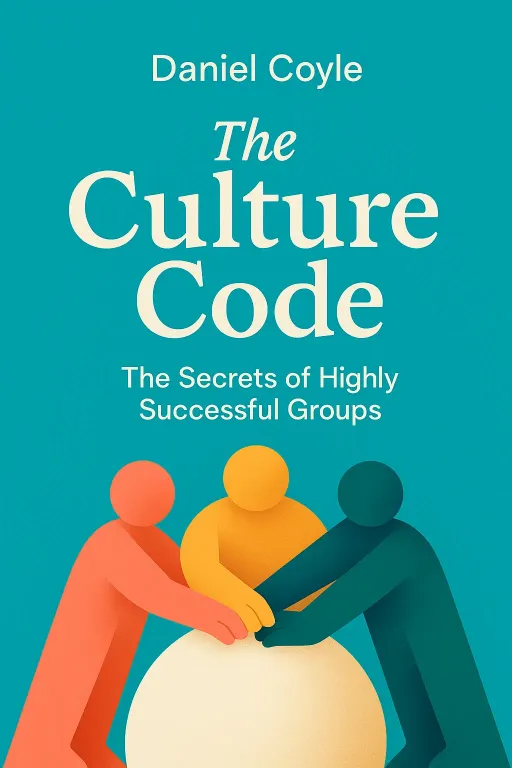
Nova: You're not wrong, it often feels that way. But today, we're going to dissect those unicorns and potlucks with Daniel Coyle’s incredibly insightful book, "The Culture Code: The Secrets of Highly Successful Groups." This book became a sensation because Coyle, a journalist, spent years embedding himself with some of the world's most successful organizations—from the creative powerhouse of Pixar to the elite Navy SEALs—to uncover the invisible forces that made them click. He found that it wasn't about individual brilliance or forced synergy, but something far more profound and, surprisingly, trainable.
Atlas: Oh, I like that. So it’s less about the rockstar individuals and more about the invisible glue that holds them together? Because I imagine a lot of our listeners have been on teams where everyone is brilliant, but it still feels like a mess.
The Deliberate Design of Culture: Safety, Vulnerability, and Purpose
SECTION
Nova: Precisely. Coyle argues that building a thriving group is not about individual genius, but about intentionally creating a culture where people feel safe, connected, and have a shared future. He distills it down to three core skills. The first is building psychological safety.
Atlas: But how do you engineer something as 'squishy' as 'safety' in a high-pressure environment? Isn't that just 'being nice' or avoiding tough conversations?
Nova: That's a common misconception, but it’s actually the bedrock of effective teams. Think about Google’s massive Project Aristotle study. They analyzed hundreds of their own teams to figure out what made some excel and others flounder. Their number one finding, above all else, was psychological safety. It’s the belief that you won't be punished or humiliated for speaking up with ideas, questions, concerns, or mistakes.
Atlas: Wow. So it wasn't about who was on the team, but how they treated each other? That goes against a lot of conventional wisdom about hiring only the "best and brightest."
Nova: Exactly. Coyle observed that signals of safety are subtle: equal speaking time, active listening, lots of eye contact. Teams with high psychological safety make more mistakes, paradoxically, but they also learn from them faster because people aren't afraid to admit them.
Atlas: So it's about making it okay to be human, to be imperfect. What’s the next skill?
Nova: The second is sharing vulnerability. This is where leaders really set the tone. Coyle describes how Navy SEALs conduct "after-action reviews." During these, the team leader is often the first to admit their mistakes or what they could have done better, even in front of junior members.
Atlas: I imagine a lot of our listeners in high-stakes environments might see vulnerability as a weakness. How do you overcome that ingrained fear, especially if you’re trying to project strength?
Nova: It's a powerful counter-intuitive move. When a leader admits their fallibility, they're sending a clear signal: "It's safe to be imperfect here, and we grow by learning from our collective imperfections." This normalizes struggle and builds a feedback loop of mutual reliance. It shows that seeking help or admitting you don't know something isn't a flaw, but a critical part of the learning process. It deepens trust because it shows genuine humanity.
Atlas: That's a great way to put it. It sounds like it fosters a deeper sense of connection within the team. And the third skill?
Nova: The third is establishing purpose. High-performing groups don’t just have goals; they have a deeply ingrained narrative of those goals matter. It's often framed as serving a higher cause. Think about Zappos, the online shoe retailer. Their purpose wasn't just to sell shoes; it was to deliver happiness through exceptional customer service. This narrative permeated everything they did.
Atlas: So it's not just a mission statement on a wall; it's a story everyone buys into, a reason to get out of bed beyond a paycheck? How do you make that feel authentic and not just corporate jargon?
Nova: It has to be constantly reinforced through actions and communication, not just words. It’s about clearly articulating the group's highest ideals, linking the present work to a future vision, and celebrating the behaviors that embody that purpose. When a group knows its 'why,' individual actions become meaningful contributions to something larger than themselves.
Agility Beyond Hierarchy: Trust and Shared Intent in Complex Organizations
SECTION
Nova: Speaking of high-stakes environments and shared purpose, our next insight comes from a place where hierarchy is usually king: the military. General Stanley McChrystal, author of "Team of Teams," shows us how even the most rigid structures learned to move with the agility of a startup.
Atlas: Wait, you're saying a four-star general basically dismantled his own chain of command? That sounds like chaos! How did they maintain control, especially in a combat zone?
Nova: It’s a fascinating story. McChrystal was leading the Joint Special Operations Task Force against Al-Qaeda in Iraq. Initially, his highly trained, hierarchical units were being outmaneuvered by a decentralized, agile enemy. Their traditional, top-down structure was too slow. So, he had to make a radical shift.
Atlas: Like, what kind of shift?
Nova: He realized they needed to operate as a "team of teams." This meant tearing down the silos between units—intelligence, SEALs, Army Rangers—and fostering what he called "shared consciousness." Every unit, from the top brass to the junior analysts, had access to the same real-time intelligence.
Atlas: So it's like everyone knows the overall game plan, and they trust each other enough to make quick decisions without waiting for top-down approval? That sounds incredibly risky.
Nova: It was, but it was also incredibly effective. Shared consciousness meant radical transparency. And then, crucially, they combined that with "empowered execution." Junior officers and teams on the ground were given the authority to make decisions rapidly, without having to wait for approval from above, as long as those decisions aligned with the overarching "common intent."
Atlas: That’s amazing. It totally flips the traditional military model. So, how does this connect back to Coyle's insights on culture?
Nova: It's a perfect parallel. McChrystal's shared consciousness is built on the psychological safety and vulnerability Coyle talks about—you can't share information or admit mistakes if you don't feel safe. And the "common intent" is essentially Coyle's "purpose" on a grand, life-or-death scale. Both authors highlight that the within a group are far more powerful than individual skill or rigid structure alone.
Atlas: That's a powerful synthesis. It's not just about what you do, but you relate to each other while you're doing it. It’s about building an environment where people can thrive, not just survive.
Synthesis & Takeaways
SECTION
Nova: Exactly. What both Coyle and McChrystal ultimately teach us is that building high-performing groups is a deliberate act of cultural engineering, not a happy accident. It’s about creating an operating system for human connection. And the surprising truth is that these 'soft skills' like safety, vulnerability, and shared purpose are the hardest, most impactful levers you can pull.
Atlas: So, if I'm part of a group, whether it's a family, a volunteer committee, or a team at work, what's one tiny step I can take this week to start building this kind of culture? It feels like such a big concept.
Nova: Start small. Identify one small action you can take this week to increase psychological safety within that group. Maybe it's asking a genuinely open-ended question in a meeting, or admitting a minor mistake you made. Model that vulnerability yourself first. It sends a ripple.
Atlas: That's actually actionable. It's about consciously shaping the environment, not just hoping for the best. It's the difference between a random collection of people and a true team, a group that actually feels like a living, breathing entity.
Nova: Exactly. It's about creating a space where people aren't just performing tasks, but truly connecting and feeling like they belong, which is the ultimate unlock for collective achievement.
Atlas: And that connection is what unlocks the real magic. Thank you, Nova, for illuminating these profound insights.
Nova: My pleasure, Atlas. Always a pleasure digging into the code of human connection with you.
Nova: This is Aibrary. Congratulations on your growth!