

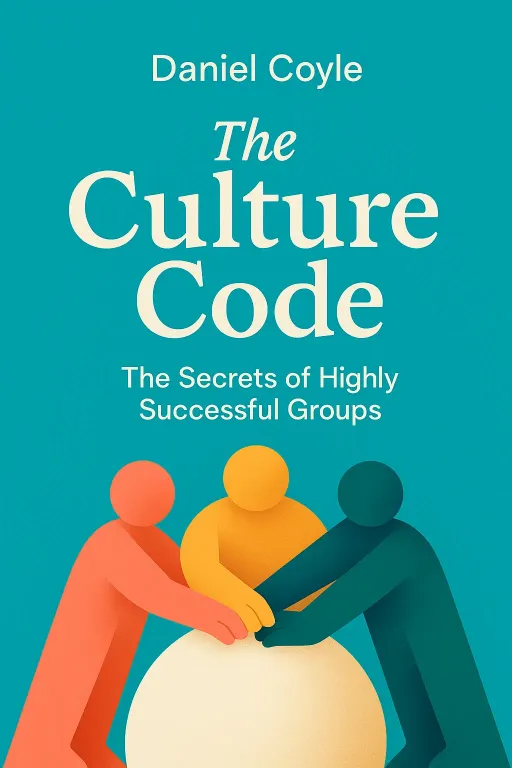
The "Culture Code" Trap: Why Shared Understanding Builds More Than Just Teams.
Golden Hook & Introduction
SECTION
Nova: Atlas, what’s the first image that pops into your head when I mention "company culture"? Be honest.
Atlas: Oh, man. Honestly? I picture forced fun. Like, a team-building exercise with trust falls, maybe a slightly awkward potluck lunch on a Tuesday, or a foosball table collecting dust in the corner. The stuff that sounds great on paper but often feels… performative.
Nova: Performative. Love that word. And you’re right, that’s so often what we culture is. But what if I told you that true, powerful culture isn't about the perks or the platitudes at all? It's something far deeper, almost like a secret language.
Atlas: A secret language? Intriguing. I'm imagining whispers and covert handshakes. Tell me more, because I think a lot of our listeners, especially those who seek to understand the deeper impact of things, are probably tired of the superficial culture definitions.
Nova: Absolutely. And that’s exactly what we’re diving into today, inspired by by Daniel Coyle. Coyle, a New York Times bestselling author, has earned widespread acclaim for demystifying how truly successful groups work. His insights are consistently praised for being incredibly practical and actionable, cutting through the abstract to show us what’s really going on. He argues that building a strong culture isn't about superficial fixes, but about forging deep, unspoken connections that allow groups to thrive, even under immense pressure.
Atlas: So, we’re talking about the invisible architecture of success, not just the interior decorating? I like that.
Nova: Precisely. And understanding this "secret language," as you called it, is absolutely vital for anyone trying to build something meaningful, influence others, or even just make sense of how humanity organizes itself. It's the underlying narrative that binds people together.
The Secret Language of Thriving Teams: Unpacking the Culture Code
SECTION
Nova: So, Coyle argues that highly successful groups, whether it’s a championship sports team or a pioneering tech startup, share three core skills. And these aren't abstract ideals, Atlas, they are learnable, observable behaviors. The first is.
Atlas: Building safety. Okay, so not just physical safety, I assume. You mean psychological safety?
Nova: Exactly. Think about it: when people feel safe, truly safe, they can relax. They can be themselves. They can take risks without fear of humiliation or blame. Coyle gives this incredible example of a team where the leader would deliberately make small, visible mistakes during meetings—like fumbling with his notes or mispronouncing a word—just to signal that it was okay to be imperfect.
Atlas: Wow. So it's not about being flawless, it's about modeling imperfection to create space for others. I imagine a lot of our listeners, especially those in high-stakes environments, might feel immense pressure to appear competent all the time. That sounds almost counterintuitive.
Nova: It does, doesn't it? But that’s the genius of it. That small, deliberate act by the leader completely changed the energy in the room. People started to speak up more, share half-formed ideas, and even admit when they didn't know something. The cause was a leader's intentional vulnerability, the process was a shift in team behavior, and the outcome was a more innovative and connected group.
Atlas: That makes sense. It’s like, if the captain of the ship admits they need help navigating, everyone else feels more comfortable admitting they can't see the lighthouse either. What's the second core skill?
Nova: The second is. And this builds directly on safety. Once you feel safe, you can start to show your authentic self, admit your weaknesses, and ask for help. This isn't weakness, Atlas, it's a strategic move. It signals trust.
Atlas: So, vulnerability isn't just about emotional sharing. It’s about creating a bond through shared imperfection. I can see how that would deepen connections, especially for a "curious storyteller" who values human connection and narrative. But how does that translate to something as big as "establishing purpose"?
Nova: Excellent question. The third skill is. This isn’t just a mission statement on a wall; it's a constant, vivid reminder of the group exists, what it stands for, and where it's going. Great leaders don't just state the purpose; they continually narrate it. They tell stories that link the group's daily actions to its larger goals.
Atlas: Right, like constantly reminding everyone of the "why" behind the "what." So, these three—safety, vulnerability, and purpose—they really do create a shared narrative, don't they? That's what you mean by culture being a shared narrative that binds people.
Nova: Exactly. These behaviors weave a rich tapestry, a story that everyone in the group implicitly understands and contributes to. It’s the invisible glue.
Beyond Perks: How Shared Understanding Fuels Collective Action
SECTION
Nova: Once you have that internal "secret language" of safety, vulnerability, and purpose, what does it actually in the real world? That’s where someone like Stanley McChrystal comes in with his insights from "Team of Teams."
Atlas: Ah, McChrystal. The general who transformed an elite military unit. So, how does his work connect to Coyle’s "Culture Code"?
Nova: McChrystal saw how rigid hierarchies and traditional command structures were failing in complex, rapidly changing environments. He realized that small, agile units, empowered by an almost telepathic level of shared understanding and trust, could vastly outperform those rigid systems. It's the ultimate example of how culture fuels collective action.
Atlas: So it's not just about knowing your specific task is, but understanding everyone else is doing their task, and how it all fits into the bigger picture. Like, the whole team has the same operating manual, not just their individual section of it.
Nova: Precisely! McChrystal's teams didn't need constant top-down orders because they shared a deep common purpose and understanding of the overall mission. This cultural cohesion allowed them to make decentralized decisions quickly and effectively. There’s a story where a junior officer, observing a new development, made a critical decision on the fly that would have previously required multiple layers of approval. It felt natural and powerful because the culture enabled it.
Atlas: That’s amazing. So, the cause was deep shared understanding and trust, the process was decentralized action, and the outcome was rapid, effective response in a complex situation. It really highlights how a strong culture can be a competitive advantage, especially for "future forgers" and those dealing with emerging tech. How does this apply to, say, a team developing ethical AI? Because that’s a field where shared understanding of values is paramount.
Nova: It’s absolutely critical. In a field like ethical AI, where the implications are so vast and complex, a team needs to feel safe enough to challenge assumptions, vulnerable enough to admit when they don't have all the answers, and constantly aligned on the deeper purpose – the ethical impact on humanity. Without that cultural code, you get silos, missed signals, and potentially disastrous outcomes. The shared narrative isn't just 'build a product,' it's 'build a responsible future.'
Atlas: Wow. So it’s the difference between a group of individuals working in parallel and a truly unified organism. I can see how that would make collective action feel not just natural, but almost inevitable, even powerful, as you said. It’s like the team itself becomes a single, cohesive storyteller, enacting its own narrative.
Nova: That’s a beautiful way to put it, Atlas. It's about empowering people to act not just on instruction, but on shared intuition and deeply ingrained purpose.
Synthesis & Takeaways
SECTION
Nova: So, what we’ve really unpacked today is that culture isn’t a fluffy concept or a list of corporate values. It’s the essential operating system of human groups, built on specific, learnable behaviors: psychological safety, shared vulnerability, and a constantly narrated purpose.
Atlas: And it’s this code, this secret language, that allows groups to move from just being a collection of individuals to a powerful, cohesive force that can tackle complex challenges, adapt quickly, and truly thrive. It’s the difference between a team that goes through the motions and one that genuinely feels like a shared journey.
Nova: Exactly. Understanding and deliberately cultivating this "culture code" isn't just good management; it's fundamental to human flourishing and progress, whether you're building a startup, a community, or a responsible future. It’s the profound insight into how humans connect and create together.
Atlas: That’s actually really inspiring. For our listeners who are curious storytellers, future forgers, and artistic humanists, I think this really gives them a new lens to view the world, and perhaps even their own teams. So, what’s one tiny step they can take this week to start applying this insight?
Nova: Here’s a tiny step. Observe a group you admire, whether it’s at work, in a volunteer organization, or even just a friend group. Identify one specific behavior that fosters safety or purpose within their interactions. Just one. See it in action.
Atlas: That’s actionable. And it aligns perfectly with the "curious storyteller" mindset. Just observe. Start seeing the hidden code.
Nova: Absolutely. This is Aibrary. Congratulations on your growth!









