Scaling Beyond Limits: Building High-Performance Teams That Last.
Golden Hook & Introduction
SECTION
Nova: More people, more problems. Sounds counterintuitive for growth, right? But what if adding talent actually your team down?
Atlas: Whoa, that's a bold claim, Nova! Most leaders are just focused on headcount when they think about scaling. Are you saying we've been doing it wrong all along?
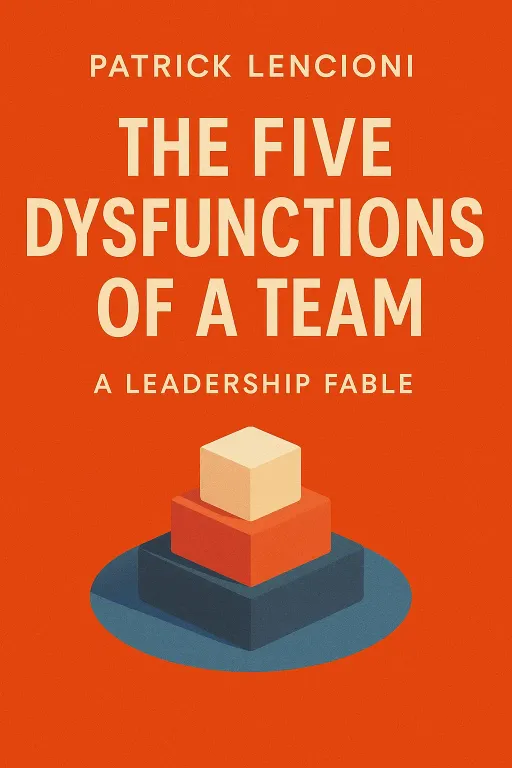
Nova: Well, it’s certainly not as simple as just adding bodies, Atlas. Today, we're diving into the brilliant insights of two seminal works that redefine how we build and scale high-performance teams. First up is by Patrick Lencioni. What’s fascinating about Lencioni is his background as a management consultant who saw these patterns repeat across countless organizations. He distilled complex human dynamics into incredibly simple, yet powerful, models. It’s why his work resonates so deeply with anyone trying to build a cohesive unit.
Atlas: Absolutely. And for anyone navigating the complexities of growing a business, the idea of 'more problems with more people' can feel very real. So, where do these dysfunctions begin to show up in a team?
Diagnosing and Overcoming Internal Team Dysfunctions
SECTION
Nova: They often begin subtly, Atlas, at the very foundation: the. Imagine a team where members are polite, maybe even friendly, but deep down, they don't truly believe in each other's intentions or vulnerabilities. They'll withhold information, they'll nod in agreement in meetings, only to subtly undermine decisions later. The cost of this is immense: stifled innovation, passive aggression, and all that wasted energy.
Atlas: Oh, I know that feeling. It's like everyone's wearing a mask. For someone trying to nurture their team, how do you even begin to build trust when it feels like it's been eroded? Is it just about people not talking, or is it more insidious?
Nova: It’s definitely more insidious than just silence. Lencioni talks about. It’s not about predicting someone’s behavior; it’s about being comfortable enough to be vulnerable around your teammates. A leader admitting a mistake, asking for help, or even just saying "I don't know" can be incredibly powerful. It models that it's safe to be imperfect. And without that trust, you inevitably slide into the second dysfunction:.
Atlas: But healthy conflict sounds like an oxymoron to many. For our listeners in high-stakes environments, where emotions run high, how do you encourage passionate debate without it devolving into personal animosity?
Nova: The key is that strong teams understand conflict is about, not people. It’s about passionately debating the best path forward, knowing that everyone is genuinely committed to the team's success. When there’s no trust, conflict becomes personal attacks. When there is trust, it’s a search for truth. Teams with a fear of conflict often have what Lencioni calls "artificial harmony," where critical issues are never discussed openly, leading to superficial agreements. This leads directly to the third dysfunction:.
Atlas: I can see that. If you haven't truly debated an issue, how can you genuinely commit to the outcome? It feels like you're just going through the motions.
Nova: Exactly. Without healthy conflict, decisions are often ambiguous, and team members don't buy into them. They might even passively resist implementation. This, in turn, feeds into the fourth dysfunction:. If people aren't truly committed, they won't hold each other accountable for results, or even for adhering to decisions.
Atlas: So, it's a domino effect, starting with that initial crack in trust. And the final piece of the puzzle?
Nova: The tip of the pyramid, Atlas, is. When teams aren't trusting, aren't engaging in healthy conflict, aren't committed to decisions, and aren't holding each other accountable, their focus inevitably shifts from collective results to individual status, ego, or departmental silos. The team loses sight of the ultimate goal. Lencioni’s model is so powerful because it gives leaders a tangible way to diagnose these invisible forces undermining their teams.
Scaling Adaptability and Shared Consciousness
SECTION
Nova: That idea of commitment, or the lack of it, naturally brings us to the next level of challenge: what happens when your healthy, committed team needs to connect with or even of other teams? How do you scale that cohesion? This is where General Stanley McChrystal’s becomes absolutely essential. McChrystal, who led the Joint Special Operations Task Force in Iraq, faced a decentralized, agile enemy that traditional hierarchical military structures simply couldn't outmaneuver. He had to completely rethink how a massive organization could operate with the speed and adaptability of a small team.
Atlas: Oh, I’ve heard about McChrystal’s work; it's legendary. But taking lessons from a military special ops unit... how does that translate to, say, a tech startup or a growing non-profit? Aren't the stakes and structures completely different?
Nova: You'd think so, but the principles are surprisingly universal. McChrystal found that the biggest enemy wasn't just the adversary; it was the internal silos, the slow flow of information, and the lack of trust different units. His solution revolved around two core concepts: and. Imagine his task force, traditionally, intelligence would flow up a chain of command, be analyzed, and then orders would flow back down. It was too slow.
Atlas: Right, like a game of telephone, but with lives on the line.
Nova: Exactly. So, he instituted daily "Operations and Intelligence" briefings, open to thousands of personnel across different agencies and even different continents. Everyone, from a junior analyst to a senior general, had access to the same, real-time intelligence. This fostered shared consciousness—not just information sharing, but a deep, collective understanding of the entire operational environment.
Atlas: Shared consciousness... that sounds like 'everyone knows everything,' which can feel overwhelming, especially for a strategic innovator trying to cut through noise. How do you prevent information overload while still allowing for empowered execution? How does a leader balance giving autonomy with maintaining overall direction?
Nova: That’s where the "empowered execution" comes in. Once everyone understands the broader strategic intent—the 'why'—then small, decentralized units are given the authority to make critical, time-sensitive decisions on the ground without waiting for top-down approval. McChrystal shifted from a "command and control" leader to a "gardener." His role was to cultivate the environment, ensure information flowed freely, and then trust his empowered teams to act. It's about clarity of purpose at the top, and maximum autonomy at the edges.
Atlas: So, it's about trusting your team to not just execute, but to within a clear framework. That's a huge shift from traditional management, especially for someone who's used to a more direct approach. It means letting go, but with a safety net of shared understanding.
Nova: Precisely. It allows organizations to be both robust and agile. You move from a rigid, machine-like structure to a more fluid, adaptive organism. McChrystal demonstrated that even the most complex, high-stakes organizations can transform into a network of highly interconnected, highly autonomous teams. It’s about building a system where collaboration is the default, not an exception.
Synthesis & Takeaways
SECTION
Nova: So, when we look at Lencioni and McChrystal together, we see a powerful one-two punch for team building. Lencioni gives us the blueprint for a healthy, functional team —how to build that bedrock of trust, engage in healthy conflict, achieve commitment, ensure accountability, and focus on collective results.
Atlas: And then McChrystal takes that healthy team and shows us how to connect it into a larger, adaptable network, creating a "team of teams" that can scale effectively without losing its agility or its ability to respond quickly to change. It’s the journey from individual team health to organizational super-organism.
Nova: Absolutely. You need the robust internal health Lencioni champions before you can effectively connect those units into the kind of adaptable, high-performing network McChrystal describes. It’s about building futures, not just products, and fostering potential at every level.
Atlas: For someone trying to build a future, not just products, what's one tiny step they can take today to move towards a 'team of teams' mentality, starting with Lencioni's foundation?
Nova: My tiny step for you today, for anyone listening, is to simply observe your next team meeting with fresh eyes. Can you identify any of Lencioni's five dysfunctions at play? Is there an absence of trust, manifesting as people holding back? Is there a fear of conflict, leading to artificial harmony? Just by noticing, you’ve taken the first, most crucial step towards building a truly high-performing team. Understanding the friction is the first step to eliminating it.
Atlas: That’s a powerful, tangible action. It brings these complex ideas right down to the everyday interactions. It’s not about overhauling everything at once, but about gaining that initial insight.
Nova: Exactly. It's about seeing the invisible forces at work and then, consciously, deliberately, beginning to reshape them.
Atlas: That’s incredibly insightful. Thank you, Nova.
Nova: My pleasure, Atlas.
Nova: This is Aibrary. Congratulations on your growth!