Mastering Team Dynamics: Cultivating a High-Performing Culture
Golden Hook & Introduction
SECTION
Nova: We talk a lot about "teamwork" like it's this universally understood good, a magical ingredient. But honestly, most teams aren't truly performing, they're just… existing. They're collections of people, not cohesive powerhouses.
Atlas: Oh, I like that. "Cohesive powerhouses." That's a great way to put it. Because, honestly, I think a lot of us that powerhouse, but we stumble over what it actually takes to build one. It’s not just putting smart people in a room, right?
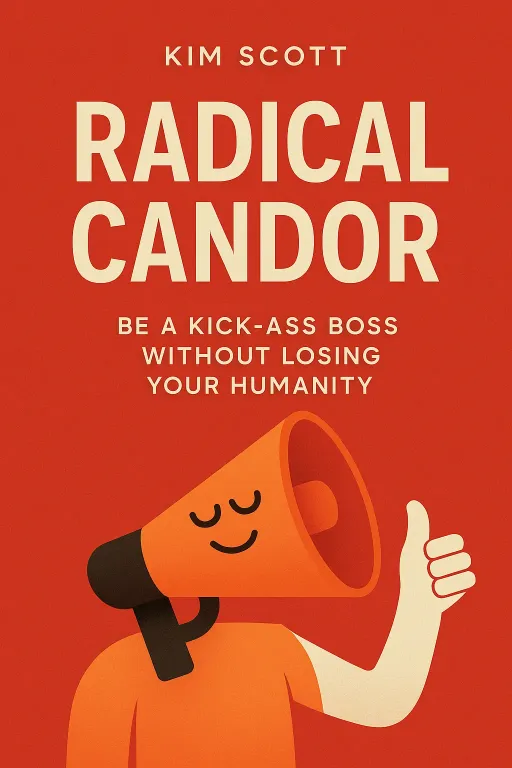
Nova: Exactly! It’s far more nuanced than that. Today, we're diving into the absolute anatomy of what makes a great team, drawing foundational insights from three incredible books: "Radical Candor" by Kim Scott, "The Culture Code" by Daniel Coyle, and "Team of Teams" by General Stanley McChrystal. What's fascinating about Kim Scott, for instance, is how she developed her radical candor framework directly from her high-stakes experiences leading teams at Google and Apple. It wasn't academic theory; it was battle-tested in some of the most innovative companies on the planet.
Atlas: That’s a powerful origin story. So, these aren't just theories from an ivory tower. These are insights forged in the trenches of high-performance environments.
Nova: Absolutely. And that leads us directly to our first big question: what are the foundational pillars that actually hold these powerhouse teams together?
The Foundational Pillars of High-Performing Teams
SECTION
Nova: Let's start with Kim Scott's "Radical Candor." It’s a concept that sounds almost contradictory at first glance. She argues for "caring personally while challenging directly." It’s not just about being tough; it’s about having deep empathy for your team members, understanding their goals, their lives, and then, because you care, you give them direct, honest, sometimes uncomfortable feedback.
Atlas: Hold on, that sounds easy in theory, but challenging directly can feel like walking on eggshells for a lot of leaders. How do you do that without just being a jerk? Or, from a strategic perspective, how do you ensure that direct feedback actually leads to progress, not just resentment?
Nova: That’s the brilliance of it. The "care personally" part is non-negotiable. If your team knows you genuinely have their best interests at heart, they're far more likely to receive difficult feedback as a gift, not an attack. Scott illustrates this with a story of a manager who struggled to tell a direct report they weren't performing. The manager, trying to be "nice," avoided the conversation for months, ultimately leading to the employee being fired, blindsided, and heartbroken. The "nice" approach was actually cruel.
Atlas: Wow, that’s heartbreaking, but it makes so much sense. It’s like avoiding a small, painful conversation now leads to a much larger, more devastating one later. So, psychological safety must be key here.
Nova: Precisely. And that’s where Daniel Coyle’s "The Culture Code" steps in beautifully. Coyle unpacks the fundamental elements of highly successful groups, emphasizing psychological safety, shared vulnerability, and purpose. He shows that the most effective teams aren't necessarily the ones with the smartest individuals, but the ones where people feel safe enough to make mistakes, ask "dumb" questions, and even challenge the status quo without fear of retribution.
Atlas: So it's not just about being 'nice,' it's about creating an environment where people to be honest, even if it's uncomfortable. That makes sense for foundational understanding, but for someone trying to build something lasting, how does that connect to actual performance and tangible results?
Nova: That’s where the power truly lies. Coyle's research shows that teams with high psychological safety are more innovative, learn faster, and ultimately perform better. They aren't held back by internal politics or fear. He cites studies where teams that paused to reflect on mistakes, openly discussing what went wrong and why, consistently outperformed those that just pushed forward. That open discussion—that vulnerability—is only possible with psychological safety.
Atlas: I can see how that would be a game-changer for someone who’s really trying to build resilience and adaptability into their team, especially in complex, fast-moving environments.
Nova: Which brings us to General Stanley McChrystal’s "Team of Teams." McChrystal illustrates how adaptable, empowered teams can outperform traditional hierarchies in complex environments. His experience leading the Joint Special Operations Task Force in Iraq showed him that the rigid, top-down structure they initially had was too slow, too siloed, to combat a rapidly evolving, decentralized enemy like Al-Qaeda in Iraq. They had to transform into a network of highly empowered, interconnected teams.
Atlas: So, he shifted from a command-and-control structure to one where individual units had more autonomy, but still maintained a shared consciousness? That sounds like a massive undertaking. Like building a complex system that can self-regulate and adapt.
Nova: It was. And the key was trust and shared understanding. Everyone needed to know what everyone else was doing, and they needed to trust each other implicitly to make decisions quickly. This is where psychological safety and radical candor come full circle. Empowered teams to feel safe to make those fast decisions and adapt without fear of reprisal. McChrystal's task force started holding daily "Operations and Intelligence" briefings that brought together hundreds of people from different agencies, sharing real-time intelligence, fostering a collective understanding that broke down silos.
Atlas: Wow, so from Google to SEAL teams, the thread is psychological safety enabling honest feedback and rapid adaptation. That's a powerful pattern. It's not just about one book or one theory; it's a consistent principle across vastly different high-stakes environments.
From Theory to Practice: Cultivating Team Dynamics as a Strategic Asset
SECTION
Nova: Exactly, Atlas. And that naturally leads us to the second key idea: transforming this understanding into action. Because knowing these principles is one thing, but actually embedding them into a team's DNA, making culture a strategic asset, that's the real challenge for a builder, for a cultivator of talent.
Atlas: Yeah, for someone who values tangible results and wants to build something lasting, it can feel abstract. Where do you even begin to 'cultivate' something as nebulous as culture? It’s not like you can just flip a switch for psychological safety.
Nova: You're right, it's not a switch. It's a series of intentional, consistent actions. And the first step, a "Tiny Step" as our content highlights, is something incredibly simple: implement a 'start, stop, continue' feedback session with your core team next week.
Atlas: I like that – a concrete tool. So, "start doing this," "stop doing that," "continue doing this." It's not some grand overhaul; it's a specific, actionable step. It's about getting people talking about collaboration, about what's working and what's not, without it feeling like a performance review.
Nova: Precisely. It’s a low-barrier entry point to practicing radical candor and fostering vulnerability. It gives people a structured way to give and receive feedback, building that psychological safety muscle. It normalizes giving direct, constructive input.
Atlas: But what about the deeper, more systemic stuff? You mentioned a 'Deep Question' in the content. For the strategist in me, I want to know how to make a truly cultural impact.
Nova: The "Deep Question" is incredibly powerful for that: "What single cultural norm, if consistently reinforced, would have the biggest positive impact on your team's psychological safety and performance?" This isn't just about tweaking; it's about identifying the core operating principle that will unlock your team's potential.
Atlas: Okay, that's not just a 'nice to have.' That's a strategic decision. It's about intentionally designing the operating system of the team to achieve impact. Like, if our norm is "assume positive intent," how does that change every interaction? Or "no question is a dumb question."
Nova: Exactly. Imagine a team where the norm is "blame is a learning opportunity, not a punishment." How would that transform how people approach mistakes, innovation, and risk? It forces a strategic focus on what truly drives collective success. It moves beyond just tasks to the very fabric of interaction.
Atlas: That gives me chills. That could fundamentally reshape how a team operates. And then there's the "Healing Moment": "Realize that leadership means nurturing growth, not just directing tasks." What's the profound shift there?
Nova: Honestly, that sounds like a fundamental mindset shift. It's about seeing your team not just as resources to execute tasks, but as individuals whose collective potential you're responsible for unlocking. It's recognizing that your team's success is a direct reflection of the environment you, as a leader, cultivate. It’s moving from a transactional relationship to a transformational one.
Atlas: That’s a huge reframe. Instead of just pushing people to hit targets, you’re creating the conditions for them to grow into hitting those targets, and beyond. It's about building capacity, not just consuming it.
Synthesis & Takeaways
SECTION
Nova: So, when we pull all these threads together, from radical candor to psychological safety to adaptable teams, the message is clear: a strong team culture isn’t just a 'nice to have'; it’s your most critical strategic asset. It amplifies individual strengths and drives collective success in ways that sheer talent alone never can.
Atlas: So, it's about building a foundation of trust where people can be their full selves, challenge each other, and adapt, all while being led by someone who sees their role as a gardener, not just a foreman. It’s designing an environment where growth isn't just possible, but inevitable.
Nova: Precisely. For any leader, any architect or cultivator out there, understand that the health of your team's culture is directly proportional to its performance. What kind of environment are you cultivating? What single norm could you reinforce that would have the biggest impact?
Atlas: It’s a journey, not a destination, but what a profoundly rewarding one. The impact you can have, not just on output, but on the individuals you lead, is immense. It's about building something truly lasting.
Nova: Absolutely. Take that tiny step, ask that deep question, and embrace the healing moment of leadership. Your team, and your impact, will thank you for it.
Atlas: This is Aibrary. Congratulations on your growth!