Cultivating High-Performing Global Teams
Golden Hook & Introduction
SECTION
Nova: Everyone says communication is key in global teams. It’s the mantra. But what if I told you, the better you think you’re communicating, the deeper the cultural misunderstanding might actually be festering beneath the surface?
Atlas: Wait, are you saying clarity can actually be a trap? My strategic foresight senses are tingling, detecting a hidden complexity here. What kind of paradox is this?
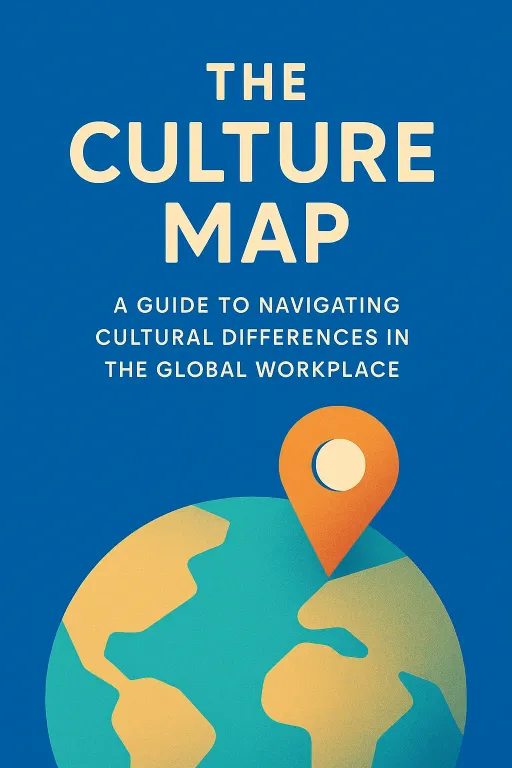
Nova: Exactly, Atlas! That’s just one of the profound paradoxes we uncover today as we dive into two truly transformative books. First, we’re looking at Erin Meyer’s deeply insightful “The Culture Map.” Meyer, a professor at INSEAD, built her entire framework not just from academic study, but from years of real-world consulting with global executives. She turned what seemed like an impossibly complex maze of cultural dynamics into an incredibly practical, data-driven system. It’s not just theory; it’s a field guide for anyone working across borders.
Atlas: A field guide for the global battlefield, then. My inner architect is already sketching blueprints, trying to figure out how to build these cultural bridges. And the second book?
Nova: The second is General Stanley McChrystal’s groundbreaking “Team of Teams.” Together, these books offer a powerful one-two punch for anyone looking to build genuinely high-performing global teams. They show us that effective global team leadership requires both sharp cultural intelligence and an adaptive organizational structure that actively fosters trust and shared purpose.
Atlas: That resonates deeply. As someone who’s always looking for strategic advantage and new leadership principles, I’m keen to understand how these two seemingly different areas—culture and structure—intertwine to create that high performance.
Navigating the Global Cultural Maze: The Culture Map's Insights
SECTION
Nova: Let’s start with “The Culture Map.” Meyer’s genius is in distilling cultural differences into eight clear dimensions. Think of them as scales, like how you rate a movie, but for how cultures operate. One of the most impactful is "High-Context vs. Low-Context Communication." In low-context cultures, like Germany or the US, communication is explicit, direct, and literal. The message is in the words themselves.
Atlas: So, you say what you mean, and you mean what you say. Pretty straightforward for an architect, where precision in blueprints is everything.
Nova: Precisely. But in high-context cultures, like Japan or many Asian and Middle Eastern countries, communication is nuanced, layered, and often implicit. The message isn't just in the words; it's in the tone, the body language, the shared history, the context of the relationship. It's about reading between the lines.
Atlas: Oh, I see. So for our listeners who are trying to manage complex international projects, this could be a massive blind spot. You think you're being clear, but you're actually missing half the conversation.
Nova: Absolutely. Meyer shares a fantastic case study about an American executive leading a Japanese team. The American, a low-context communicator, would give instructions directly: "Please send me the report by Friday." The Japanese team member, a high-context communicator, would often say "Yes, I will do my best," which the American interpreted as a firm commitment. But in Japan, that phrase often means "I understand the request, and I will try, but there might be obstacles, and I might need to manage expectations later."
Atlas: That sounds rough. So the American thought everything was on track, only to be blindsided when the report was late, or incomplete, because the Japanese team member was subtly communicating potential issues all along. How does a leader actually this knowledge without just resorting to stereotypes or constantly second-guessing every interaction?
Nova: That's the key. It's not about stereotyping; it's about understanding the and then adapting your approach. For example, Meyer suggests that when working with high-context teams, a low-context leader should make an extra effort to ask more open-ended questions, like "What challenges do you foresee in delivering this by Friday?" or "Is there anything that might prevent this from happening?" This creates space for the implicit to become explicit.
Atlas: That makes sense. It's about creating a safe channel for those unspoken nuances to surface. For an innovator, that's critical. You need the full picture, not just the parts that are easy to articulate. It’s about being truly strategic in your communication, not just saying words.
From Command to Connect: Building Agile 'Teams of Teams'
SECTION
Nova: And once you understand the "how" of global interaction, the "what" of organizational design becomes critical. This is where General Stanley McChrystal’s “Team of Teams” comes in. McChrystal led the Joint Special Operations Task Force in Iraq, and his story is a masterclass in organizational transformation. He realized that their traditional, hierarchical, top-down command structure, designed for efficiency in predictable environments, was utterly failing against Al-Qaeda in Iraq.
Atlas: That’s fascinating. You’d think a military organization would be the epitome of command and control, where every step needs a blueprint. What was the problem?
Nova: Exactly. Their enemy was a decentralized, agile network. Al-Qaeda in Iraq could adapt and move faster than the highly specialized, siloed units of the task force. McChrystal describes how intelligence analysts would gather crucial information, but it would sit in their silo, while operators on the ground were making decisions with outdated or incomplete data. He realized he had to dismantle the very structure that had made them successful in previous wars.
Atlas: So he had to break down the walls, not just build bridges. That sounds incredibly agile, but for an innovator building long-term impact, isn't there a risk of losing control, or diluting strategic vision, when you decentralize so much? How do you maintain coherence without a rigid blueprint, especially in a high-stakes global operation?
Nova: That’s the brilliant part. He didn’t just decentralize; he fostered two critical elements: "shared consciousness" and "empowered execution." Shared consciousness meant daily, massive video conferences where everyone, from junior analysts to senior commanders, shared intelligence, discussed operations, and understood the behind every mission. This built a common understanding of the battlefield, turning specialized individuals into a collective brain.
Atlas: Wow. So, instead of a few people at the top holding all the context, everyone had a piece of the strategic puzzle. That sounds like a radical shift in leadership principles.
Nova: It was. And "empowered execution" meant that once everyone had that shared consciousness, they were trusted to make decisions at the lowest possible level, without waiting for top-down approval. This sped up their response time dramatically. They moved from a system where one commander made all the calls to one where every team could act decisively, guided by a shared understanding and mutual trust.
Atlas: That gives me chills. Thinking about it from an architect's perspective, it’s like moving from a single, rigid skyscraper design to a modular, interconnected city where each building can adapt and respond to local conditions, but still contributes to the overall urban plan. How did they build that trust, especially across different units with different cultures and objectives?
Nova: It was incredibly difficult. It required leaders to let go of control, to mentor rather than command, and to actively connect people. They started embedding personnel from different units into each other’s teams, fostering personal relationships and breaking down those inter-organizational cultural barriers. This direct interaction built the trust necessary for shared consciousness and empowered execution to flourish. It’s a powerful lesson in how cultural intelligence isn't just about national cultures, but also organizational sub-cultures.
Synthesis & Takeaways
SECTION
Nova: So, when we bring "The Culture Map" and "Team of Teams" together, it's clear: cultivating high-performing global teams isn't about finding a magic bullet. It's about a dual strategy. You need to understand the invisible forces of national cultures shaping communication and decision-making, and then you need to design an organizational structure agile enough to leverage that understanding.
Atlas: So, it's about building bridges designing a more flexible, resilient architecture for those bridges to stand on. It’s about mastering the "soft" skills of cultural intelligence to enable the "hard" strategic agility needed for project execution. That’s a powerful combination for any leader, strategist, or innovator.
Nova: Exactly. It's about trust. Meyer helps us understand how to build trust across different cultural expectations, and McChrystal shows us how to structure an organization so that trust can translate into rapid, effective action at scale.
Atlas: This has been incredibly insightful. For our listeners who are navigating these complex global waters, what’s one tiny step they can take this week to start applying these profound ideas?
Nova: Here’s your tiny step, straight from the source: Identify one cultural dimension from 'The Culture Map' that significantly impacts your current global team. It could be communication, decision-making, or even feedback. Then, brainstorm one small, deliberate adjustment you can make in your communication style this week to bridge that specific cultural gap.
Atlas: That’s a concrete action. Instead of being overwhelmed by the big picture, start with one small, strategic tweak. It’s about testing the blueprint in a small way.
Nova: Precisely. Small adjustments, big impact.
Atlas: Fantastic. Thank you, Nova, for illuminating these complex ideas.
Nova: Always a pleasure, Atlas.
Atlas: This is Aibrary. Congratulations on your growth!