Building Resilient Teams: Beyond Collaboration
Golden Hook & Introduction
SECTION
Nova: Atlas, what comes to mind when I say 'team resilience'?
Atlas: Oh, Nova. Probably a PowerPoint presentation with a stock photo of a group of diverse individuals high-fiving over a mountain. And a lot of buzzwords. You know, 'synergy,' 'cross-functional collaboration,' 'lean agile transformation.' All the greatest hits.
Nova: You are not wrong. It's easy to dismiss, isn't it? But what if the secret to building truly unbreakable teams came from places far removed from corporate boardrooms? What if it came from the battlefields of Iraq, or from a deep dive into what truly inspires human loyalty? We’re talking about going beyond the buzzwords, way beyond the high-fives.
Atlas: Okay, now that sounds interesting. You're telling me a four-star general is going to teach us about high-fives and synergy? I’m intrigued. How does that even connect?
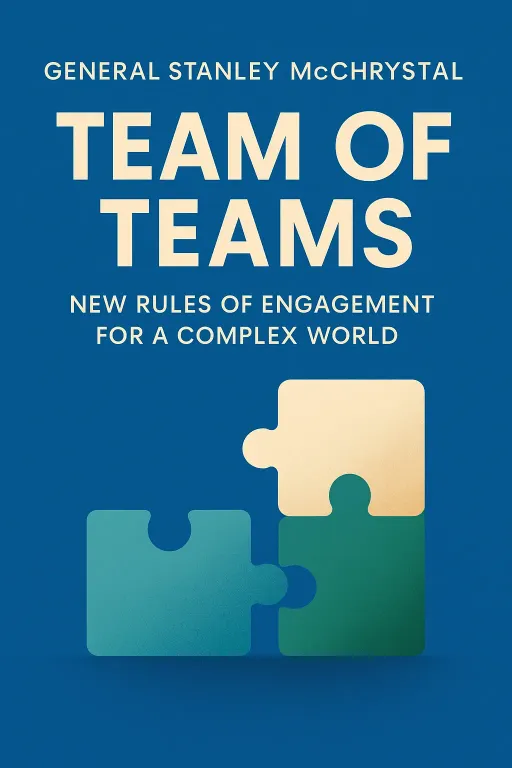
Nova: Well, today we're peeling back the layers on team resilience, drawing profound insights from two incredible thinkers. First, General Stanley McChrystal, a man who commanded Joint Special Operations Command in Iraq, and then, the immensely influential Simon Sinek, author of the seminal work, 'Start with Why.' McChrystal's book, 'Team of Teams,' outlines how extreme environments demand a new organizational structure, moving beyond traditional command-and-control. It’s a complete paradigm shift.
Atlas: So, we’re talking about military strategy meeting inspirational leadership? That’s not a combination I expected. Especially for someone like me, or many of our listeners, who are trying to lead with wisdom and build something lasting, not just manage.
Nova: Exactly. Because resilient teams, as we'll explore today, aren't just about structure or a fancy org chart. They're built on shared purpose, deep trust, and the ability to adapt autonomously, much like a living, breathing organism. It's about fostering something profoundly human at the core of any high-performing group.
The 'Why' Beyond the What: Shared Purpose as a Living Organism
SECTION
Nova: And that brings us perfectly to our first deep dive: the profound power of 'why.' Simon Sinek, with his 'Start with Why,' really shifted how we think about leadership and motivation. He argues that truly inspiring leaders, and by extension, truly resilient teams, communicate from their 'why' – their core purpose, their belief – not just their 'what' or 'how.'
Atlas: I’ve heard about 'Start with Why.' It often gets boiled down to, 'find your passion.' But for a strategic leader, or an empathic influencer, that can feel a bit… fluffy. How does a company's 'why' actually translate into empowering action, especially in complex, high-stakes situations, beyond just a nice slogan?
Nova: That’s a brilliant point, Atlas. It's far from fluffy. Sinek isn't talking about a marketing slogan. He's talking about the very soul of an organization. Take Apple, for example. Their 'why' wasn't just to sell computers; it was to challenge the status quo, to think differently. That purpose, articulated with clarity and consistency, created an almost tribal loyalty among their customers and, more importantly, within their own teams.
Atlas: Ah, so it's not just about what they make, but why they bother making it in the first place. That makes sense. It’s about the deeper connection.
Nova: Exactly. When everyone on the team understands and believes in that fundamental 'why,' it cultivates deep trust and loyalty. This trust isn't just a nice-to-have; it's the bedrock that allows individuals to act autonomously. They don't need constant oversight because they inherently understand the overarching goal and the values guiding their decisions. They don’t just know to do; they know they’re doing it.
Atlas: So, for our listeners who are building legacies, not just managing tasks, how can they articulate a 'why' that truly resonates? How do you move past the generic mission statement that nobody remembers?
Nova: It starts with introspection, not just aspiration. It’s about uncovering the genuine belief that drives the organization or team. Sinek’s work has been widely acclaimed for making this abstract concept so tangible. He often points out that many companies focus on ‘what’ they do and ‘how’ they do it, but very few articulate ‘why’ they exist. And the ‘why’ is what inspires, it’s what creates loyalty beyond reason. It's what allows a team to pivot and adapt without losing its identity, because the core purpose remains steadfast.
Atlas: Wow, that’s actually really powerful. It's like the immune system of an organization. If everyone understands the core purpose, they can fight off threats and adapt to new challenges, because they know what they're protecting and why.
Nova: A perfect analogy, Atlas! It transforms a collection of individuals into a unified, adaptive force, much like a living organism. This isn't just about structure; it's about the pulsating heart of a team. It's the ultimate empowering force, allowing teams to respond to unforeseen challenges not by waiting for orders, but by acting in alignment with their shared belief.
From Command-and-Control to Shared Consciousness: Empowering Adaptability
SECTION
Nova: And that naturally leads us to our second crucial idea, which takes that empowered 'why' and shows us how it operates in the most demanding environments. General Stanley McChrystal, from his experience leading Joint Special Operations Command, or JSOC, in the Iraq War, recognized that the traditional command-and-control structure, designed for predictable warfare, was utterly failing against a decentralized, adaptive enemy like al-Qaeda in Iraq.
Atlas: Hold on. A general admitting traditional command structures were failing? That’s a pretty radical admission, especially from someone in the military. It sounds like he’s dismantling the myth of the all-knowing leader.
Nova: Precisely. McChrystal realized they needed to move beyond the classic pyramid. His solution was to create a "Team of Teams." The core idea was to foster something he called "shared consciousness." Instead of information flowing up and down a hierarchy, leading to slow, outdated decisions, he pushed for radical transparency and horizontal information sharing. Everyone, from the top general to the individual soldier on the ground, had access to the same, real-time intelligence.
Atlas: In a military context, that sounds incredibly risky. Giving everyone access to everything, letting small teams make decisions? For a strategic leader focused on the bigger picture, isn't that just inviting chaos?
Nova: It’s counterintuitive, absolutely. But McChrystal’s insight was that in a rapidly changing, complex environment, the speed of information and decision-making trumps perfect, centralized knowledge. He argued that small, empowered teams, deeply informed and trusting of each other, could act with unprecedented agility. They weren't waiting for orders; they were executing based on shared understanding and a clear 'why' – which connects perfectly back to Sinek's work.
Atlas: So, it’s like replacing a single, overloaded brain with a distributed nervous system, where every cell knows what the organism is trying to achieve. That’s a fascinating reframe. How did they achieve that 'shared consciousness' in practice?
Nova: They did it through relentless communication. Daily, all-hands intelligence briefings that included literally thousands of people across different agencies and units, all sharing and absorbing information. They broke down silos, intentionally fostering relationships and understanding across different components of the command. This allowed small, autonomous teams to make rapid, effective decisions on the ground without having to wait for approval from above, because they knew the overall strategic intent. They could adapt quickly because they understood the whole ecosystem.
Atlas: That’s incredible. But how do you translate that to a less extreme environment, say, a corporate team or a non-profit? Not everyone is fighting a war, thankfully. What are the practical steps leaders can take to foster this 'organism-like' adaptability without descending into utter chaos?
Nova: It starts with radically transparent communication. Leaders need to actively push information outwards, not hoard it. Create forums where teams can openly share challenges and insights. Secondly, it’s about empowering those small teams by giving them clear objectives and the autonomy to figure out the 'how.' It requires a shift from leaders being chess masters, moving pieces, to being gardeners, cultivating an environment where teams can grow and adapt. It’s about trusting your intuition as a leader and actively listening to your team, which are both crucial growth recommendations for our strategic leaders.
Atlas: It’s a profound shift in mindset, from control to cultivation. I imagine a lot of our listeners who are visionary builders or empathic influencers would resonate with that, but also find it challenging to let go of that traditional control.
Synthesis & Takeaways
SECTION
Nova: Absolutely. What McChrystal and Sinek ultimately show us is that true team resilience isn't found in rigid structures or top-down mandates. It's a dynamic interplay between a deeply felt, shared purpose – the 'why' – and the ability for empowered, informed teams to adapt autonomously, creating a 'shared consciousness.'
Atlas: It's about cultivating a living system rather than building a machine. It's about trust, transparency, and a fundamental belief in the collective intelligence of your people. It really underscores how important it is for leaders to not just manage, but to inspire and connect.
Nova: Exactly. It's about remembering that the most resilient teams are those that embody a clear purpose, allowing every member to act with conviction and adapt with agility, seeing themselves not as cogs in a machine, but as vital parts of a larger, intelligent organism.
Atlas: That’s actually a really inspiring way to think about building teams. So, for our listeners, how clearly articulated is the 'why' for your team? And how does that empower them to act autonomously in complex situations? It's a question worth reflecting on.
Nova: Indeed. Because the answer to that question might just be the blueprint for your next breakthrough.
Atlas: Thank you for breaking down these incredible ideas, Nova. This was a masterclass in building truly resilient teams.
Nova: My pleasure, Atlas. Always a joy.
Nova: This is Aibrary. Congratulations on your growth!