

Beyond the Org Chart: Why Trust is Your Ultimate Team Accelerator.
Golden Hook & Introduction
SECTION
Nova: Most leaders think they need a tighter grip, more processes, or a better org chart to make their teams perform. But what if I told you that the secret ingredient isn't control at all? It's something far more fluid, far more human, and yet, profoundly strategic.
Atlas: Whoa, that's a bold claim, Nova. Because if I’m honest, my first instinct when things slow down or get messy is usually to add another layer of accountability, or maybe an extra meeting. So, what exactly are we talking about here? Is this some kind of soft-skills pep talk?
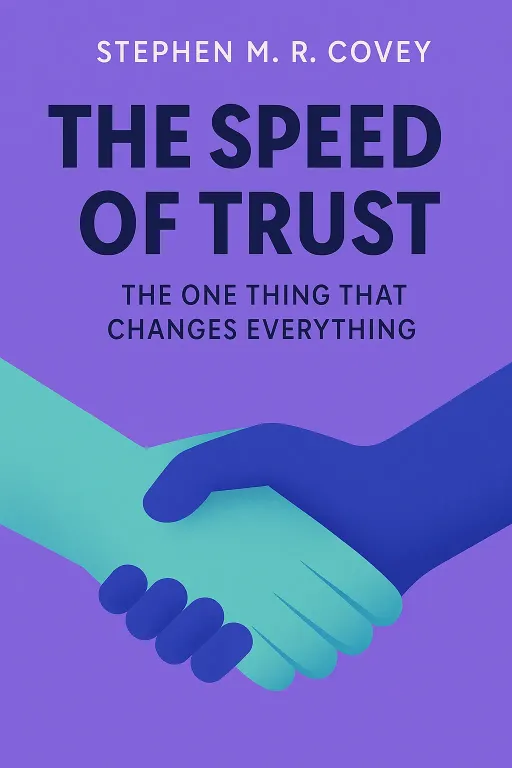
Nova: Not even close, Atlas. We're talking about trust. And today, we’re unpacking a concept that goes "Beyond the Org Chart: Why Trust is Your Ultimate Team Accelerator." We’re drawing insights from two phenomenal works: Stephen M. R. Covey's seminal book, "The Speed of Trust," and General Stanley McChrystal’s transformative "Team of Teams."
Atlas: Oh, I like that! Covey, of course, comes from a lineage of thinking about highly effective people, but he really honed in on the measurable aspects of trust. And McChrystal – a four-star general talking about trust in a military context – that just screams high stakes and real-world application. How do these two diverse voices converge on this idea of trust as an accelerator?
Nova: Exactly. Covey, the son of the legendary Stephen Covey, took his father's principles and applied them directly to the quantifiable impact of trust in organizations, arguing it’s a learnable competency. McChrystal, on the other hand, experienced firsthand how even the most rigid, hierarchical organization had to fundamentally transform its approach to trust to survive and succeed in modern warfare. Their combined wisdom fundamentally reshapes how we view team dynamics.
Trust as the Ultimate Team Accelerator: Speed, Cost, and Strategic Imperative
SECTION
Nova: So, let's dive into Covey’s core argument. He flips the script entirely. He says trust isn't just a nice-to-have, a warm fuzzy feeling that makes team meetings more pleasant. He positions trust as your ultimate team accelerator, a fundamental lubricant for speed and a powerful buffer against conflict.
Atlas: Okay, but for our listeners who are team architects and strategic motivators, that sounds a bit abstract. How do you measure 'lubricant' or 'buffer'? Like, what does that actually mean for the bottom line or project deadlines? I imagine a lot of our listeners are thinking, "How does this translate into my quarterly reports?"
Nova: That's the beauty of it, Atlas. Covey introduces the concept of a "trust tax" and a "trust dividend." Think about it this way: In a low-trust environment, every single interaction slows down. Every decision requires multiple layers of approval, every piece of information is second-guessed, every commitment comes with caveats and contingency plans. That's the "trust tax." It's hidden in the extra meetings, the redundant checks, the endless emails, the constant need to clarify intentions. It directly impacts your speed and inflates your operational costs.
Atlas: Right, like an invisible friction. I can totally see that. When I've been on teams where there's low trust, you spend more time managing perceptions and covering your bases than actually doing the work.
Nova: Precisely. Now, imagine the opposite: a high-trust team. Communication is direct, decisions are made faster because there's less need for micromanagement, and people take ownership without fear of being thrown under the bus. If someone says they'll do something, you trust they'll do it. If a problem arises, they bring it to the table early, knowing they'll get support, not blame. This is the "trust dividend." It manifests as increased speed, reduced costs, and higher quality output.
Atlas: So, it's like two teams are given the exact same complex project. The low-trust team gets bogged down in internal politics, documenting every single step to cover themselves, debating every minor point because they don't trust intentions. They miss deadlines, go over budget, and the final product is riddled with compromises.
Nova: Exactly. Meanwhile, the high-trust team, facing the same challenges, can communicate openly. They quickly identify potential roadblocks, trust each other's expertise to make rapid decisions, and if someone makes a mistake, the team rallies to fix it, learning along the way. They deliver faster, often under budget, and with higher innovation because people felt safe enough to take calculated risks.
Atlas: That’s incredible. So, cultivating trust isn't just a feel-good initiative; it's a strategic imperative that directly accelerates effectiveness and resilience. For our listeners who are growth seekers, driven by impact and collective success, this sounds like the ultimate ROI. But how does a team architect actually this kind of speed into their team's DNA?
Beyond Hierarchy: How Trust Builds Resilient 'Teams of Teams'
SECTION
Nova: That’s a brilliant segue, Atlas. Because building trust at the individual and small team level is one thing, but how does that scale to an entire organization, especially one as complex and traditionally hierarchical as the military? This is where General Stanley McChrystal’s "Team of Teams" comes in and blows traditional thinking out of the water.
Atlas: Oh man, how did a structure built on command and control suddenly pivot to extreme transparency and shared consciousness without chaos? Because for a lot of our listeners, the idea of dissolving hierarchy might feel like a recipe for anarchy, especially when the stakes are high.
Nova: It's a fascinating story. McChrystal, leading the Joint Special Operations Task Force in Iraq against Al-Qaeda in Iraq, initially faced a formidable challenge. His highly specialized, elite units were exceptional individually, but they operated in silos. They had state-of-the-art technology, unparalleled training, but their traditional, top-down command structure was too slow to counter a decentralized, agile enemy like AQI. Information wasn't flowing fast enough between units, leading to missed opportunities and a frustrating lack of collective impact.
Atlas: So, the formal structure was actually hindering their performance, not helping it, despite being designed for maximum efficiency in a different era. That's a crucial insight for anyone whose team feels stuck in old ways.
Nova: Precisely. McChrystal realized they needed to transform. He didn't dismantle the hierarchy entirely, but he flattened it, fostering what he called "shared consciousness" and "empowered execution." This meant radical transparency – daily "Operations and Intelligence" briefings, involving hundreds of people from different units, all sharing their most sensitive information. He also embedded liaisons from different units within each other, forcing cross-pollination and personal relationship building.
Atlas: So, it wasn't just about sharing data; it was about building trust across those previously siloed units. Getting to know the person behind the intelligence report, understanding their challenges, feeling a collective purpose.
Nova: Exactly. It became a "team of teams," where each specialized unit maintained its expertise but operated with a profound understanding of the larger ecosystem. They trusted that their counterparts in other units were equally committed, competent, and had the same overarching goals. This distributed trust allowed for decentralized decision-making – empowered execution – because everyone had the context and the relationships to make smart choices quickly, without waiting for orders from the top. The result was an unprecedented acceleration in their operations and a dramatic increase in effectiveness against AQI.
Atlas: That's incredible. So, for our listeners, the Team Architects out there, how do you foster that kind of shared consciousness and trust when the stakes aren't life or death? How do you translate "embedding liaisons" into a corporate or non-profit environment?
Nova: It's about intentional design, Atlas. It's about creating opportunities for inter-team vulnerability and shared understanding. It could be cross-functional project teams, structured sharing sessions where different departments present their challenges and learnings to each other, or even simply creating social spaces where people from different silos can connect on a human level. The goal is to break down those artificial barriers and build the personal connections that form the bedrock of organizational trust.
Synthesis & Takeaways
SECTION
Nova: So, when we pull these insights together, it becomes profoundly clear: trust isn't a soft skill you delegate to HR. It is the operational bedrock for speed, the strategic imperative for agility, and the fundamental component for resilience. Without it, every interaction slows down, every decision is questioned, and every potential conflict festers.
Atlas: That hits home. For leaders aiming for collective success and deep impact, it means shifting focus from merely managing tasks to actively cultivating the environment where trust can flourish. It sounds like the kind of empathetic leadership that connects deeper with a diverse team, and proactively helps navigate challenging team dynamics before they become full-blown conflicts.
Nova: Absolutely. And this isn't just theory. Covey shows us the measurable "trust dividend" in efficiency and cost, and McChrystal illustrates how it transformed a rigid military into an adaptive network. So, for our listeners, the tiny step we recommend this week is to initiate a trust-building exercise with your team.
Atlas: A trust-building exercise. Can you give me an example? Because sometimes those sound like forced icebreakers.
Nova: It needn't be. It could be as simple as a structured sharing session. Give everyone five minutes to talk about a recent challenge they faced – professional or even a work-related personal one – and what they learned from it. The goal isn't to solve problems, but to foster vulnerability, empathy, and shared understanding. It helps everyone see the human behind the job title and realize they're not alone in their struggles. That shared context, that vulnerability, that's where true trust begins to grow.
Atlas: That’s a really actionable step, Nova. It moves beyond just talking about trust to actively building it, and that’s going to resonate with anyone trying to empower their team to rise. It’s not just about hitting targets, it's about building a team that to hit them, together.
Nova: Exactly. It's about moving beyond simply doing the work, to truly thriving in it, together.
Atlas: Powerful stuff. This is Aibrary. Congratulations on your growth!









