

The Strategic Foresight Playbook
Golden Hook & Introduction
SECTION
Nova: The future isn't a passive thing that happens to us; it's something we actively build, often without realizing the blueprints we're laying down.
Atlas: Oh, that's a powerful opening. It feels like we're constantly reacting to what's next, but you're suggesting we have more agency than we think.
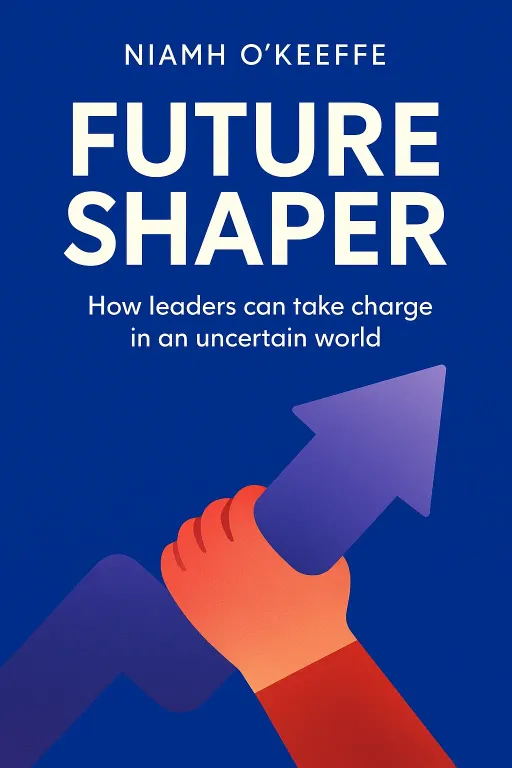
Nova: Exactly. And today, we're diving into "The Strategic Foresight Playbook" – a framework that synthesizes cutting-edge thinking on how to lead by design, not by default. It draws heavily from thought leaders like Niamh O’Keeffe and Clarke Murphy, whose work highlights a critical shift required in modern leadership.
Atlas: So, "The Strategic Foresight Playbook." It sounds like a manual for future-proofing, but more than that, it sounds like a manual for. What’s the core idea that gets us started here?
The 'Shaper' Mindset vs. The Reactive Leader
SECTION
Nova: The first big concept, championed by Niamh O’Keeffe, is the idea of moving beyond simply reacting to trends. She argues that truly effective leaders must adopt a 'shaper' mindset. Instead of just observing what's happening and adjusting course, they actively work to the future they want to see.
Atlas: A 'shaper' mindset. That sounds incredibly proactive. But Nova, for a lot of people, especially those navigating the early stages of their careers, the reality feels more like constant reaction. You’re trying to master current tools, meet deadlines, and just keep your head above water. How do you even begin to think about 'shaping the future' when you're focused on the immediate present?
Nova: That's a fantastic question, Atlas, and it gets right to the heart of why this distinction is so crucial. Reacting often stems from a place of scarcity or fear – fear of missing out, fear of disruption, fear of falling behind. It’s like being a sailor constantly adjusting the sails to the wind. A 'shaper,' on the other hand, is more like the shipbuilder. They understand the currents, yes, but they're also designing and constructing the vessel that can navigate those currents, or even set a new course.
Atlas: I love that analogy. So, it’s not just about being optimistic or having big ideas, it’s about developing a specific capability, a skill set for future-building?
Nova: Precisely. O’Keeffe's argument is that the most impactful leaders are those who recognize that the future isn't a fixed destination we discover, but a landscape we actively construct. It requires a different kind of strategic thinking – one that anticipates possibilities, identifies leverage points, and then takes intentional action to manifest those desired futures. It's about moving from a position of being acted upon by change to being an agent of change.
Atlas: That makes a lot of sense. When you put it that way, it feels less like an impossible task and more like a cultivated discipline. But what does 'actively creating' actually look like in practice for a team, say, in a fast-paced tech environment? Is it about inventing entirely new technologies?
Nova: It can be, but it's often more nuanced. Think about a tech team noticing the nascent rise of generative AI. A reactive team might wait for competitors to release AI features and then scramble to copy them. A 'shaper' team, however, would proactively explore how AI could fundamentally change user interaction within their existing product, perhaps developing a new interface or a unique AI-driven workflow that sets a new standard for the industry. They're not just responding; they're defining the next iteration. It’s about seeing an emerging trend not as a threat, but as a raw material to build something new and valuable.
Atlas: So, it's about seeing potential where others see disruption, and then having the courage and the foresight to invest in making that potential a reality, rather than just bracing for impact. That’s a powerful shift in perspective. It requires a different kind of vision, doesn't it? A willingness to look beyond the next quarter.
Sustainable Leadership: The Long-Term Imperative
SECTION
Nova: And that willingness to look beyond the immediate is precisely where the second core idea comes in, highlighted by Clarke Murphy's work on sustainable leadership. He provides data-driven cases showing that the most successful modern leaders are those who integrate sustainability into the very core of their business strategy.
Atlas: Sustainability. That's a term we hear a lot, but sometimes it feels like it's relegated to the PR department or a 'nice-to-have' initiative. Many leaders still worry that focusing on environmental or social impact slows down innovation or eats into short-term profits. How do these 'successful modern leaders' he talks about manage to balance that?
Nova: That's the critical point Murphy emphasizes: it's not an add-on; it's foundational. The data suggests that companies embedding sustainability into their core strategy aren't just doing good; they're doing. For instance, consider a tech company designing a new product. A purely reactive approach might focus solely on features and speed to market. A sustainable leadership approach would integrate energy efficiency, ethical sourcing of components, and the product's end-of-life disposal right from the conceptual phase.
Atlas: But wouldn't that add significant upfront costs and complexity, potentially delaying that crucial time-to-market?
Nova: Initially, perhaps. But the long-term dividends are substantial. Murphy's cases show that this integration leads to greater resilience. Think about supply chain disruptions – companies with diversified, ethically sourced, and environmentally conscious supply chains are far better equipped to weather global shocks than those reliant on single, potentially problematic sources. Beyond resilience, it builds immense brand loyalty and attracts top talent who are increasingly values-driven. It becomes a competitive advantage, not a burden.
Atlas: So, the data shows it's not just an ethical nicety, but a strategic imperative for enduring success? It’s about building a business that can last, not just one that can achieve a quick win?
Nova: Exactly. It influences everything: product development, operational efficiency, risk management, investor relations, and even innovation itself. When you're forced to innovate within constraints like resource efficiency or circularity, you often discover entirely new, more robust solutions. It pushes creativity in a direction that inherently builds long-term value and reduces long-term risk. It’s about building a robust foundation, not just a flashy facade.
The Synthesis: Shaping a Sustainable Future
SECTION
Nova: Now, here's where it gets really interesting: how do you bring these two powerful ideas together – the 'shaper' mindset and sustainable leadership? The danger of being a 'shaper' without a strong ethical compass is that you might inadvertently shape a future that's ultimately detrimental, perhaps technologically advanced but environmentally disastrous or socially inequitable.
Atlas: That’s the tightrope walk, isn't it? How do you balance the agile, 'shaper' speed with the deliberate, long-term perspective of sustainability? Especially for someone early in their career trying to make a real impact, it feels like a massive challenge. You want to innovate, but you also want to ensure that innovation is responsible.
Nova: You've hit on the core tension and the ultimate goal. Shaping the future isn't just about speed; it's about. Sustainability provides the ethical framework and the long-term vision for that intentionality. It guides future you choose to shape. It’s about asking not just "Can we build this?" but "Should we build this?" and "What are the long-term consequences if we do?"
Atlas: Okay, that clarifies it. It’s about shaping a future that is not only innovative and successful but also resilient, ethical, and viable for the long haul. So, what’s the actionable first step? The takeaway suggests identifying one future trend in your field and drafting a plan for how your team can influence its direction ethically. That sounds like a significant undertaking.
Nova: It can feel daunting, but let’s break it down, keeping your growth journey in mind. First, the identification. What trend is just starting to bubble up in your industry? It could be anything from the evolution of remote work tools, the integration of AI in customer service, the rise of decentralized autonomous organizations, or new methods of sustainable material sourcing. Don't pick the loudest trend, pick one that genuinely sparks your curiosity and has potential long-term impact.
Atlas: So, for someone in marketing, it might be the increasing sophistication of AI-driven personalized advertising. For someone in software development, perhaps it's the shift towards low-code/no-code platforms or advanced cybersecurity threats.
Nova: Exactly. Now, the 'drafting a plan to influence its direction' part. This isn't about writing a 50-page business plan. It's about a few bullet points. How could your team, even in a small way, how this trend unfolds? Instead of just using the AI ad tools, could your team experiment with using them transparently, perhaps focusing on user education about data privacy? Instead of just adopting low-code, could your team help establish best practices for security or integration with existing complex systems? It's about proactive contribution, not passive adoption.
Atlas: And the 'ethically' part is where sustainability and foresight intersect?
Nova: Precisely. For each potential influence, ask: What are the ethical implications? Who benefits? Who might be disadvantaged? What are the environmental impacts? Could this trend exacerbate existing inequalities? How can we steer this towards a more positive, equitable, and sustainable outcome? For our marketing example, influencing AI ads ethically might mean designing campaigns that empower users with control over their data, rather than exploiting it. For the low-code trend, it might mean ensuring accessibility for developers with different skill levels and building in robust security protocols from the start.
Atlas: That feels much more manageable. It’s about conscious direction and ethical consideration, not just wild, unfettered innovation. It’s about being a thoughtful architect of the future, not just a busy builder.
Nova: That’s the essence of strategic foresight and sustainable leadership combined. It’s about balancing the speed and agility needed to innovate with the wisdom and foresight required to ensure that innovation serves a greater, long-term good. It’s the dynamic tension between being a quick-footed 'shaper' and a grounded 'sustainability advocate' that truly defines effective leadership for tomorrow.
Synthesis & Takeaways
SECTION
Nova: The core insight from "The Strategic Foresight Playbook" is that leadership in the modern era demands a dual capability: the agility to innovate and shape emerging futures, coupled with the ethical grounding to ensure that future is sustainable and beneficial. We can't afford to just react to change; we must actively co-create the world we want to live in, with intention and responsibility.
Atlas: And for us, the listeners, especially those navigating their early careers and driven by growth and impact, this means embracing that journey of continuous learning with purpose. Your daily 20 minutes of focused learning could be spent exploring one of these trends. Identify that trend, brainstorm one way your team could influence it, and critically, ask one ethical question about its direction. That’s not just learning; that’s practicing foresight, that’s beginning to shape.
Nova: Absolutely. It’s about building that muscle of proactive, ethical leadership, one conscious choice at a time. The future isn’t out there waiting to be discovered; it’s here, being built by your decisions today.
Atlas: This has been incredibly illuminating, Nova. It reframes how we think about our role in shaping what comes next.
Nova: It's a powerful reframe, Atlas. And with that, we've reached the end of our exploration today.
Atlas: Thank you for guiding us through these essential concepts.
Nova: This is Aibrary. Congratulations on your growth!









