Your Narrative Shapes Your Reality: How Storytelling Powers Agent Adoption and Impact.
Golden Hook & Introduction
SECTION
Nova: Atlas, quick. What's the one thing every brilliant engineer secretly struggles with?
Atlas: Oh man, Nova, that's easy. Admitting when their code isn't perfect. Or maybe... talking to people outside of engineering?
Nova: You're close! It's actually expecting their brilliant work to speak for itself. And that, my friend, is where we're going today. We're diving into how engineers, often focused on the 'what' and 'how,' can unlock massive adoption and impact for their Agent solutions by mastering the 'why' through compelling storytelling.
Atlas: Oh, I like that. The 'why.' Because I've definitely seen amazing tech just… languish.
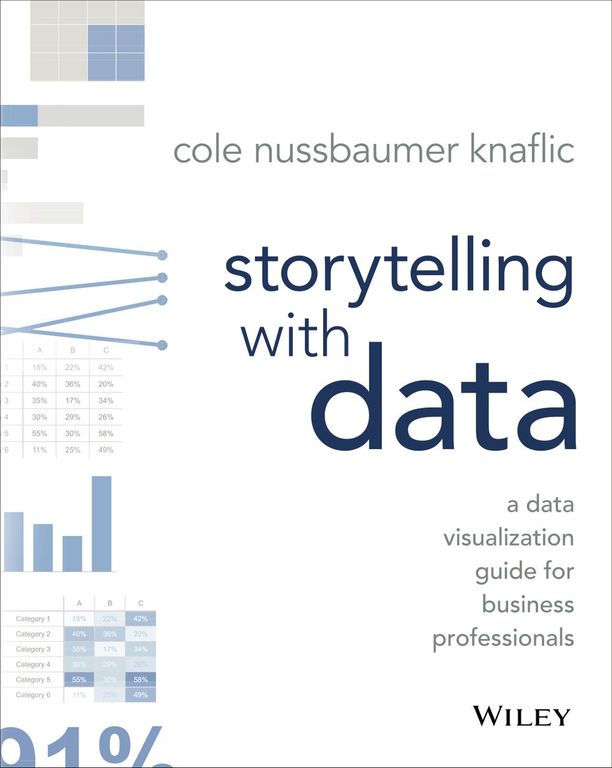
Nova: Exactly. Today we'll explore that inherent 'blind spot' engineers often have when it comes to human decision-making. Then, we'll discuss how two powerful frameworks can fundamentally shift our approach from merely presenting information to inspiring action. We’re talking about insights from "Storytelling with Data" by Cole Nussbaumer Knaflic, who built her expertise as a data visualization specialist at Google, making complex data narratives compelling. And "Start With Why" by Simon Sinek, who famously distilled his observations of highly successful leaders into a globally recognized framework, especially after his viral TED Talk.
Atlas: Wow, so we’re taking big ideas from these widely acclaimed works and putting them to work for Agent engineers. I’m in.
The Blind Spot: Engineering Logic vs. Emotional Decision-Making
SECTION
Nova: So, let's start with this 'blind spot.' As engineers, we're trained for logic, for facts, for precision. We build incredible Agent systems with robust architectures, optimized algorithms, and elegant code. We then present our work, sometimes with detailed slides, assuming the sheer brilliance and efficiency of our solution will naturally lead to its adoption. But Atlas, what often happens instead?
Atlas: Yeah, I know that feeling. You present all the metrics, all the performance gains, and you see… glazed eyes. Stakeholders nod politely, but the project doesn't get the traction it deserves. It’s frustrating because you know it’s a superior solution.
Nova: Exactly! It's like we're speaking a different language. Imagine a team of highly skilled Agent architects. They’ve spent months building a technically superior, super-efficient Agent system designed to revolutionize a core business process. They meticulously prepared their presentation: countless slides detailing every optimization, every performance metric, every security feature. They showed graphs, charts, and benchmarks proving their Agent was faster, smarter, and more reliable than anything else out there.
Atlas: Sounds like a Monday morning for a lot of our listeners who are building high-performance Agent systems. They're all about the systemization and application-oriented results.
Nova: Right? But the stakeholders, the business leads, the end-users… they're not engineers. They see a torrent of data, a cascade of technical jargon. They don't the solution. The engineers are baffled; their work speak for itself. They poured their expertise, their passion, their very intellect into this, and it’s met with polite indifference. The emotional stakes are high for everyone, but the communication just misses the mark. The engineers feel undervalued, and the stakeholders feel overwhelmed and unconvinced.
Atlas: Hold on, Nova, so you're saying even if an Agent system is technically flawless, optimized for speed and scalability, it can just… sit there? For someone building high-performance Agent systems, those 'value creators' you mentioned, that's a nightmare. What are we missing here, beyond just 'better slides'? Is it really just about feelings?
Nova: It absolutely is about feelings, Atlas, but not in a fluffy, unscientific way. People don't just process information; they process. They buy into or, not just features or raw data. The disconnect isn't simply about understanding the technical details; it's about the relevance, the impact, that this Agent technology aligns with goals and values. We’re trained to be objective, to value precision, so we often forget that human decisions are deeply emotional. We miss the power of narrative to connect and drive adoption for our Agent solutions.
The Power of Narrative: Reframing 'Why' for Agent Adoption
SECTION
Atlas: Okay, so if facts aren't enough, what? You mentioned 'Storytelling with Data' and 'Start With Why.' How do these connect for an Agent architect who’s trying to integrate complex tech into existing business?
Nova: This is where the shift happens. Cole Nussbaumer Knaflic, in "Storytelling with Data," shows us that presenting data effectively isn't just about making pretty charts. It's about understanding your audience and building a clear, persuasive around your insights. It’s about structuring your information in a way that takes your audience on a journey, making them the hero who benefits from your insights. It's about identifying the emotional core of your data.
Atlas: I see. So it's like, instead of just showing a graph of Agent A's 20% efficiency gain, you tell a story about what that 20% for someone's day?
Nova: Exactly! And then Simon Sinek comes in with "Start With Why." He argues that people don't buy you do, they buy you do it. He explains how communicating your purpose first—your belief, your cause—inspires action and builds lasting connections. It's about tapping into that deeper emotional resonance.
Atlas: That makes me wonder, how does that actually apply to something as technical as, say, an Agent that automates a complex, repetitive task?
Nova: Great question! Let's contrast our earlier scenario. Another Agent team, inspired by these very principles, is developing an Agent that automates a complex, repetitive task within a large organization. Instead of just showing efficiency gains of X percent, they start with a story. They say: "Imagine Sarah, one of our customer service agents. She spends three hours every single day on mundane data entry, copy-pasting information between systems. She's frustrated, her creativity is stifled, and she feels like a robot herself. Our Agent isn't just a bot; it's a tool designed to give Sarah back those three precious hours. It allows her to focus on complex customer issues, to innovate solutions, and to feel truly valued for her human skills. Our 'why' is empowering human potential and unleashing our team's creativity."
Atlas: Wow, that's actually really inspiring. So you're saying for our listeners, the 'architects' and 'value creators,' it's about finding that 'Sarah' in their project and articulating the human outcome? Not just the technical elegance?
Nova: Precisely. They use vivid language, they introduce a relatable character like Sarah, and they focus on the and the of the Agent. This approach, grounded in Knaflic's narrative structure and Sinek's 'why,' leads to enthusiastic stakeholder buy-in and much faster adoption. It's about translating technical excellence into a compelling future vision.
Atlas: But what about something more abstract, then? Like optimizing a high-performance Agent's decision logic, which is super technical. How do you tell a 'why' story for?
Nova: Even for those deep technical optimizations, the 'why' is about the. Faster decision logic in an Agent could mean quicker problem resolution for customers, more efficient resource allocation for the business, or even saving critical time in a high-stakes scenario. You translate "optimized decision logic" into "the ability to serve our customers with unprecedented speed and accuracy, making their lives easier and our operations smoother." It’s about linking that technical brilliance directly to human or business value. It’s about building a shared vision.
Synthesis & Takeaways
SECTION
Nova: So, what we've really explored today is that the 'blind spot' engineers often have – assuming facts alone will drive adoption – is overcome by intentionally crafting narratives. Narratives that start with 'why' and resonate emotionally with your audience. It's moving from simply presenting information to inspiring action and building a shared vision for your Agent technology.
Atlas: I guess that makes sense. It's about becoming a storyteller, not just a coder. So, for our listeners who are deep in the code, building these amazing Agent systems, what's the one thing they should take away to bridge this gap between their technical brilliance and stakeholder adoption?
Nova: My challenge to them, and to you, Atlas, is to reflect on this: How could you reframe the 'why' behind your current Agent project to make its value more compelling and emotionally resonant for your stakeholders? Don't just list features; tell the story of the transformation it brings.
Atlas: That’s actually really inspiring. It's about understanding that the code is just the beginning; the real impact comes from the story we tell around it.
Nova: Absolutely. It’s about making your Agent solutions not just functional, but.
Atlas: Meaningful. I love that. It’s not just about the silicon, it's about the story.
Nova: Exactly. And that's a perfect place to wrap up. This is Aibrary. Congratulations on your growth!