The 'Why' Beyond the 'What': Unlocking Deeper Engagement in Learning
Golden Hook & Introduction
SECTION
Nova: Alright, Atlas, here's a thought that might shake up some of our listeners, especially those deep in the world of educational innovation: What if all those incredible new learning tools, the personalized pathways, the AI tutors... what if they are fundamentally missing the most crucial ingredient for true engagement?
Atlas: Whoa, that's a bold claim, Nova. But isn't that where all the excitement and investment are happening? Everyone's chasing the next big "what" or "how" in education. What could possibly be more important than cutting-edge delivery?
Nova: Well, it turns out, the true impact, the kind that creates deeply engaged, self-sustaining learners, comes from understanding something far more fundamental: the. We're talking about purpose, about what genuinely drives people from the inside out, not just what's presented to them on a screen or in a textbook.
Atlas: So you're saying even the coolest VR learning experience can fall flat if students don't emotionally buy into its ultimate reason for being there? That's a fascinating challenge to the status quo. What sparked this line of thinking?
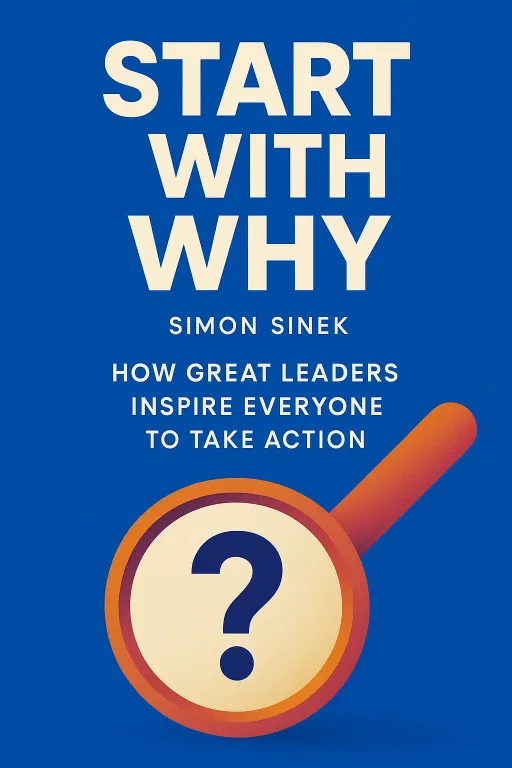
Nova: This insight really crystallizes around two seminal works that have profoundly shaped our understanding of motivation. First, Simon Sinek's "Start with Why," a book that, after his viral TED Talk became one of the most-watched in history, sparked a global movement around purpose-driven leadership. And then, Daniel Pink's "Drive," which synthesizes decades of behavioral science to challenge long-held assumptions about what truly motivates us beyond simple rewards.
Atlas: Right, I'm familiar with both, especially their impact in the business world. But how do these powerful frameworks, usually applied to inspiring employees or building brands, translate specifically to the nuanced, often complex, landscape of learning and education?
Nova: That's precisely where the magic happens, Atlas. It's about recognizing that learners are people first, and people are driven by the same core human desires whether they're in a boardroom or a classroom.
The 'Why' as the Foundation of Engagement
SECTION
Nova: Let's start with Sinek's "Golden Circle." He argues that inspiring leaders and organizations, and I'd add inspiring learning environments, always communicate from the inside out. They start with the – their purpose, their belief – then move to the – their process, their unique approach – and only then to the – the products or services they offer, or in our case, the curriculum and tools.
Atlas: Okay, so you're saying that if a school or an educator introduces a new personalized learning platform, for example, and they jump straight to explaining all the features – "This app has adaptive quizzes, it tracks your progress, it gives you instant feedback!" – they're missing the crucial first step?
Nova: Precisely. If the student doesn't understand they should care about that adaptive quiz, this feedback matters to their personal growth, or this particular learning path is going to help them achieve something they genuinely value, then all those fantastic features become just another task. It's like giving someone a high-tech shovel but never telling them why they should dig a hole in the first place.
Atlas: That's a great analogy. It sounds like the "why" isn't just about understanding the objective; it's about finding personal meaning. But for someone designing curriculum, how do you even begin to identify that core "why" for a diverse group of learners, especially when the subject matter might seem dry on the surface?
Nova: It requires a shift in perspective. Instead of asking "What do I need to teach?" or "How can I teach it better?", we first ask, "Why should they care?" A vivid case study might be a history class. One approach is memorizing dates and names. The 'what' is historical facts, the 'how' is lectures and tests. But what's the 'why'?
Atlas: Probably something vague like "to understand the past so we don't repeat it," which, let's be honest, doesn't always resonate with a teenager.
Nova: Exactly. Now imagine a history class that starts with the 'why': "We're going to explore historical events not just to learn facts, but to understand the roots of systemic inequalities in our community today, and to equip you with the critical thinking skills to advocate for a more just future." The 'what' might still be historical facts, but the is deeply personal and relevant.
Atlas: That's actually really inspiring. It frames learning as a tool for impact, which I think would resonate with a lot of students looking to make a difference. It sounds like the 'why' isn't just about understanding, it's about and to their lives and the world around them.
Nova: Absolutely. It transforms passive recipients of information into active participants in a meaningful endeavor. It's about tapping into something deeper than just getting a good grade. It's about giving them a personal stake in the learning journey.
Intrinsic Motivation: The Engine of Self-Sustaining Learning
SECTION
Nova: And once you've tapped into that powerful 'why,' you unlock the real engine of self-sustaining learning, which Daniel Pink masterfully explores in "Drive." Pink reveals that for complex, creative tasks – which most meaningful learning inherently is – intrinsic motivators vastly outperform traditional, external rewards. He boils it down to three key elements: autonomy, mastery, and purpose.
Atlas: Okay, so Sinek gives us the big picture "why," and Pink gives us the internal mechanics of how that "why" translates into sustained, internal action. But what exactly do you mean by autonomy in a classroom setting? Isn't there a curriculum to follow, standards to meet? How much real "autonomy" can a student actually have?
Nova: That's a common misconception, Atlas. Autonomy isn't about letting students do whatever they want; it's about providing choices within boundaries. It's the desire to direct our own lives. In a learning context, that could mean students choosing their project topics, deciding how they demonstrate their understanding – perhaps through a presentation, a written essay, a video, or even a podcast. It's about giving them agency over their learning path, even if the ultimate learning objective remains the same.
Atlas: I can definitely see how that would boost engagement. When you feel like you have a say, you're much more invested. And mastery, I imagine that's the innate human drive to get better at something that matters to us?
Nova: Exactly. It's the urge to get better and better at something that's important. Think about a musician practicing for hours, or a gamer perfecting a strategy. They're not doing it for a gold star; they're driven by the sheer satisfaction of improving. In learning, this translates to providing clear pathways for skill development, offering constructive feedback, and celebrating progress, not just endpoints. It's about fostering a growth mindset where the challenge itself is the reward.
Atlas: So it's like a gamified learning experience where you level up your skills, but it's not just for points, it's because you genuinely want to the subject, to truly understand it and feel competent. That's a powerful distinction. But what about purpose here? How does Pink's 'purpose' differ from Sinek's 'why' that we just discussed?
Nova: That's a great question, and they're deeply interconnected. Sinek's 'why' is the overarching belief or cause that inspires action. Pink's 'purpose' is the desire to do something that serves something larger than oneself, a direct outgrowth of that foundational 'why.' For example, if a student's 'why' for learning science is to understand how the world works, their 'purpose' might be to apply that scientific knowledge to develop sustainable solutions for their local community. It moves beyond personal understanding to collective contribution.
Atlas: That’s such a hopeful way to look at it. So it’s not just about getting a good grade, it's about being part of something bigger, something meaningful to the world. It sounds like a lot of traditional educational structures, with their emphasis on grades and external benchmarks, are actually these intrinsic motivators.
Nova: They often are. Pink's research highlights the "candle problem," where traditional rewards can actually performance on tasks requiring creative problem-solving. When you offer external motivators for intrinsically rewarding activities, you can inadvertently crowd out the very internal drive you're trying to cultivate. It's a subtle but profound shift in how we design learning.
Synthesis & Takeaways
SECTION
Nova: So, bringing it all together: the synergy between Sinek's foundational 'why' and Pink's intrinsic motivators of autonomy, mastery, and purpose creates learning experiences that are not just effective in terms of content delivery, but deeply engaging and truly self-sustaining for the learner. It's about designing for the human spirit, not just measurable outcomes.
Atlas: That's truly transformative. For our listeners who are cultivating next-gen learning environments, or even just rethinking their own personal development, the "tiny step" isn't just a suggestion, it's a foundational redesign. Articulating that core 'why' in the first 60 seconds of a new curriculum or project... that's a game-changer.
Nova: It absolutely is. It transforms passive recipients of information into active, passionate learners who are driven by their own internal compass, not just external pressures. It fosters a sense of ownership and deep personal investment.
Atlas: It challenges us to look beyond the shiny new tech and the latest pedagogical fads and ask the tougher, deeper questions about human motivation. What truly engages us? What makes learning stick and become a lifelong pursuit?
Nova: Exactly. It's about grounding innovation in something truly meaningful, something that resonates with our deepest human desires. For anyone out there designing their next curriculum, planning a training, or even just embarking on a personal learning journey, take that tiny step. Find your core 'why' and articulate it upfront. You might be surprised by the profound engagement you unlock.
Atlas: That's a powerful call to action. It makes learning not just a process, but a profound experience.
Nova: This is Aibrary. Congratulations on your growth!