

The 'Why' Beyond the 'What': Building Unbreakable User Loyalty
Golden Hook & Introduction
SECTION
Nova: Loyalty.
Atlas: Dog. Best friend. My coffee maker.
Nova: Retention.
Atlas: Sticky tape. Gym membership. That one email I can’t unsubscribe from.
Nova: Unbreakable.
Atlas: Diamond. Nokia 3310. My ambition after a triple espresso.
Nova: Exactly! That’s the kind of mental cascade we’re talking about today, Atlas. Because for so many products out there, the dream is that unbreakable loyalty, that incredible retention. But the cold, hard fact is, most products are struggling. They’re stuck focusing on they offer, not their users should genuinely care.
Atlas: Oh, I know that feeling. I imagine a lot of our listeners, especially those building complex systems, are nodding along. It’s easy to get lost in the features, the specs, the deliverables. But moving beyond that transactional engagement to foster lasting devotion… that’s the holy grail, isn’t it?
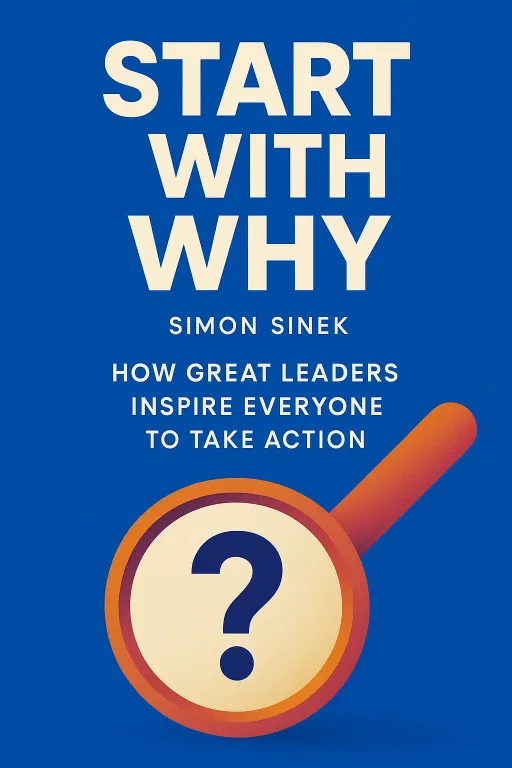
Nova: Absolutely. And that’s why today, we’re diving into two foundational texts that, when woven together, offer a powerful roadmap. We're talking about by the brilliant Simon Sinek, and by the insightful Nir Eyal. Sinek, you know, he spent years not just reading about leaders but observing them, like an ethnographer, really digging into some inspire and others just manage. Eyal, coming from a Stanford background, offers this almost engineering-like precision to understanding human behavior in product design.
Atlas: I can see how those two perspectives could create a really potent combination. One is about the soul of the product, the other about the mechanics of engagement. So, where do we start with this quest for unbreakable loyalty?
Nova: We start with the 'why,' Atlas. The 'why' as the absolute foundation of loyalty.
The 'Why' as the Foundation of Loyalty
SECTION
Nova: Simon Sinek, in, famously introduces the concept of the Golden Circle: Why, How, and What. Most organizations, most products, they communicate from the outside-in: 'Here’s we make, here’s we make it, wanna buy it?' But truly inspiring leaders and companies, they communicate from the inside-out. They start with their 'why' – their purpose, their cause, their belief.
Atlas: So you’re saying it’s not about the shiny new feature, but the underlying reason it exists? For someone who’s a strategic architect, constantly connecting the dots and building sustainable systems, that feels like a fundamental shift in perspective. We’re often trained to articulate the 'what' and 'how' with precision.
Nova: Exactly. Think about Apple, for instance. Their iconic "Think Different" campaign wasn’t about faster processors or more memory. It was about challenging the status quo, empowering creativity, and giving a voice to the rebels. Their 'why' was to empower individuals to think differently. The 'what' – beautifully designed computers – was just the tangible manifestation of that belief. People didn't buy a Macintosh just for the hardware; they bought into the 'why.' They felt a connection to a deeper purpose.
Atlas: That’s a great example. But for our listeners who are building a complex product, maybe a B2B SaaS platform or a new AI tool, how do you even that 'why' when you’re buried in feature requests and technical debt? It’s hard to articulate a grand, inspiring purpose when you’re just trying to get the next sprint out the door.
Nova: That’s such a critical question, Atlas. It’s not always obvious, especially when you’re in the weeds. Sinek argues that the 'why' isn't invented; it's discovered. It's about looking inwards, understanding the core belief that drives you or your organization. For our listeners, especially those driven by impact and creating value for users, their 'why' might be precisely that: empowering users, simplifying complex tasks, or fostering connection. It’s about asking: 'What problem are we solving that aligns with our deepest values?'
Atlas: I can see how that introspection would be challenging for an analytical mind. We value deep understanding, and sometimes 'why' can feel a bit… nebulous. But if you can nail that down, it provides a North Star for everything else, doesn’t it? It’s about building a system that’s not just functional, but meaningful.
Nova: Precisely. It gives clarity, which I know is something our strategic architect listeners crave. It moves you from merely building products to building sustainable systems with a soul. But once you have that powerful 'why,' how do you translate it into daily engagement? How do you ensure users don't just your purpose but it through their interaction with your product? That's where Nir Eyal and the Hook Model come in.
Psychological Hooks: Engineering Engagement Beyond Features
SECTION
Nova: So, once you’ve articulated your profound 'why,' the next challenge is to embed it into a product experience that fosters consistent, almost automatic engagement. This is where Nir Eyal’s becomes incredibly powerful. Eyal presents the 'Hook Model' – a four-step process that helps companies create products users can’t live without by understanding deep user psychology.
Atlas: Okay, so we’ve got the 'why' as our purpose. Now, how do we actually people? That sounds a bit… manipulative, honestly. For someone who’s an empathetic motivator, driven by genuine impact, the word 'hook' can trigger some alarm bells.
Nova: That's a fair concern, and it’s a crucial distinction. Eyal himself addresses this. The Hook Model isn't inherently manipulative; it's a framework for understanding human behavior and habit formation. It can be used for good or ill, depending on the 'why' behind the product. When your 'why' is genuinely about improving users' lives, the hooks become powerful enablers of that value. Let's break down the four steps: Trigger, Action, Variable Reward, and Investment.
Nova: Think about Instagram. Their 'why' is about sharing moments, connecting people through visuals. The might be an internal one – boredom, loneliness, or a desire for connection – or an external one, like a notification that someone liked your photo. The is simple: you open the app, scroll through your feed. The is the magic. You never know what you’ll see next: a photo from a friend, a funny meme, a new product. That unpredictability makes it incredibly compelling.
Atlas: Oh, I like that. The unpredictability. It’s like a slot machine for your brain, but with pictures of cats.
Nova: Exactly! And then comes the. This is where users put something into the product, which increases their likelihood of using it again. For Instagram, it’s curating your profile, uploading photos, commenting on posts. Each investment makes the service more valuable to you, making it harder to leave.
Atlas: So, for a product leader focused on user retention strategies, this isn't just about adding more features; it’s about designing these loops that organically draw users back. But wait, looking at this from a strategic decision-making perspective, how do you ensure you’re building a habit loop, not an addictive one that users resent? That’s where the empathetic motivator in me really kicks in.
Nova: That's the ethical tightrope, isn't it? The key is alignment with your 'why.' If your 'why' is to genuinely enrich lives, then your hooks should lead to positive outcomes for the user. Instagram, at its best, helps people connect and share. If a product’s 'why' is just to maximize screen time for profit, then the hooks can become exploitative. The Hook Model provides the, but your 'why' provides the. It’s about empowering users, not entrapping them. For our listeners who are building sustainable systems and seeking clarity, it means designing these loops consciously, with user well-being in mind.
Atlas: That makes perfect sense. It’s about leveraging psychology to serve a higher purpose. So, the 'why' sets the intention, and the hooks provide the engine for sustained, meaningful engagement. It sounds like a powerful combination for building a truly loyal customer base.
Synthesis & Takeaways
SECTION
Nova: Absolutely, Atlas. When you bring these two ideas together, you realize that building unbreakable user loyalty isn't a mystery; it's a design challenge. Your 'why' provides the emotional core, the purpose that resonates deeply. It’s the gravitational pull. And the Hook Model provides the practical framework, the psychological architecture that translates that 'why' into consistent, valuable user interactions.
Atlas: So basically, you’re saying that customers don’t just buy you make, they buy you make it, and they keep coming back because you’ve thoughtfully designed an experience that reinforces that 'why' through psychological principles. For someone who seeks clarity and wants to refine their product’s direction, this framework is incredibly valuable.
Nova: Exactly. True loyalty is a symbiosis. Users find deep value, and products fulfill a genuine, often unspoken, need. It moves beyond transactional engagement to a place where users feel a part of something bigger, something that genuinely enhances their lives.
Atlas: That's actually really inspiring. It frames user retention not as a battle for attention, but as an opportunity to create profound impact. So, for our listeners, the resilient builders, the empathetic motivators, what’s one tiny step they can take today?
Nova: Here’s your tiny step: Write down your product's core 'why' in one clear sentence. Then, share it with your team. And then ask an even deeper question: 'Does this 'why' truly resonate with why our users care, not just what we offer?'
Atlas: Yes! And then, listen actively. Truly hear your team’s response. Because that clarity, that shared purpose, is the first building block of unbreakable loyalty.
Nova: It’s the starting line for everything.
Atlas: This is Aibrary. Congratulations on your growth!









