The 'Story' Trap: Why Compelling Narratives are Your Real Competitive Edge.
Golden Hook & Introduction
SECTION
Nova: What if the biggest lie in business isn't about profit margins or market share, but about what you your customers are buying?
Atlas: Oh, I like that. That’s a bold claim, Nova. Are you telling me all those quarterly reports and product spec sheets are… a smokescreen?
Nova: In a way, yes! Because in this incredibly crowded digital landscape we're all navigating, products and services often just blend together. The cold fact is, your audience isn't just buying you do; they're buying into the story you tell about what you do.
Atlas: That makes me wonder… we hear a lot about storytelling in marketing, but it often feels like a buzzword. What’s the real trap here?
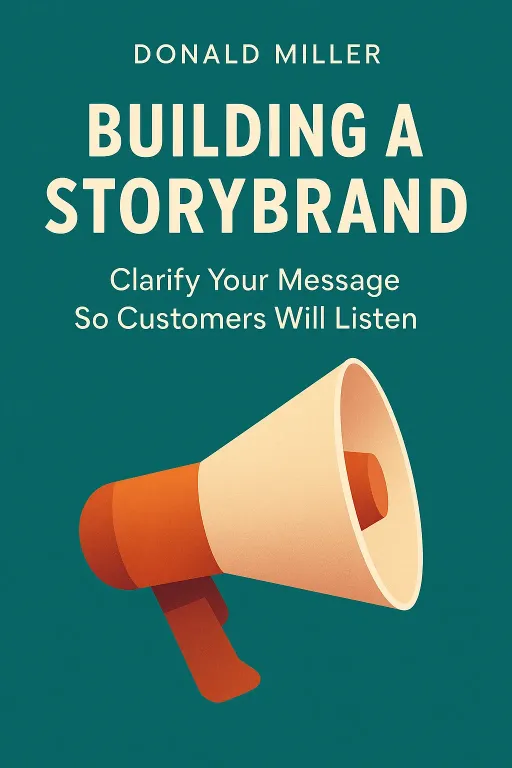
Nova: The trap, Atlas, is thinking that features alone sell. It's the moment we need to transform our marketing from merely informative to truly influential. And today, we're diving into how to do just that, drawing wisdom from two giants: Donald Miller's "Building a StoryBrand" and Simon Sinek's "Start with Why." It’s fascinating how Sinek’s work, in particular, really took off after his incredibly influential TED Talk, which became one of the most-watched of all time. These aren't just books; they're blueprints for connection.
Atlas: So it’s not just about flashy ads, it’s about a fundamental shift in how we communicate. I can see how that would resonate with leaders trying to carve out a unique space.
The 'Story' Trap: Beyond Features to Narrative Power
SECTION
Nova: Exactly. Let me paint a picture. Imagine two coffee shops on the same busy street. Both serve excellent, ethically sourced coffee. One shop's marketing talks about its bean origin, roast profile, and state-of-the-art espresso machines. The other's marketing invites you to "discover your daily ritual of calm amidst chaos," a place where "every cup is a moment of peace in a frantic world."
Atlas: Oh, I see where you’re going with this. The second one isn't selling coffee; it's selling an, a.
Nova: Precisely! The first shop is stuck in the 'story trap.' They're focusing purely on the 'what.' Their coffee is good, but it's interchangeable. The second shop, however, is selling a narrative. They're positioning their customer as the hero who desperately needs that moment of calm, and the coffee shop is the wise guide providing the solution. The result? Deep emotional connection, loyalty, and a brand that stands out, even when the product itself is, on paper, identical.
Atlas: But wait, isn’t a good product supposed to speak for itself? For strategic learners and critical thinkers, the quality of the product should be paramount, right? If the coffee is genuinely superior, won't people eventually find it and stick with it?
Nova: That’s a great question, and it’s a common misconception. While product quality is foundational, in today's saturated market, 'good enough' is everywhere. If your product is excellent but your story is absent or unclear, you force your customers to connect the dots themselves. And let’s be honest, people are busy. They're not looking for more information; they're looking for clarity and relevance to their own lives. Without a clear narrative, even a superior product can become a commodity. Think of all the incredible tech startups that had brilliant engineering but ultimately failed because no one understood their 'why' or how they fit into the customer's story.
Atlas: That sounds rough, but… so it's not just about being forgettable, it's about actively potential customers because you haven't given them a reason to care beyond the specs. Could you give a real-world example of a brand that this shift?
Nova: Absolutely. Take a brand like Patagonia. They don't just sell outdoor gear; they sell a commitment to environmental activism and a lifestyle of adventure and sustainability. Their customers aren’t just buying a jacket; they’re buying into a larger mission. They're the hero who cares about the planet, and Patagonia is the guide providing the tools to live that value. It's a powerful narrative that transcends mere product features.
Crafting Your Brand's Epic: Frameworks for Heroic Connection
SECTION
Atlas: Okay, so we need a story. But how do we one that actually works? It sounds abstract. I imagine a lot of our listeners, especially those in high-stakes tech environments, are thinking: "How do I translate this into something tangible for my brand or even my team?"
Nova: That’s the perfect segue, Atlas, because that's where frameworks like Donald Miller's StoryBrand come in. He outlines a seven-part framework that essentially positions your customer as the hero of the story, and your brand as their guide. Think of it like a Hollywood movie. The hero has a problem, they encounter a guide who understands their struggle and gives them a plan, and that plan helps the hero succeed.
Atlas: So it's not about us boasting about how great are; it's about making our customers the stars of their own success story, with us just… handing them the map?
Nova: Exactly! It’s deeply customer-centric. Your brand isn't Luke Skywalker; your customer is. You're Obi-Wan Kenobi. You're showing them the path to overcome their challenges. And then, we have Simon Sinek's "Start with Why." While Miller gives you the narrative structure, Sinek provides the foundational purpose. He argues that great leaders and organizations inspire action by starting with their 'why' – their purpose or belief – before moving to the 'how' or 'what.'
Atlas: Ah, so Miller is the screenplay writer, and Sinek is the philosopher who helps you define the core message of the film?
Nova: That’s a perfect analogy! Miller structures the journey, while Sinek ensures that journey is rooted in a deep, authentic purpose. So, a fitness brand might use StoryBrand to frame their customer as the hero on a health journey, with their programs as the guide. But Sinek would push them further: does this fitness brand exist? Is it to empower individuals, to build community, to combat a sedentary lifestyle? That 'why' becomes the emotional core that creates deep connection and loyalty.
Atlas: I can see how that would create incredible resonance. How would someone in a leadership position, a future leader perhaps, apply this? It’s easy to think of it for external marketing, but what about inspiring a team?
Nova: Oh, it’s incredibly powerful internally. Instead of just telling your team, "Here's the project, here are the deliverables," you frame the project as a story. The team members are the heroes facing a challenge – perhaps a tough deadline or a complex problem. You, as the leader, are the guide, providing the plan, the resources, and the vision. And the 'why' of the project – its ultimate purpose, its impact on the company or the world – becomes the inspiring force. It transforms work from tasks into a shared epic journey. It’s about building a narrative around your collective purpose, making everyone feel like a vital character in a meaningful story.
Synthesis & Takeaways
SECTION
Nova: Ultimately, whether you're building a brand, launching a product, or leading a team, it comes down to understanding that humans are wired for narrative. We don't just process information; we process. A compelling story isn't just marketing; it's the fundamental way we connect, influence, and inspire loyalty. In a world of infinite choices, the story is what makes you unforgettable. It's the difference between being a commodity and a movement.
Atlas: That’s actually really inspiring. So what’s one tiny step our listeners can take today to start applying this?
Nova: A really practical first step is to revisit your brand's core message, whether it's for your company, your personal brand, or even your next big project. Can you articulate its 'why' in one clear sentence, and then position your customer – or your team – as the hero of that story? It's a small change with monumental impact.
Atlas: That’s a powerful thought to leave us with. It’s about shifting perspective and seeing the bigger picture.
Nova: Absolutely.
Nova: This is Aibrary. Congratulations on your growth!