The 'Say-Do' Gap: Why Actions Speak Louder Than Words in Leadership
Golden Hook & Introduction
SECTION
Nova: Atlas, if I gave you a challenge right now, a quick one, to describe exemplary leadership in exactly five words, what would you say?
Atlas: Oh, man, five words? Okay, let me think. "Talk less, do more, consistently." How’s that? A bit blunt, maybe. What about you, Nova?
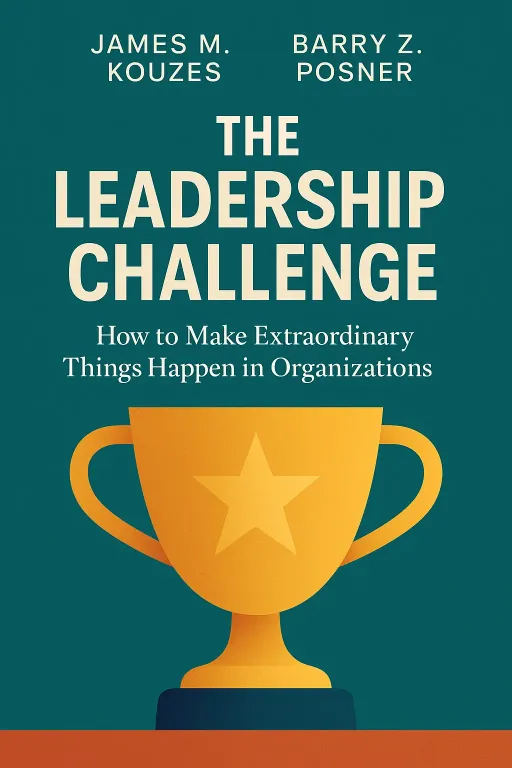
Nova: I like the bluntness! Mine would be: "Inspire through action, build trust." It gets to the heart of what we’re talking about today, which is the profound power of congruence in leadership. We're diving into the 'say-do' gap, a concept that really comes into sharp focus when you look at seminal works like "The Leadership Challenge" by James M. Kouzes and Barry Z. Posner. What's fascinating about their work is it's not just theory; it's built on decades of empirical research, interviewing thousands of leaders and their constituents to understand what truly makes leadership exemplary.
Atlas: Oh, I know that book. It's practically a bible for aspiring leaders. But what does a book that's been around for a while tell us about the common pitfalls leaders still face today, especially when the world feels like it's moving at warp speed?
The Blind Spot: Words vs. Actions
SECTION
Nova: That’s exactly where the 'blind spot' comes in. Many leaders, even the best-intentioned ones, get caught in the trap of focusing almost entirely on what they. They craft inspiring speeches, articulate grand visions, and believe their words alone can light a fire under their team.
Atlas: But isn't clear communication also crucial? I mean, if you can't articulate your vision, how can anyone follow? How do you balance speaking your vision with acting it out, especially when things are moving fast and you're constantly putting out fires?
Nova: That’s a great question, and yes, communication is absolutely vital. But the deeper psychological impact, the thing that truly builds trust or, conversely, erodes it, comes from your actions. Your words create expectations, but your actions validate those expectations. Think about it like a parent telling a child, "Do as I say, not as I do." That never works, does it? The child observes the parent's actions and mirrors behavior, not the spoken instruction. Teams are no different. They are constantly observing and mirroring their leader's behavior, whether the leader intends it or not.
Atlas: So it's not just about what's, but the unspoken contract of integrity that’s being formed. For someone trying to build a new product or team, someone in a high-stakes tech environment, how does this 'blind spot' manifest in day-to-day decisions? What's a subtle way it can derail things before they even start?
Nova: It can be incredibly subtle, actually. Imagine a leader who passionately preaches about 'work-life balance' and the importance of disconnecting. Yet, that same leader is consistently sending emails at 2 AM on a Tuesday, or expecting immediate responses over the weekend. Or perhaps they talk about fostering a culture of innovation and psychological safety, encouraging people to take risks, but then publicly criticize or punish the first person whose innovative idea doesn't pan out perfectly. These actions, even if unintended, send conflicting signals. They whisper to the team, "What I is one thing, but what I and is another." That inconsistency breeds cynicism, erodes psychological safety, and ultimately stifles the very innovation they claim to want. The team learns to play it safe, to watch what the leader, not what they.
The Shift: Modeling the Way and Embodying Purpose
SECTION
Nova: That brings us directly to bridging that gap, specifically with powerful insights from "The Leadership Challenge" and "Start with Why" by Simon Sinek. Kouzes and Posner call it 'Model the Way', and Sinek talks about embodying your 'why'.
Atlas: 'Model the Way' – that sounds like leading by example, which feels intuitive. But Sinek's 'Start with Why' adds another layer, moving beyond just showing up. How do these two ideas, 'modeling the way' and 'embodying purpose,' powerfully combine to create truly authentic leadership?
Nova: They are two sides of the same coin, really. 'Model the Way' from Kouzes and Posner is about leaders clarifying their values – knowing what they stand for – and then visibly living by them, setting the example for others. It’s about walking the talk. Sinek’s 'Start with Why' then gives that 'talk' its profound meaning. It’s not just action, but actions deeply rooted in the leader's core purpose, their fundamental belief system.
Atlas: Can you give us an example of a leader who embodies this? Someone whose actions and 'why' are so aligned it’s palpable?
Nova: Absolutely. Think about Yvon Chouinard, the founder of Patagonia. From the very beginning, his 'why' was deeply rooted in environmentalism, quality, and a less impactful way of doing business. His actions consistently mirrored this purpose. They made gear built to last, offered repairs, and even encouraged customers to buy new items if their old ones were still good. They invested in sustainable practices, fought against fast fashion, and donated a percentage of their sales to environmental causes – long before any of this was trendy. It wasn't just marketing; it was woven into every decision, every product, every action. That kind of consistency, that embodiment of purpose, builds incredible credibility and loyalty.
Atlas: Patagonia is a powerful example, but it's also a massive, established brand. For our listeners who are aspiring to build something impactful, perhaps a startup founder or a new team lead, how do they to define and then their 'why' when they're still in the trenches, iterating, and perhaps facing resistance? It feels like a big ask when you're just trying to get product-market fit or keep the lights on.
Nova: It’s true it can feel daunting, but it starts smaller than you think. It's not about grand gestures right away; it’s about consistent decisions, even minor ones, that reflect those core values. It’s the daily integrity: how you treat a new hire, how you respond to a setback, how you handle a conflict, whether you follow through on a promise, or how you allocate resources. These are all opportunities to visibly demonstrate your 'why.' It’s a continuous process of self-reflection and alignment. It's about asking yourself, 'Does this action, no matter how small, align with the values I claim to uphold?' That consistent, visible alignment, even in micro-moments, builds credibility over time. It’s the architecture of trust, built brick by consistent brick.
Synthesis & Takeaways
SECTION
Nova: So, ultimately, the 'say-do' gap isn't just a leadership theory; it's the ultimate test of your authenticity and influence. The profound insight here is that leadership isn't a performance you put on; it's a living, breathing demonstration of your values. Your team's belief in you, their willingness to commit and follow, is directly proportional to the alignment they perceive between what you preach and what you practice. When that alignment is strong, you inspire. When it's weak, you breed doubt.
Atlas: That makes perfect sense. So, it's not about being perfect, but about being relentlessly authentic. The deep question from the book content – 'How clearly did your actions in that moment reflect your stated values or vision?' – feels particularly sharp now. What's one practical step listeners can take to bridge their own say-do gap, especially if they're feeling overwhelmed or like they don't have time for more "strategic thinking"?
Nova: I would suggest carving out just ten minutes for what we might call 'reflection time' – a moment to simply identify one core value you want to embody more fully this week. Then, choose one small, visible action that directly demonstrates that value. It could be as simple as truly listening to a team member without interruption, or publicly acknowledging someone else's contribution instead of taking the credit. It’s a small step, but it’s a conscious, consistent step towards congruence.
Atlas: That's a great, tangible challenge. It brings it back to that personal accountability and the idea that trust is built, one consistent action at a time. It’s about designing your leadership, not just talking about it.
Nova: Exactly. It's about designing your leadership behavior, ensuring your actions are the clearest blueprint of your intentions.
Atlas: Powerful stuff for anyone leading, or aspiring to lead, anything from a small project to a huge company. Thanks, Nova.
Nova: Always a pleasure, Atlas.