The Purpose Trap: Why 'Finding Your Passion' Can Lead You Astray
Golden Hook & Introduction
SECTION
Nova: Forget 'follow your passion.' Seriously, just forget it. Because what if that well-meaning advice is actually the biggest roadblock on your path to a truly meaningful life?
Atlas: Whoa, Nova, that's a bold statement right out of the gate! I mean, isn't that like, the golden rule of career advice? Everyone says 'find your passion and you'll never work a day in your life.' You're telling me it's a trap?
Nova: Absolutely, Atlas. And that's exactly what we're diving into today with insights from a book called "The Purpose Trap: Why 'Finding Your Passion' Can Lead You Astray." It’s a book that really challenges a deeply ingrained societal narrative, pushing back against the often-stressful quest for a singular, predetermined passion. It's built on years of research into career satisfaction and psychological fulfillment.
Atlas: That’s going to resonate with anyone who’s ever felt lost or inadequate because they haven't "found" that one magical thing yet. I imagine a lot of our listeners are nodding along, thinking, "Wait, so it's not just me?"
Nova: Exactly. And that feeling of inadequacy? That’s what the book calls 'the blind spot.' It's the first big idea we need to unpack.
The 'Purpose Trap': Why 'Finding Your Passion' Is a Misleading Quest
SECTION
Nova: This blind spot keeps us from seeing purpose as something we build, not something we find fully formed, like a lost treasure chest. We're conditioned to believe there's this singular, grand passion out there, waiting to be discovered. And if it doesn't immediately appear, we feel like we're doing something wrong. It’s like being handed a map to a treasure hunt, but the map is blank, and you’re just told to ‘find the treasure.’ You end up paralyzed, not knowing where to even start digging.
Atlas: That sounds rough. But wait, isn’t 'follow your passion' just good advice? Why is it actually a trap? I mean, for those who are drawn to understanding things deeply, isn't finding that one big thing the ultimate goal?
Nova: It sounds good, doesn't it? But it's a trap because it implies passivity. It suggests purpose is an external object, a destination you arrive at, rather than an internal process you cultivate. Think about 'The Story of the 'Lost' Aspiring Artist.' This person, let's call her Chloe, loved drawing as a kid. Everyone told her, "You're so talented, you should be an artist!" So, she spent years waiting for 'the one true artistic passion' to strike. She dabbled in painting, then sculpture, then digital art, but because she didn't feel that overwhelming, all-consuming "passion" for any single medium, she felt like a failure.
Atlas: Oh, I know that feeling. It's like you're constantly searching for that lightning bolt moment, and if it doesn't hit, you're just... stuck. You're saying the pressure to find passion actually paralyzed Chloe, preventing her from just and?
Nova: Precisely. She wasn't building skills, she wasn't connecting with other artists, she was just waiting for a feeling. The cause was this societal pressure to find passion. The process was this agonizing self-doubt and paralysis. And the outcome? Stagnation and unhappiness, because she never allowed herself to simply and see where that led her.
Atlas: That's actually really insightful. I can definitely relate to that feeling of waiting for a clear sign, especially when you're trying to figure out what truly matters. So what's the alternative then? If we're not 'finding' it, what are we doing?
Building Purpose: The Power of 'Why' and Embracing 'Range'
SECTION
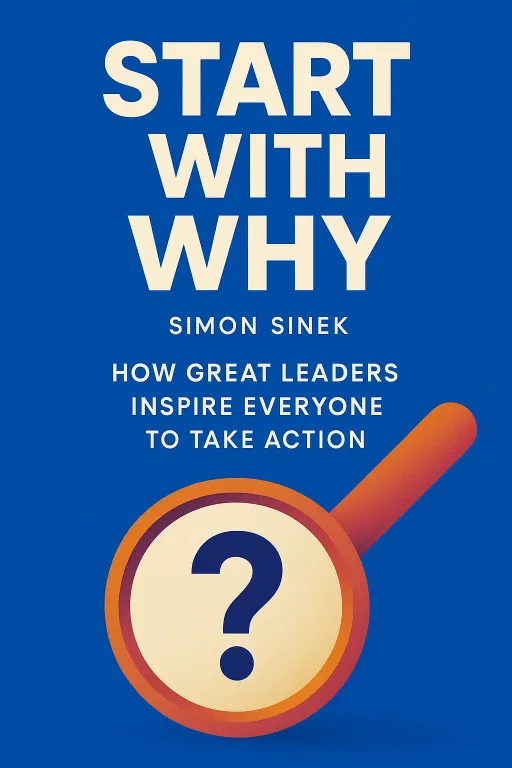
Nova: That's exactly where the shift comes in. The book points to two powerful ideas that reframe purpose entirely, moving us from passive finding to active building. First, it brings in Simon Sinek's "Start with Why." Sinek argues that true fulfillment and lasting success don't come from you do, but you do it. Understanding your core beliefs and values provides a compass, a stable anchor, even if your path changes dramatically. It’s like a ship’s rudder. The ship itself, the 'what,' can change its course, encounter storms, or sail to different ports, but the rudder, your 'why,' keeps it pointed in a meaningful direction.
Atlas: So my 'why' is my compass, but my 'what' can change? How does that work in practice, especially for someone who values methodical progress and clarity? I mean, if my 'what' is always shifting, how do I build anything substantial? Give me an example of someone who successfully navigated this evolution.
Nova: That’s a great question. And it leads us perfectly to the second big idea: David Epstein's "Range." Epstein challenges the idea of early specialization, showing how generalists, who explore various interests, often find their unique strengths and contributions later. This journey of discovery the path to purpose. Think of 'The Curious Generalist's Journey.' Sarah started in marketing, but she was always dabbling in coding, then took a philosophy course, volunteered for a non-profit, and even taught herself photography. Each 'what' seemed disparate. But her 'why' was always about 'connecting people creatively.'
Atlas: Right, like how do all those dots connect? That sounds almost counterintuitive to what we're usually told about 'sticking with it' and becoming an expert. But I can see how for someone who's always seeking deeper meaning, variety could be the key.
Nova: Exactly! Sarah wasn't just aimlessly wandering. Her 'why' — connecting people creatively — was her constant. Her 'range' of experiences, her 'whats,' eventually allowed her to launch a unique digital platform that blended marketing, coding, aesthetics, and social impact, all driven by her core value. Her purpose wasn't found; it was built, brick by diverse brick, all guided by her 'why.'
Atlas: That’s a perfect example. So, how do these two ideas, 'why' and 'range,' fit together to build purpose? It sounds like they're two sides of the same coin, pushing us towards something more dynamic.
Synthesis & Takeaways
SECTION
Nova: They absolutely are. The book’s core insight, what we’re calling Nova's Take, is that your 'why' is your stable anchor. It's the unchanging core of your beliefs and values. But your 'what' — your skills, your jobs, your projects — can and evolve through exploration. This dynamic interplay builds a more robust, adaptable, and deeply personal sense of purpose. It frees you from the pressure of finding one perfect thing.
Atlas: It’s about trusting that inner compass, isn’t it? For those of us who tend to analyze everything and seek out deeper meaning, this gives us a framework to build from, rather than just waiting for inspiration to strike or for some external validation. It's like, the process the purpose.
Nova: Precisely. And it brings us back to the deep question posed in the book: If you stripped away all external expectations, all the "shoulds" and the "have-tos," what core belief or value would still drive your actions today? That’s your 'why.'
Atlas: That’s a powerful question to sit with. It makes you realize how much of what we do is driven by external noise. It makes you think about what truly matters.
Nova: It really does. Purpose isn't a destination. It's the ongoing journey of living your 'why' through your evolving 'whats.' It’s a liberating perspective.
Atlas: What core belief would drive your actions? Think about it. And if this resonated with you, share your 'why' with us on social media. We'd love to hear your insights.
Nova: This is Aibrary. Congratulations on your growth!