The Invisible Hand of Influence: Mastering Social Dynamics for Leadership
Golden Hook & Introduction
SECTION
Nova: We’re told leadership is about vision and strategy, right? But what if your most brilliant plan is dead on arrival because you fundamentally misunderstand how humans actually make decisions?
Atlas: Oh, I've been there. That feeling when you've got the perfect strategy on paper, you present it with all the conviction in the world, and… crickets. Or worse, polite nods that translate to zero action. That’s going to resonate with anyone who struggles with getting genuine buy-in from their team.
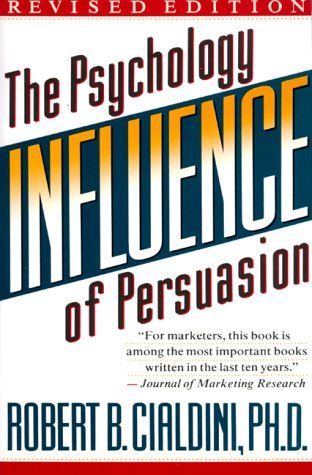
Nova: Exactly! It's like having a high-performance engine but not understanding the subtle physics of the road. Today, we're dissecting two titans of understanding human behavior: Robert Cialdini's groundbreaking "Influence: The Psychology of Persuasion" and Simon Sinek's transformative "Start with Why." It’s fascinating because Cialdini, a renowned social psychologist, literally went undercover for years, embedding himself in sales organizations and fundraising groups to observe persuasion tactics firsthand. He wanted to see how the masters actually did it.
Atlas: Wow, so he wasn't just theorizing from an ivory tower, he was in the trenches. That’s a real impact driver approach right there.
Nova: Absolutely. And Sinek, who started his career in advertising, shifted his focus dramatically to uncover the patterns of truly inspiring leaders. He moved from selling products to understanding what moves people at their core. Both offer profoundly different, yet complementary, lenses through which to view how we move others. They help us understand that invisible hand of influence.
Atlas: I can see how that would be critical for anyone who wants to not just manage, but truly lead and make a significant mark. So, where do we start with these invisible forces?
The Six Levers of Influence: Mastering Ethical Persuasion
SECTION
Nova: We start with Cialdini, because he gives us the foundational mechanics. He identified six universal principles that govern how people are influenced. Think of them as psychological shortcuts our brains use to make decisions quickly. And the first one I want to talk about, because it's so pervasive, is Reciprocity.
Atlas: Reciprocity. So, like, "you scratch my back, I'll scratch yours"?
Nova: Precisely, but it’s more subtle than that. It’s the deep-seated human need to return a favor. Cialdini tells a story about a professor who sent out Christmas cards to a random selection of strangers. Surprisingly, he received a flood of holiday cards back from people he’d never met. They felt an unconscious obligation to reciprocate a gesture, even from a stranger.
Atlas: That’s wild! I can definitely see how that works. But wait, looking at this from a strategic analyst perspective, how does a leader apply that without feeling, well, manipulative? You don't want your team to feel like they you.
Nova: And that's the crucial distinction. Ethical application is about genuinely giving value first, without expectation, but understanding that it builds a reservoir of goodwill. It's not about strategic bribes. It’s about genuine support, mentorship, or providing resources. Imagine you're a team leader. You generously share your expertise, you offer to help a team member struggling with a deadline, you advocate for their recognition. That's building reciprocity. When you later need that team's extra effort for a critical project, they'll be far more inclined to give it, not out of obligation, but out of a genuine desire to support you back.
Atlas: That makes sense. It shifts from a transactional "I did this, now you do that" to a relational "I supported you, and now we're a stronger unit." What’s another one of these levers?
Nova: Another incredibly powerful one is Social Proof. It’s the idea that we look to others to determine what is correct, especially when we’re uncertain. Think about a crowded street. If you see a group of people looking up, you instinctively look up too, right? You assume they know something you don't.
Atlas: Oh, I see. Like when you're choosing a restaurant in a new city, and one's packed and the other's empty, you're probably going for the packed one. Even if you don't know why.
Nova: Exactly! In a leadership context, this means demonstrating that others are already on board. If you’re trying to introduce a new initiative, showcasing early adopters, sharing testimonials from satisfied users, or highlighting how other successful teams are embracing it, provides powerful social proof. It reduces perceived risk and makes it easier for others to follow.
Atlas: That’s actually really inspiring. So, if I want to better inspire my team this week, I could consciously apply reciprocity by genuinely helping someone with a task they're struggling with, or by publicly recognizing their efforts. And for social proof, I could highlight a success story from another team that adopted a similar approach. It’s about making the invisible visible.
Starting with Why: Inspiring Loyalty and Action
SECTION
Atlas: Okay, so we understand the 'how' of influence. We can use reciprocity, social proof, and these other levers. But Nova, what about the 'why'? Why do some leaders just people to follow them, not just comply? You see it with certain companies or movements, people are fiercely loyal.
Nova: That naturally leads us to Simon Sinek and his groundbreaking concept of "Start with Why." Sinek argues that most organizations and leaders communicate from the outside-in: they tell us they do, then they do it, and rarely they do it. But truly inspiring leaders, like Martin Luther King Jr. or Apple, communicate from the inside-out. They start with their.
Atlas: So they lead with their purpose, their belief?
Nova: Precisely. Their core belief, their cause, their purpose. Sinek explains that our neocortex, the rational part of our brain, processes the 'what' and 'how.' But our limbic brain, which controls feelings, trust, and loyalty, processes the 'why.' When you communicate from your 'why,' you're speaking directly to the part of the brain that drives behavior, not just logic. This creates profound loyalty and engagement, far beyond transactional leadership. It's why people don't just buy what Apple makes; they buy Apple makes it—challenging the status quo, empowering creativity.
Atlas: That’s such a hopeful way to look at it. It sounds like 'why' isn't just a marketing slogan; it's the ethical compass that guides how you use Cialdini's levers. Like, you use social proof, but it's in a genuine 'why' that resonates with people's values.
Nova: Exactly! The 'why' transforms influence from a mere tactic into a genuine leadership philosophy. If your 'why' is clear and authentic, then using principles like reciprocity or social proof becomes about amplifying a shared purpose, not manipulating people. For a leader, this means articulating not just the project goals, but those goals matter, impact they will have, and shared belief they serve. It connects people to something bigger than themselves.
Atlas: So, for a leader who wants to make a real mark, how do they actually that? How do they articulate their 'why' to their team or stakeholders this week?
Nova: It starts with self-reflection. Ask yourself: what's the fundamental belief that drives you and your team? What problem are you truly trying to solve for your customers or the world? It's not about profit; profit is a result. It's about the deep-seated impact. Once you articulate that 'why,' then weave it into every communication—your team meetings, your project briefs, your one-on-ones. Make it the North Star.
Synthesis & Takeaways
SECTION
Nova: What we've explored today is that mastering influence isn't just about wielding power; it's about understanding the profound psychological architecture of human connection and purpose. Cialdini gives us the tools to understand people are moved, but Sinek provides the essential framework for we should move them.
Atlas: It’s the difference between being a good manager and a truly inspiring leader. One can get things done; the other can build a movement. The invisible hand of influence isn't about trickery; it's about profound understanding and genuine intent.
Nova: Absolutely. When you combine the scientific understanding of influence with an authentic, clearly articulated 'why,' you stop being a director of tasks and become an architect of inspiration. You're not just asking for buy-in; you're inviting people to join a cause they believe in.
Atlas: So, as you reflect on your own leadership, which 'why' are you truly leading with? And how might that shape which of Cialdini's principles you choose to apply and how you apply them this week?
Nova: We'd love to hear your thoughts on this. Share your 'why' or how you're applying these principles in your leadership journey.
Nova: This is Aibrary. Congratulations on your growth!