The Innovator's Paradox: How to Build What People Want Without Asking Them Directly
Golden Hook & Introduction
SECTION
Nova: Most innovators believe their job, their ultimate quest, is to build the next big thing. The revolutionary app, the disruptive gadget, the service that changes everything.
Atlas: Oh, absolutely. That's the dream, right? To be the one who saw it first, who brought that impossible idea to life. The visionary.
Nova: Exactly. But what if I told you that focusing solely on 'the next big thing' is precisely why so many brilliant ideas, so many visionary projects, crash and burn spectacularly, taking with them not just capital, but passion and potential impact?
Atlas: Whoa. That's a bold claim. Because for anyone in innovation, it feels like the opposite is true—you to swing for the fences. You to aim for that breakthrough. Are you saying we should be aiming… smaller? Or differently?
Nova: Differently, Atlas. Very differently. Today, we're dissecting. It's a fascinating look at a counter-intuitive truth: truly understanding what people need often means looking beyond what they say they want, and even beyond what you think you're building. It's about a fundamental shift in how we approach creation itself.
Atlas: That’s going to resonate with anyone who’s ever poured their heart and soul into a project, only to see it fizzle out despite its obvious brilliance. It speaks to that deep fear of building something magnificent, only for it to be met with… silence. So, what’s the core problem this paradox addresses? Where do so many of these dazzling ideas go wrong?
The Innovator's Dilemma: Building Without Knowing
SECTION
Nova: That’s where we start, with what the book calls "The Cold Fact." It's stark: many brilliant ideas fail because they don't solve a real problem. Not a perceived problem, not a 'nice-to-have,' but a. Think of it like this: you've got a team of world-class engineers, designers, and marketers, all working tirelessly to construct the most exquisite, technologically advanced bridge ever conceived.
Atlas: Sounds impressive. A marvel of modern engineering.
Nova: It is! It’s beautiful, it’s strong, it’s got all the bells and whistles. The only catch? It connects two uninhabited islands.
Atlas: Oh man. That’s… that’s a perfect metaphor for so many projects. All the resources, all the brilliance, all the effort, and ultimately, no one needs to cross that bridge. It's a monument to a non-existent problem.
Nova: Precisely. The outcome is wasted resources, monumental effort, and a disheartening failure. For an innovator, a strategist, or anyone crafting experiences, that's not just a financial hit; it's a blow to morale, to purpose, and to the very idea of making an impact. You’re building something that, while objectively 'brilliant,' lacks deep connection and collective success.
Atlas: For our listeners who are constantly driving innovation, who value impact and want to craft holistic experiences, this scenario feels like the ultimate nightmare. It’s not just about a product failing; it’s about a vision failing, and all the human energy that went into it. But how do you even know if it's a 'real problem' before you've built something substantial, before you've invested enough to even make a bridge? It feels like a chicken-and-egg situation.
The Dual Compass: Validation & Purpose
SECTION
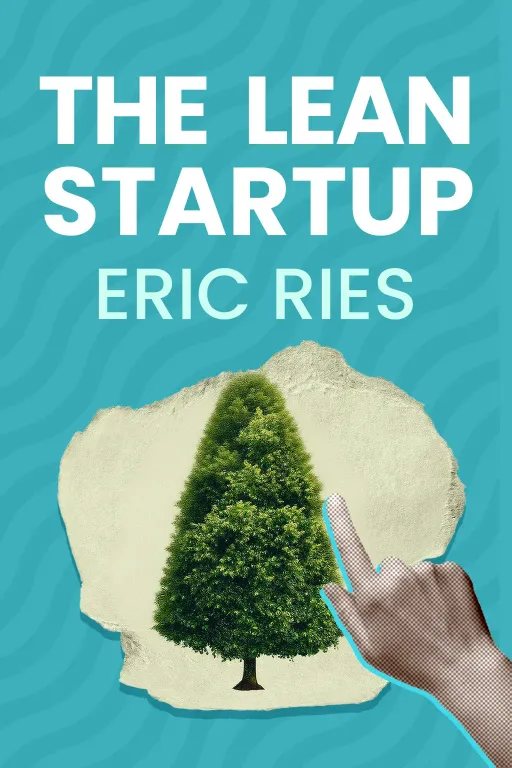
Nova: That’s exactly where our two tactical insights come in, acting like a dual compass for true north. The book synthesizes the wisdom from two giants: Eric Ries’s "The Lean Startup" and Simon Sinek’s "Start with Why." They might seem disparate, but together, they form an incredibly powerful approach.
Atlas: Okay, so tell me about this dual compass. How do these two ideas, seemingly from different planets, guide us?
Nova: Let's start with Eric Ries and "The Lean Startup." His core idea is the "Build-Measure-Learn" feedback loop. Instead of building that grand bridge to nowhere, you build a tiny, perhaps rudimentary, ferry. You launch it, you see if anyone actually to cross the water, they want to cross it, and you learn. Based on that learning, you decide if you need a better ferry, a small bridge, or maybe even discover they just wanted to swim.
Atlas: Right, like testing out a new recipe with small batches before you cater a whole wedding. You don’t make a hundred servings of something you’re not sure people will even like. That makes sense for validating features and avoiding obvious missteps. But for someone crafting entire experiences, for someone driven by a holistic approach, doesn't that feel a bit… incremental? Where's the 'soul' in just iterating on a basic ferry? It feels like it could lead to a very functional, but uninspired, bridge.
Nova: That’s a brilliant point, Atlas, and it leads us perfectly to Simon Sinek’s "Start with Why." Ries gives you the to build what people want, but Sinek gives you the that makes it matter. Sinek argues that people don't buy you do, or even you do it; they buy you do it.
Atlas: So, the purpose, the core belief. Like a company that might make phones, but their 'why' is about empowering human connection, not just selling a device.
Nova: Exactly. Your 'why' is your anchor. It’s what gives your innovations meaning and resonance, fostering that deep connection you mentioned earlier. Think of a company like Patagonia. They make outdoor gear, with sustainable practices, but their is about protecting the planet. Even if they experiment with new materials or designs, their North Star, their purpose, remains constant.
Atlas: So, Nova's Take is about combining these? It feels like they could pull in different directions – 'fail fast' with experimentation versus 'stick to your purpose' with the why. How do you reconcile them? Is one more important than the other?
Nova: Not at all. They’re two sides of the same coin. Nova's Take is that combining rapid validation with a clear purpose helps you build products that are both innovative and deeply desired. Your 'why' defines your mission, your ultimate impact. The "Build-Measure-Learn" loop is how you that mission. You’re not changing your 'why'; you’re constantly refining your 'how' to best serve that 'why.' It’s the difference between building bridge and building for the and the. It’s about building a resilient, communicative team around a shared purpose, and then giving them the tools to validate their innovative features quickly and effectively.
Synthesis & Takeaways
SECTION
Nova: So, the paradox is solved not by guessing what people want, but by intelligently discovering it through rapid feedback, all while being guided by an unshakeable core purpose. It's about being visionary grounded in reality.
Atlas: That’s powerful. It’s not just about avoiding failure; it's about channeling that innovative drive into truly impactful work, crafting experiences that genuinely resonate. For our listeners who are constantly innovating, strategizing, and building, how do they even begin to apply this? What's the very first, non-overwhelming step to integrate this dual compass into their work, especially when they're looking for product-market fit strategies?
Nova: The book offers a "Tiny Step," and it’s beautifully simple. Identify one core assumption about your current project, your team, or even your own process. Then, design a tiny, low-cost experiment to test it this week. It could be as simple as asking five potential users a specific question, or running a small A/B test on a landing page, or even just observing how people interact with a rudimentary prototype.
Atlas: That makes perfect sense. It’s about moving from assumption to insight, without betting the entire farm. And it ties so well into personal resilience, too. Because if you’re constantly testing and learning, you’re not building up huge, fragile expectations that can shatter. You’re building small, robust insights.
Nova: Absolutely. It’s about nurturing your well-being by reducing the inherent risk of innovation. It means your vision can truly fuel you, rather than drain you. It allows you to lead with intention, build resilient teams, and achieve genuine product-market fit.
Atlas: So, what's one assumption you're holding onto about your project, your team, or even yourself, that you're ready to test this week?
Nova: This is Aibrary. Congratulations on your growth!