

The Ethical Imperative: Leading with Integrity in a Complex World
Golden Hook & Introduction
SECTION
Nova: What if the biggest myth in leadership isn't about vision or charisma, but about something far more fundamental: that ethics is just a 'nice to have'?
Atlas: You're saying it's not a luxury, it's the engine? My gut tells me a lot of leaders struggling with tough decisions right now are probably thinking, 'I wish I had the luxury of just focusing on ethics!'
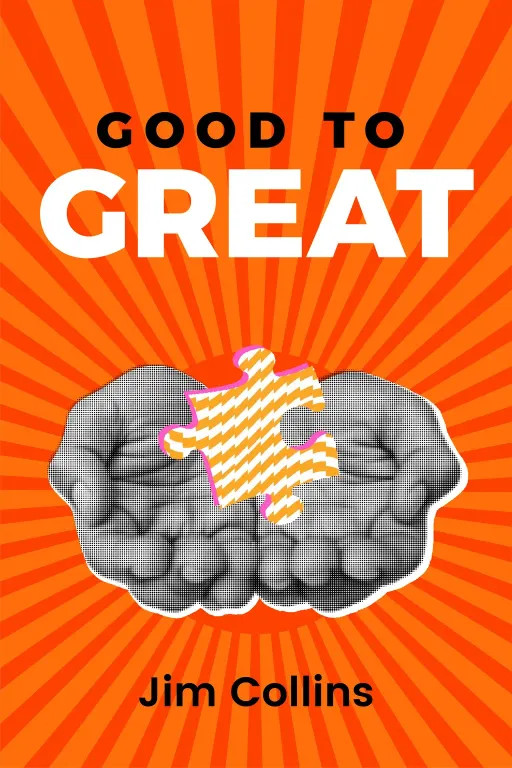
Nova: Exactly! That's the myth we're here to dismantle. Today, we're tackling the profound idea that unshakeable integrity isn't just a moral choice, but the ultimate strategic advantage for any leader navigating a complex world. We’re drawing insights from giants in the field, specifically Jim Collins's "Good to Great" and Simon Sinek's "Start with Why."
Atlas: Oh, those are foundational texts. I've heard them quoted endlessly. But I imagine for our listeners, who are often in high-pressure roles, the question is: how do you actually that, especially when the quarterly numbers are screaming?
Nova: That's the core of it, isn't it? What's often overlooked about these seminal works is how deeply they connect leadership success, not just to strategy, but to an unwavering commitment to values. It illustrates that true leadership isn't about avoiding mistakes, but about building an unshakeable foundation of trust and resilience. It's not a side dish; it's the main course.
The Strategic Imperative of Integrity: Beyond Morality
SECTION
Atlas: Okay, so if ethics isn't a luxury, it's an engine, how does that translate into tangible, strategic advantage? Because I know a lot of our listeners value clear, decisive action under pressure. They want to know how this actually helps them win.
Nova: That's where Jim Collins's concept of 'Level 5 Leaders' from "Good to Great" becomes so illuminating. He found that the leaders who took companies from good to truly great weren't these flashy, charismatic types. They were a paradoxical blend: fierce resolve and profound humility.
Atlas: Fierce resolve and profound humility? That sounds almost contradictory. Like, how can you be both?
Nova: It’s the magic formula. These leaders prioritized the enterprise's long-term health over any personal gain or short-term pressures. They made ethical decisions consistently, even when those decisions were incredibly difficult or unpopular in the moment. Think of a leader who, in the face of a financial downturn, might choose to invest in employee training and R&D, rather than making immediate, drastic cuts to boost the stock price.
Atlas: Hold on. That sounds like a recipe for getting fired in today's market! A lot of our audience, the strategic architects and resilient leaders, are constantly being judged on immediate results. How does that translate into 'strategic advantage' when the market demands instant gratification?
Nova: It’s precisely of that pressure that it becomes an advantage. Collins's research showed that these Level 5 leaders built trust. Not just with their employees, but with their customers, their suppliers, and even their investors. When you consistently make decisions that align with your deepest values, even if they're tough, people see that. They it.
Atlas: So you're saying that consistent ethical decision-making, even when it costs you in the short term, builds a kind of capital that pays off exponentially later?
Nova: Exactly! It creates a reservoir of goodwill and resilience. When a truly difficult crisis hits, the organization with a Level 5 leader doesn't crumble. Their team is committed, their customers are loyal, and their partners are supportive because they know the leader's decisions are coming from a place of integrity, not just opportunism. It’s a profound strength that weathering storms. It's like building a skyscraper on bedrock, not sand. The initial effort is greater, but the structure stands for centuries.
The 'Why' of Ethical Leadership: Inspiring Loyalty and Guiding Decisions
SECTION
Atlas: Okay, I can see how that unwavering integrity creates resilience. But then, how does a leader communicate that, or rather, that sense of purpose in a way that truly resonates and guides their teams, especially when things get ambiguous or complex? Because it's not enough for the leader to integrity; the whole team needs to embody it.
Nova: That naturally leads us to Simon Sinek's "Start with Why." He argues that people don't buy what you do, they buy you do it. And that 'why' isn't just for customers; it's the organizational soul. A clear, ethically grounded 'why' inspires loyalty and guides decisions, especially under pressure.
Atlas: So it's about more than just a mission statement on a wall. It's about a living, breathing purpose that everyone understands and believes in.
Nova: Precisely. Imagine two companies. Company A manufactures high-quality widgets. Their 'why' is "to make the best widgets and maximize shareholder value." Company B also makes high-quality widgets, but their 'why' is "to empower individuals through reliable tools that foster creativity and connection." Which company do you think cultivates a more committed team when a competitor suddenly offers a slightly cheaper widget?
Atlas: Company B, hands down. Because their employees aren't just making widgets; they're fulfilling a deeper purpose. It’s about impact, not just output. That makes me wonder, for a leader trying to build a high-performing, ethical culture, how do you genuinely that 'why' when it feels like everyone's just chasing targets?
Nova: It's about authentic leadership. It's about the leader living that 'why' every single day, making decisions that visibly align with it, and communicating it constantly, not just in quarterly meetings. It’s about creating a culture where employees feel like their work contributes to something bigger than themselves. When a clear, ethically grounded 'why' is pervasive, it becomes the organizational compass. When a tough decision comes up – say, whether to cut corners on a product feature to meet a deadline – the 'why' acts as an immediate filter. Does this decision align with our purpose to empower individuals through reliable tools? If not, then the answer becomes clear, even if it's harder.
Atlas: That’s a perfect example. It sounds like the 'why' provides a framework for ethical decision-making without having to dictate every single action. It empowers people to make the right choice because they understand the underlying purpose.
Synthesis & Takeaways
SECTION
Nova: Absolutely. What both Collins and Sinek ultimately show us is that ethical leadership isn't just about avoiding legal trouble or making a moral stand. It's a profound strategic choice. It's about building trust, inspiring loyalty, and creating a resilient organization that can withstand the storms and thrive in complex environments.
Atlas: So, it's less about being 'good' in a soft, abstract sense, and more about being 'good' in a robust, strategically advantageous way that benefits everyone involved. It’s the bedrock for true, sustained impact.
Nova: Exactly. It's the difference between a fleeting success and an enduring legacy. It’s why some organizations don't just survive, they excel, becoming magnets for talent and customer loyalty.
Atlas: That's actually really inspiring. It reframes ethics from a burden into a superpower. For all our listeners who are building teams and shaping markets, I’d encourage you to reflect on a recent tough decision. Did it align with your deepest values? How can you make that alignment even stronger next time?
Nova: A simple, powerful question.
Atlas: This is Aibrary. Congratulations on your growth!









