The Empathy Advantage: Mastering Persuasion without Manipulation
Golden Hook & Introduction
SECTION
Nova: What if the 'soft skills' you've been told are optional are actually the hardest, most strategic advantage you're routinely overlooking? Forget manipulation; true power in influence comes from something far more profound.
Atlas: Whoa, Nova. That's a gauntlet thrown right out there. You're saying the secret weapon isn't some clever tactic, but... genuine understanding?
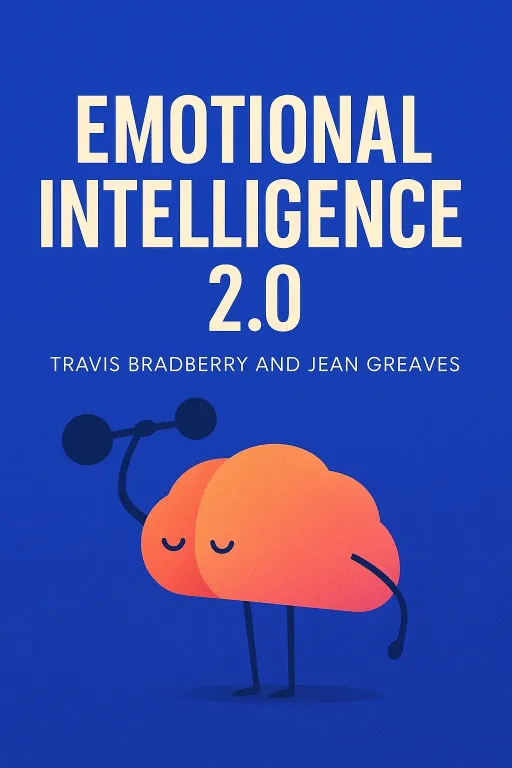
Nova: Exactly, Atlas. Today, we're unpacking 'The Empathy Advantage,' exploring how mastering persuasion isn't about manipulation, but about deep, authentic connection. We're drawing insights from two pivotal works: "Emotional Intelligence 2.0" by Travis Bradberry and Jean Greaves, and "Start with Why" by Simon Sinek. These aren't just self-help books; they’re strategic blueprints for human connection.
Atlas: Those are heavy hitters. Bradberry and Greaves really put emotional intelligence on the map as something measurable and actionable, not just a fuzzy concept. And Sinek? He fundamentally changed how many leaders think about inspiring loyalty.
Nova: Absolutely. And the core idea tying them together is that genuine understanding isn't some abstract ideal. It's the new competitive edge, the strategic bedrock for truly impactful relationships and influence that actually lasts.
Deep Dive into Emotional Intelligence: The Foundation of Genuine Connection
SECTION
Nova: Let's dive into that first pillar: emotional intelligence. Bradberry and Greaves, in "Emotional Intelligence 2.0," really break it down. They show us that self-awareness and social awareness are the foundational elements. Think of it as your internal GPS system.
Atlas: I like that. An internal GPS. But Nova, for someone in a high-stakes strategic role, this can sound a bit... touchy-feely. How does 'feeling my feelings' or 'reading the room' actually help me close a deal or lead a team through a tough quarter? It feels like a 'nice to have,' not a 'must-have.'
Nova: That's the common misconception, isn't it? It's not about being 'nice,' Atlas, it's about data. Imagine a leader, let's call her Sarah, who's brilliant with numbers but completely oblivious to the rising tension in her team. She pushes her agenda, misses the subtle cues of burnout and frustration, and suddenly, her top performers are leaving. Her lack of emotional intelligence wasn't a 'soft' problem; it was a hard, measurable drain on her team's productivity and retention.
Atlas: Oh, I know that feeling. I imagine a lot of our listeners have seen that play out in their own organizations. The brilliant mind, but a blind spot for the human element.
Nova: Precisely. Now, contrast Sarah with Mark. Mark is equally strategic, but he regularly checks in with his team, not just on tasks, but on their energy levels. He notices when a key player seems withdrawn, he asks open-ended questions, and he understands that the quiet resistance in a meeting isn't disagreement with the idea, but perhaps fear of implementation. He anticipates objections because he's read the emotional landscape. That's not touchy-feely; that's predictive analytics for human behavior.
Atlas: That’s a great way to put it – predictive analytics for human behavior. It sounds like a way to anticipate and mitigate risks, which is very strategic. So, for our listeners who are trying to actively cultivate relationships and build bridges, where do they even start to sharpen this 'emotional GPS' you mentioned?
Nova: It starts with genuine curiosity, Atlas. Self-awareness means understanding your own triggers, your own strengths, your own blind spots. Social awareness then means extending that curiosity outward. It's about actively listening for the behind the words. Are they enthusiastic? Hesitant? Frustrated? It's a skill you develop by consciously seeking out that data.
Deep Dive into The 'Why' Factor: Persuading Through Purpose, Not Pressure
SECTION
Nova: Understanding emotions is one thing, but knowing how to use that understanding to inspire and persuade is another. That naturally leads us to Simon Sinek's groundbreaking work, "Start with Why." Sinek argues that people don't buy you do, or even you do it; they buy you do it.
Atlas: That’s a powerful idea. It sounds like a way to move beyond transactional relationships. For someone trying to influence stakeholders or drive a new initiative, how does finding 'why' translate into tangible results? Isn't it just about having a compelling vision?
Nova: It’s more than just a vision, Atlas; it's a belief system. Sinek's Golden Circle shows us that most organizations communicate from the outside-in: 'Here's what we do, here's how we do it,' hoping to persuade with features or benefits. But truly inspiring leaders and organizations, like Apple in its early days, communicate from the inside-out. They start with they exist, what they believe.
Atlas: So, it's not just about selling a product or an idea, it's about selling a shared purpose.
Nova: Exactly. Think about the civil rights movement. People weren't marching for a policy change initially; they were marching for a belief in equality, for human dignity. Martin Luther King Jr. didn't say, "I have a detailed legislative plan"; he said, "I have a dream." He articulated a 'why' that resonated at a fundamental, emotional level, inspiring millions to act. That's persuasion without manipulation.
Atlas: That’s a profound example, and it really highlights the difference between compliance and genuine commitment. For an analyst or strategist who's constantly connecting dots and trying to get buy-in for complex ideas, how do they practically uncover the 'why' of their partners or their own team, and then articulate their own?
Nova: It comes back to that genuine understanding we just talked about. If you've been practicing emotional intelligence, you're better equipped to perceive what truly drives someone—their underlying values, their aspirations, their 'why.' Then, it's about finding the intersection between your 'why' and theirs. It's not about making them believe 'why,' but about showing how your initiative serves deeper purpose. It builds bridges of shared conviction.
Synthesis & Takeaways
SECTION
Nova: So, bringing it all together, emotional intelligence is the lens through which you perceive the 'why' in others – their motivations, their beliefs. And articulating your own 'why' is the magnetic force that connects with those beliefs, building genuine trust and inspiring action. It's the ultimate combination for authentic, lasting influence.
Atlas: That’s actually really inspiring. It's about making empathy a verb, not just a feeling. It's about strategic listening and then speaking from a place of shared conviction. It means true persuasion isn't about clever tactics; it's about genuine understanding.
Nova: Precisely. And the beauty is, you can start small. For your next meeting, identify one person and actively listen for the emotion behind their words, not just the words themselves.
Atlas: What hidden 'why' might you discover in someone today that could unlock a whole new level of connection?
Nova: This is Aibrary. Congratulations on your growth!