

The Empathy Advantage: Leading with Heart and Head
Golden Hook & Introduction
SECTION
Nova: Atlas, I want to play a quick game. We're talking today about the absolute power of leading with both heart and head. Give me your five-word review of that concept, right here, right now. No overthinking!
Atlas: Oh, I love this! Hmm... "Beyond soft skills, truly strategic."
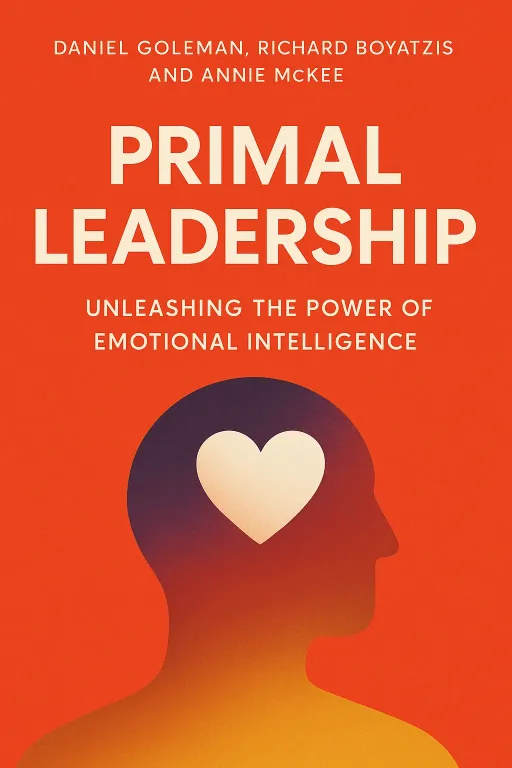
Nova: Wow, "Beyond soft skills, truly strategic." I like that. You cut right to the chase, because that's exactly what we're dissecting today, the idea of "The Empathy Advantage." And you know, we're drawing heavily from foundational works like "Primal Leadership" by Daniel Goleman, Richard Boyatzis, and Annie McKee. These are the folks who, in the early 2000s, really solidified emotional intelligence as a non-negotiable for leaders. Their earlier work, especially Goleman's, challenged that old-school belief that IQ was the sole determinant of success. They showed us how a leader's emotional impact literally shapes an organization's entire climate.
Atlas: That makes sense, but how do we move past it being just another buzzword? For many leaders, especially those trying to navigate complex, high-pressure environments, "empathy" can often feel like a fluffy concept. How is it truly a strategic asset, not just a nice-to-have?
Nova: Exactly! That's the cold hard fact we're tackling. It’s not just about being "nice." Leading with genuine connection isn't a soft skill; it's the most powerful driver of team performance and well-being you can possibly wield. It's about creating what Goleman and his colleagues call a "resonant" environment.
The Strategic Power of Empathy
SECTION
Nova: Think about a typical tech startup. High-pressure, demanding, brilliant minds, but often, the human element takes a backseat. I know of one such company, let's call it 'InnovateNow.' Their CEO, Sarah, was a prodigy, all about metrics, algorithms, and hitting targets. And they were hitting them, but at a cost. Turnover was climbing, innovation was stagnating, and there was this palpable undercurrent of stress. People were performing, but not thriving.
Atlas: I can definitely relate. For our listeners who are natural observers, seeing those subtle cues of stress and disengagement, that’s a common scenario. But how does a leader like Sarah, so focused on the hard numbers, even begin to shift that without feeling like she’s just adding more to her plate, or worse, being intrusive?
Nova: That’s the critical question. Sarah hit a wall when a major project nearly imploded due to a key team member burning out unexpectedly. It was a wake-up call. Instead of just replacing him and pushing harder, she paused. She started actively listening, not just to words, but to the unsaid. She began to understand the personal 'whys' behind her team members' work, their anxieties, their aspirations. She started small: one-on-one check-ins that weren't just about tasks, but about well-being. She fostered psychological safety, making it okay to admit mistakes, to ask for help.
Atlas: So it wasn't about a sudden personality transplant, but a shift in approach. What did that actually look like in terms of results? How did that empathy translate into something tangible, beyond just a happier team?
Nova: That’s the magic. When people felt seen, truly understood, and valued as whole humans, something shifted. Turnover rates plummeted. Innovation, which had been stifled by fear of failure, started bubbling up spontaneously. Teams began collaborating not because they were told to, but because they genuinely wanted to. They were more resilient under pressure. Their performance metrics didn't just recover; they surpassed previous highs. Goleman, Boyatzis, and McKee explain that resonant leaders literally create positive emotional climates that boost productivity and innovation. It’s not a fuzzy feeling; it’s a measurable, strategic advantage.
Atlas: Wow. So it's not just about making people feel good; it's about unlocking a deeper level of engagement and potential because they feel psychologically safe and valued. That's a powerful distinction.
Leading with 'Why' and Emotional Intelligence
SECTION
Nova: Absolutely. And speaking of unlocking potential, that naturally leads us to the second pillar of this "Empathy Advantage" – the power of 'why.' Because once you've created that empathetic, resonant environment, how do you then channel that energy towards a collective, inspiring goal? This is where Simon Sinek's "Start with Why" becomes so incredibly potent.
Atlas: Okay, so it’s not enough to be empathetic; you also need to give that empathy a direction, a purpose. But what do you mean by leading with 'why'? Is it just about having a good mission statement? Because I imagine a lot of our listeners have fantastic mission statements that don't always translate into that deep loyalty Sinek talks about.
Nova: That’s a perfect point. It's far more than a mission statement. Sinek illustrates how leaders who articulate a clear 'why' inspire deep loyalty and purpose, fostering environments where people thrive, not just perform. Think about a non-profit organization focused on literacy, let’s call it 'ReadForward.' For years, their leader, Mark, was excellent at logistics: organizing book drives, recruiting volunteers, tracking hours. But volunteer retention was a constant struggle, and the energy often felt transactional.
Atlas: I can see that. For someone driven by connection and fostering well-being, focusing purely on tasks can feel draining without that deeper purpose. How do they authentically share their 'why' without it feeling performative?
Nova: Mark realized he was missing the 'why.' He was focused on the 'what' and the 'how.' So he shifted. Instead of just saying, "We need 50 volunteers for the book drive," he started sharing personal stories. He talked about growing up in a home where books were a luxury, about the transformative power of learning to read, about the ripple effect a single book could have on a child's entire future. He invited volunteers to share personal 'whys' for being there. He connected every daily task, every book sorted, every child tutored, back to that profound impact.
Atlas: So it’s not just about 'why,' but about understanding and integrating the 'whys' of everyone involved. That makes me wonder, can someone fake their 'why'? Or does it have to be truly authentic, almost an extension of their emotional intelligence?
Nova: Exactly. Authenticity is absolutely paramount. And yes, it’s deeply intertwined with emotional intelligence. An emotionally intelligent leader doesn't just articulate their own 'why' powerfully; they also have the empathy to understand and connect with the 'whys' of their team members. They can see how individual motivations align with the larger purpose, and they help people feel that connection. When leaders lead from a place of emotional intelligence and clear purpose, they unlock an intrinsic motivation that standard incentives cannot touch. It’s no longer about a paycheck or even a task list; it's about being part of something meaningful, something that resonates with their deepest values. That’s the true 'Empathy Advantage.'
Synthesis & Takeaways
SECTION
Nova: So, what we're really seeing here is that empathy and purpose aren't just separate, feel-good concepts. They are two sides of the same powerful leadership coin. They combine to create an environment where people don't just clock in and out; they invest their hearts and minds. They bring their full selves to the work because they feel understood, valued, and connected to something greater than themselves. This taps into an intrinsic motivation that no bonus, no threat, no external pressure can ever replicate.
Atlas: That’s a great way to put it. For leaders who are natural observers, who cultivate growth and care deeply about fostering well-being, this isn't about learning a new trick. It’s about trusting their inner wisdom, as you often say. It's about leveraging what's already there. And honestly, that sounds like a much more sustainable and fulfilling way to lead.
Nova: Absolutely. It's about recognizing that your natural empathy, your ability to see those subtle cues, your drive for connection – those aren't just personal traits; they are strategic assets waiting to be fully leveraged. And the beautiful thing is, it doesn't require a grand, overnight transformation.
Atlas: That’s really inspiring. So, for our listeners, what’s one tiny step they can take to start cultivating this 'Empathy Advantage' tomorrow?
Nova: Here's a tiny, powerful step directly from our insights: Tomorrow, start your team meeting by sharing a personal 'why' behind a current project, and then, crucially, invite others to share theirs. Just open that door. See what happens.
Atlas: I love that. It’s about creating that space, inviting that connection. That's where the magic really begins.
Nova: Exactly. This is Aibrary. Congratulations on your growth!









