The Community Trap: Why You Need Intentional Design for True Impact.
Golden Hook & Introduction
SECTION
Nova: What if every 'community event' you've ever attended—the potlucks, the brainstorming sessions, even the 'team-building' retreats—was fundamentally flawed from the start? Not because of the people, but because of a single, glaring omission.
Atlas: Whoa, flawed? That's a bold claim, Nova. I mean, I’ve definitely been to my share of awkward gatherings, but I always figured it was just the usual social dynamics at play. Are you saying there’s something deeper, a structural issue, preventing connection?
Nova: Absolutely, Atlas. We’re diving headfirst into what we’re calling 'The Community Trap' today. It’s this insidious problem where our best intentions for connection often fall flat. And it’s not for lack of effort or good people. It’s because we’re missing a critical ingredient: intentional design, specifically a sharp, disputable purpose for every single interaction.
Atlas: Intentional design for a community potluck? That sounds… intense. I imagine a lot of our listeners, especially those deeply involved in building sustainable agriculture initiatives, are thinking, 'We just want to get people together to talk about soil health, not conduct a corporate strategy session.'
Nova: And that’s exactly where the insights from Priya Parker’s widely acclaimed book,, become indispensable. Parker, with her fascinating background as a master facilitator and conflict resolution specialist, spent years studying how groups come together, from high-stakes peace talks to simple dinner parties. What she uncovered is a profound yet surprisingly simple truth about human connection: the quality of a gathering is directly proportional to the clarity of its purpose. Her work has truly revolutionized how we think about human interaction, moving beyond superficial pleasantries to genuine, impactful purpose.
Atlas: Okay, so it’s not about being overly rigid, but about being clear. I like that. So, today we're going to unpack why this intentional design is the critical, often overlooked ingredient for successful community building, and then we'll discuss how defining your community's 'why' with precision creates an unbreakable bond that drives collective action.
The Intentional Design Imperative
SECTION
Nova: Exactly. Parker argues that when you don't know you're gathering, you can't possibly know to gather. You just default to cultural scripts—the usual meeting format, the standard networking event. And that’s where the trap springs. These aren't movements; they're just meetings.
Atlas: That makes sense. For our listeners who are trying to mobilize people around sustainable practices, a vague 'let’s talk about food waste' event probably won't inspire much long-term commitment. But what do you mean by a 'sharp, disputable purpose'? Isn't the purpose of a community event usually pretty clear, like 'to build connections' or 'to share knowledge'?
Nova: That’s the precise trap, Atlas. 'To build connections' is a, not a purpose. Parker says a good purpose is specific, it’s unique, and most importantly, it should be disputable. It's not something everyone would immediately agree on. If everyone agrees, it's often too broad to be useful.
Atlas: Hold on, disputable? So, if I’m hosting a workshop on regenerative farming, and my purpose is 'to educate farmers on soil health,' that’s not good enough? Because everyone agrees soil health is good.
Nova: Exactly! Let me give you an example from Parker's work. She describes a diversity training session that was failing miserably. Its stated purpose was something generic like, "to understand diversity better." People were bored, disengaged, and nothing changed. But when Parker helped them reframe the purpose to something like, "to uncover the specific ways unconscious bias in our hiring process leads to underrepresentation of women in department X, and to brainstorm concrete actions to fix it by next quarter," suddenly the room dynamic shifted.
Atlas: Wow. That's a massive difference. The first one is a passive reception of information, the second is an active problem-solving session with a clear, measurable outcome. The disputable part is probably that people might not want to admit their biases, or disagree on the 'how' of fixing it.
Nova: Precisely. The disputable element isn't about creating conflict; it's about defining a purpose so specific and focused that it creates a natural tension or a clear line in the sand. It forces people to engage with the actual challenge, rather than just nodding along. For your regenerative farming workshop, a disputable purpose might be, "to challenge the conventional wisdom that high yields require chemical inputs, by demonstrating three viable, profitable organic alternatives for this region."
Atlas: Oh, I like that. That’s going to resonate with anyone who’s ever tried to get buy-in for new farming methods. It moves from passive learning to active debate and demonstration, which is far more engaging. So, the takeaway here is that before you gather, you need to define the you want to create, not just the topic you want to discuss. It’s about impact, not just attendance.
The Magnetic 'Why' of Community
SECTION
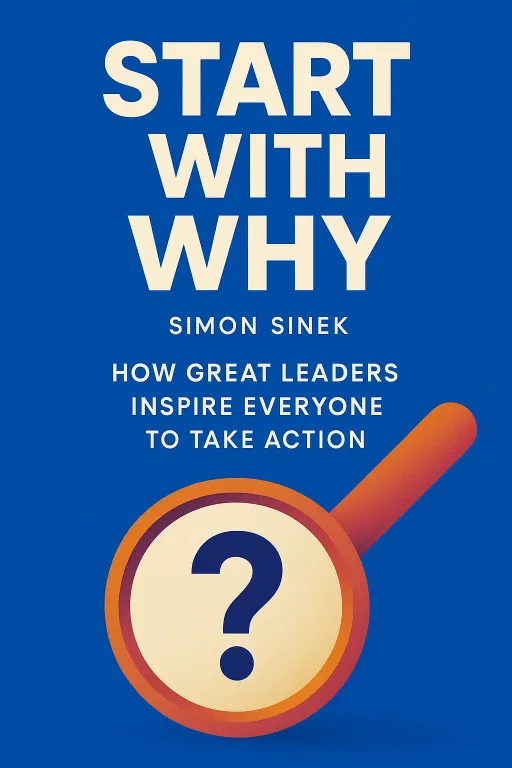
Nova: And that naturally leads us to the second key idea we need to talk about, which often acts as a counterpoint to what we just discussed, but also deeply complements it. While Parker focuses on the purpose of, Simon Sinek, in his seminal work, zooms out to the overarching purpose of an entire organization or community. He argues that people don't buy you do; they buy you do it.
Atlas: Ah, Sinek’s Golden Circle. So, if Parker is about the micro-purpose of each event, Sinek is about the macro-purpose of the whole community?
Nova: You got it. Sinek’s insight is that truly inspiring leaders and organizations communicate from the inside out: they start with 'why,' then 'how,' then 'what.' Most communities, however, lead with 'what' – 'we grow organic produce,' 'we advocate for policy change.' But a powerful 'why' is what creates that unbreakable bond and attracts those who truly share your vision.
Atlas: That makes sense. I can see how for our listeners, who are often driven by deep values like sustainability and healing the earth, articulating that 'why' would be crucial. But how do you make that 'why' more precise than just 'sustainability'? Isn't 'sustainability' already a pretty inspiring 'why'?
Nova: It’s a good starting point, but it can still be too broad to be truly magnetic. Nova's Take, which we often discuss, reinforces this idea: precision in your 'why' creates unbreakable bonds. Think of a community garden. One might say its 'what' is 'we grow vegetables.' Its 'how' might be 'organically.' But its 'why'? It could be 'to cultivate local food sovereignty and empower urban youth through permaculture education, fostering a resilient ecosystem and community.'
Atlas: Wow, that's a much richer 'why.' The first one is just a hobby, the second is a movement. You’re not just attracting people who want to grow tomatoes; you’re attracting people who care about food justice, youth empowerment, and ecological resilience.
Nova: Exactly. And when challenges arise—as they inevitably do in any community effort—those who are there for the 'why' are far more likely to stick around and work through it than those who are just there for the 'what.' They’re bonded by a shared belief, not just a shared activity. This 'why' becomes the magnetic core, attracting individuals who resonate with that deeper vision, and it helps the community withstand challenges and drive collective action.
Atlas: So, for a scientific agronomist looking to cultivate community around global impact, their 'why' might be something beyond just 'improving crop yields.' It could be 'to foster a global network of innovators dedicated to developing climate-resilient food systems that ensure equitable access to nutrition for all, everywhere.' That’s a 'why' you can truly rally behind.
Nova: Precisely. It’s about finding that intersection of your passion, your unique contribution, and the deeper impact you want to have. It transcends the transactional nature of simply 'doing things' and elevates it to 'making a difference.'
Synthesis & Takeaways
SECTION
Nova: So, bringing it all together, what we're talking about today is the immense power of intentionality. It's not enough to simply to build community or to make a difference. The convergence of Priya Parker's intentional design for individual gatherings and Simon Sinek's magnetic 'why' for the entire community creates something truly special.
Atlas: I can see that. It's about moving from accidental gatherings and vague intentions to deeply purposeful and resonant communities. Community leadership isn't just about managing logistics; it’s about curating meaning and shared purpose. It’s about building a foundation that can truly heal the earth and feed the future.
Nova: And it starts with a tiny, yet powerful step. Before your very next community interaction, whether it's a team meeting, a volunteer session, or even a family dinner, write down its single, bold purpose. Make it specific, make it unique, and make it disputable. Then, share it with your members.
Atlas: That’s a fantastic, actionable takeaway. It shifts the entire mindset. So, for everyone listening, what’s the one bold purpose you’ll define for your next gathering, and how will it clarify your community’s 'why' to truly empower others and build together?
Nova: This is Aibrary. Congratulations on your growth!