The Art of Influence: Becoming a Leader People Follow
Golden Hook & Introduction
SECTION
Nova: Atlas, have you ever noticed how some people just command a room, not because they're loud, but because you just… feel their presence? It's like they're playing a different game of influence.
Atlas: Oh, absolutely! And honestly, for anyone trying to navigate that leadership ladder, it often feels less like a game and more like trying to herd cats. What's their secret?
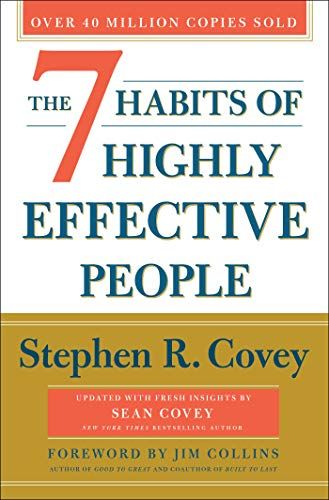
Nova: Well, that's precisely what we're dissecting today, pulling insights from a true classic of personal development: "The 7 Habits of Highly Effective People" by Stephen Covey. What's fascinating about Covey is that he wasn't just an academic; he was a management consultant to Fortune 100 companies and even worked with governments. He saw firsthand what made leaders truly effective, beyond fleeting trends.
Atlas: Oh, I love that. So many books talk theories, but to have someone who's actually been in the trenches with massive organizations, that adds a whole different layer of credibility. I'm already hooked.
The Foundation of Proactive Leadership: Self-Mastery
SECTION
Nova: Right? And his first habit is foundational to everything else: "Be Proactive." Now, when people hear 'proactive,' they often think it means being a go-getter, an initiator. But Covey's definition is much deeper. It's about choosing your response, not being a victim of circumstance. It’s the profound realization that between stimulus and response, there's a space, and in that space lies our power to choose.
Atlas: Wait, so it's not about being a go-getter or an initiator, but about? That sounds almost philosophical. Can you give me an example of what that looks like in a messy, real-world context for someone trying to lead a project? Because projects, let's be honest, rarely go according to plan.
Nova: Exactly! Let's say you're leading a project, and suddenly, a key team member quits, or a crucial supplier fails to deliver, putting your entire timeline at risk. A reactive person might throw their hands up, blame the team member, blame the supplier, lament the unfairness of it all. They feel like a victim of external forces.
Atlas: Yeah, I know that feeling. It's easy to get caught in that spiral of "why me?"
Nova: A proactive leader, on the other hand, acknowledges the external challenge but immediately shifts their focus. They ask: "Okay, what I control here? What are my options? How can I communicate this to stakeholders? How can I adapt the plan or find an alternative solution?" They don't dwell on what they can't change, but pour their energy into what they. It’s a complete shift in where you place your locus of control.
Atlas: Honestly, that sounds like my Monday mornings! I still struggle with that myself. But isn't there a risk of becoming self-blaming? What if the problem really outside your control, like a global market downturn or a sudden policy change? You can't just 'think positive' your way out of that, can you?
Nova: That’s a really important distinction. Proactivity isn't about blaming yourself for everything that goes wrong, or pretending you can control the uncontrollable. It's about taking responsibility for your to everything. Covey introduces the idea of the "Circle of Concern" versus the "Circle of Influence." Our Circle of Concern includes all the things we worry about – the economy, the weather, other people's opinions. Our Circle of Influence is the smaller circle within that, containing the things we actually do something about. Proactive people focus their energy on expanding their Circle of Influence.
Atlas: That’s a great way to put it – focusing on your circle of influence. It suggests that even in chaos, you're not powerless. So, for our listeners who are trying to apply this hands-on, what's one tiny step someone could take today to start shifting that mindset?
Nova: Identify one area in your current role or even just your daily life where you tend to complain or feel victimized by circumstances. Maybe it's a frustrating commute, or a recurring issue at work. Then, consciously re-frame it. Instead of dwelling on the problem, ask yourself: "What's one small thing I do to improve this situation, or my experience of it?" It could be as simple as changing your route, having a difficult conversation, or adjusting your own expectations. That small shift is the start of being proactive.
The Power of Purpose: Inspiring Loyalty Through 'Why'
SECTION
Nova: And that notion of internal clarity, of understanding what you control and what truly matters, naturally leads us to our second profound insight, this time from "Start with Why" by Simon Sinek. Sinek argues that great leaders don't just tell you to do, but they do it.
Atlas: Oh, I've heard that phrase 'start with why' tossed around a lot. It's almost become a business buzzword. But what does it mean beyond a catchy slogan? Like how does 'why' actually inspire loyalty, especially in a competitive environment where people are often just driven by bonuses or promotions?
Nova: That’s a critical question, and Sinek's work provides a compelling answer. He introduces what he calls the Golden Circle: Why, How, What. Most organizations communicate from the outside-in: 'Here's what we do, here's how we do it.' But truly inspirational leaders and companies communicate from the inside-out, starting with the 'Why.' They articulate their purpose, their cause, their belief first. People don't buy you do, they buy you do it.
Atlas: Can you give us an example? Because it still feels a little abstract.
Nova: Think about Apple. In their early days, they weren't just selling computers. Their 'why' was to challenge the status quo, to empower individuals with creative tools, to "think different." The 'what'—computers, phones—were simply the manifestation of that 'why.' People bought into the belief, not just the product. This creates deep loyalty because it taps into a fundamental human need to belong to something bigger than ourselves.
Atlas: That’s a great analogy with Apple. I can see how that resonates. But what about a leader who their 'why,' but maybe it's not particularly inspiring to others? Or worse, what if their 'why' is purely self-serving—like "I want to be rich and powerful"? How do you make sure your 'why' is actually and not just… well, selfish?
Nova: That's a crucial point, Atlas. A truly magnetic 'why' is usually bigger than oneself. It's about contribution, impact, or a belief that serves a greater good. It aligns with a deeper human need for meaning. A leader's job isn't just to a why, but to it clearly, consistently, and authentically, so it becomes a shared vision that others can believe in and contribute to. It’s not about convincing people, but about attracting those who already believe what you believe.
Atlas: So basically you’re saying it’s about finding that intersection between your personal drive and a larger purpose that others can buy into. That makes me wonder, how does this 'why' connect back to Covey's proactivity? Is a clear 'why' another form of being proactive?
Nova: Absolutely! Your 'why' your "beginning with the end in mind" from Covey. It's the proactive choice of your ultimate destination, the guiding principle that informs all your other proactive decisions. Without a clear 'why,' proactivity can be directionless, like a ship with a powerful engine but no rudder. It's the destination you've proactively chosen.
Synthesis & Takeaways
SECTION
Nova: So, true leadership, the kind that both empowers you and inspires others, isn't about external control or simply managing tasks. It's built from the inside out: it's about owning your responses and clarifying your deepest purpose. These aren't just management theories; they're blueprints for making a profound impact.
Atlas: That’s actually really inspiring. It re-frames leadership from a position of authority to one of genuine influence. So, for our listeners who are aspiring leaders, looking to hone their influence and articulate their vision, what’s one deep question they should sit with after today's conversation? Something that will really make them think.
Nova: I'd ask them to reflect on their personal 'why.' Not just in their career, but in their life. What is the fundamental belief or contribution that drives them? How does that 'why' align with the difference they want to make, and how can they proactively live that 'why' every single day?
Atlas: That sounds like a powerful exercise. Because if you don't know your own 'why,' how can you expect anyone else to follow?
Nova: Exactly. Your internal clarity fuels external impact. And that’s the art of influence.
Atlas: Fantastic insights today, Nova. Thank you.
Nova: Always a pleasure, Atlas.
Atlas: This is Aibrary. Congratulations on your growth!